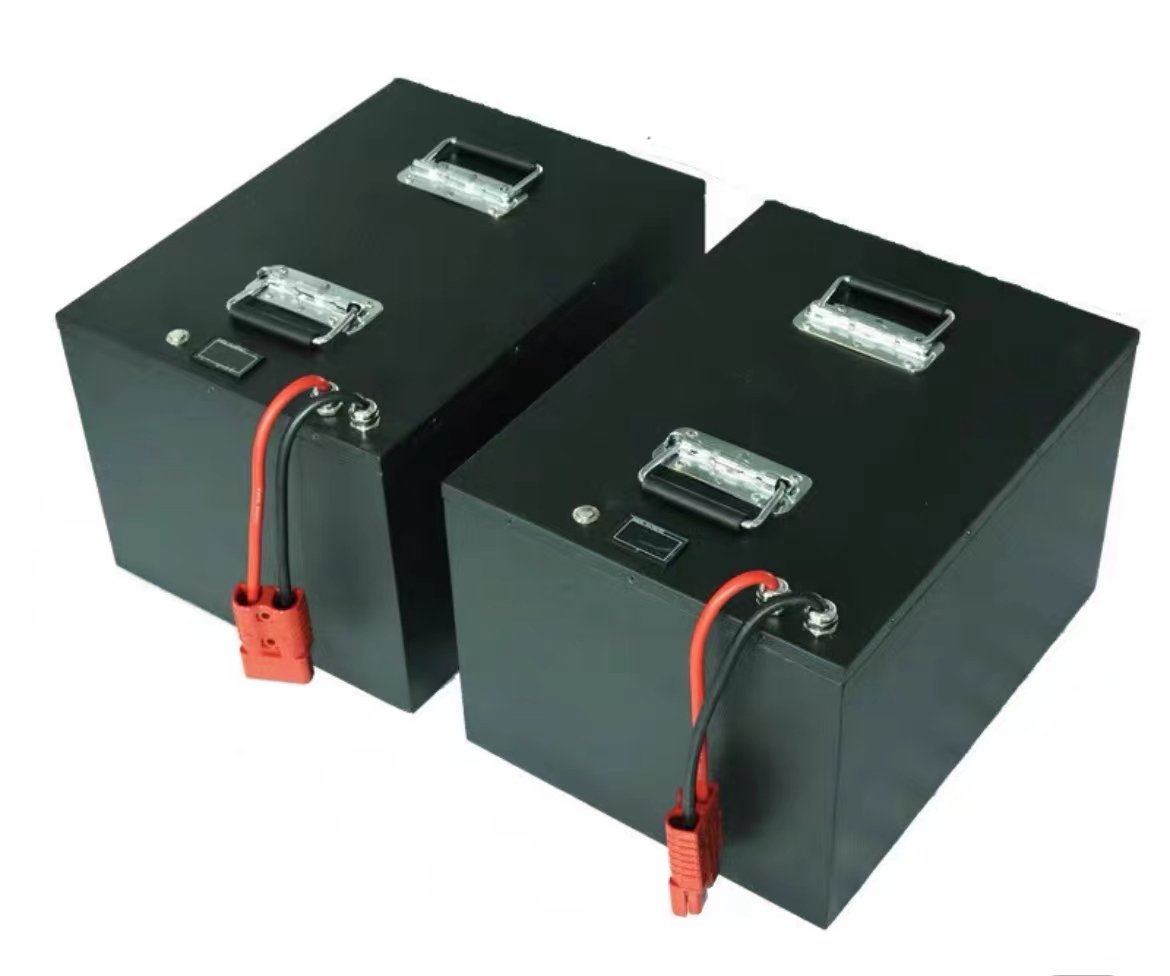
Incoming inspection answers one question: does this lot of battery packs match the design you approved and the specification you signed? A pack that passed UN 38.3 and carries an IEC 62133-2 report can still arrive with a cold solder joint, a mis-set protection threshold, or cells from a different production batch. Those defects are lot defects, and only lot testing finds them.
This guide sets out the checks that catch most of what escapes a supplier’s own outgoing inspection: how to sample, what to measure, which limits to write into the purchase order, and how to decide what happens when a lot fails. The acceptance limits below are examples you can adopt or tighten for your own design; they are not universal requirements, and every one of them should be agreed in writing before the first shipment.
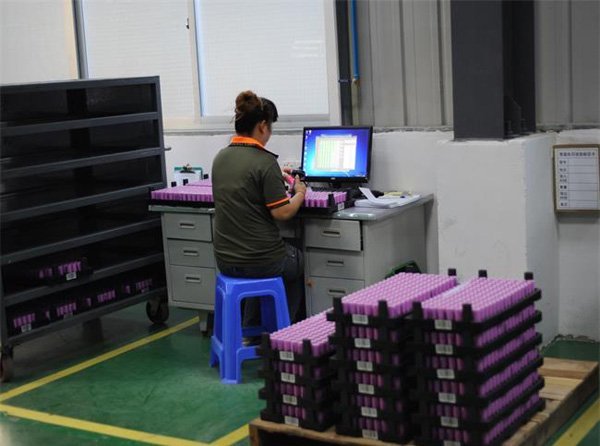
What incoming inspection can and cannot prove
Design qualification and lot acceptance are separate activities, and confusing them is the most common reason buyers accept a bad batch with a complete document folder.
Design qualification is a type test. IEC 62133-2:2017+AMD1:2021 defines safety requirements and tests for portable sealed lithium cells and batteries under intended use and reasonably foreseeable misuse, and a UN 38.3 report covers transport conditions. Both are performed on samples of a design. Neither tells you whether the welds on last week’s production run were made at the right energy setting.
Lot acceptance is statistical and mechanical. It samples a shipment, measures the parameters that drift in production, and decides whether the lot is released, screened, or rejected. It cannot prove reliability over five years, and it will not detect a defect that appears in one pack out of ten thousand unless the sample happens to contain it. What it does well is catch systematic shifts: a cell batch with higher internal resistance, a BMS firmware version loaded by mistake, a sealing process that was re-set after maintenance.
Both layers are needed. If your supplier cannot show the type-test documents, stop there. If they can, you still need the receiving plan described below.
Write the acceptance specification before the purchase order
Inspectors argue at the dock because the limit was never written down. Settle these items in the RFQ or technical agreement, with units and test conditions, so that pass and fail are arithmetic rather than opinion:
- Rated capacity, the tolerance on it, and the discharge rate and temperature at which it is measured.
- DC internal resistance limit and the pulse method used, or the 1 kHz AC value if that is what your bench measures.
- Open-circuit voltage window at shipment, and the maximum allowed deviation between packs in one lot.
- Self-discharge limit over a stated period and temperature.
- BMS protection thresholds for over-voltage, under-voltage, over-current and short circuit, plus the recovery behaviour after a trip.
- Ingress protection rating, enclosure dimensions, weight, connector type and pin-out.
- Label content, including model, capacity, voltage, polarity, date or batch code and manufacturer identification.
- The document package that must accompany each lot.
- The sampling standard, inspection level, AQL values and disposition rules for each defect class.
A useful test of whether your specification is complete: hand it to someone who has never seen the product and ask them to accept or reject a pack using only that document. If they need to ask you a question, the specification is not finished.
Sampling: how many packs to pull
ISO 2859-1 remains the working reference for attribute sampling. The NIST/SEMATECH handbook chapter on lot acceptance sampling is a practical primer on how sample size, acceptance number and consumer risk interact, and it is worth reading before you fix your AQL values.
Most buyers start from General Inspection Level II, single sampling, normal inspection. That gives the sample sizes below.
| Lot size (packs) | Code letter | Sample size | Typical situation |
|---|---|---|---|
| 26–50 | D | 8 | Spare-part or repair orders |
| 91–150 | F | 20 | Pilot run or first article batch |
| 281–500 | H | 50 | Regular production shipment |
| 501–1,200 | J | 80 | High-volume program, quarterly deliveries |
| 1,201–3,200 | K | 125 | Container-load shipments |
Two adjustments matter in practice. First, critical defects should carry an acceptance number of zero: one swollen pack, one reversed connector, one BMS that fails to trip ends the lot, whatever the sample size. Second, destructive tests need their own small sample. Capacity cycling, teardown and X-ray work consume units, so pull an additional three to five packs for those checks rather than burning the inspection sample.
Whichever plan you use, draw the sample across cartons and pallet layers rather than from the top layer only. Mixed date codes inside one shipment are a finding in themselves.
Electrical checks that reveal production drift
These are the measurements worth repeating on every lot. Conditions matter more than the instrument: stabilise the sample at 25 °C for at least four hours before electrical readings, and use the same meter and leads for every lot so that trends are comparable.
| Check | Method | Example acceptance limit | Defect it exposes |
|---|---|---|---|
| Open-circuit voltage | 4 h rest at 25 °C, then measure each pack | Within ±20 mV of lot median; state of charge inside the agreed shipping window | Cell mismatch, parasitic drain, storage damage |
| Capacity | 0.2 It A discharge at 20 °C | ≥ 97% of rated capacity | Low-grade cells, mismatched batch |
| DC internal resistance | 10 s pulse at 50% state of charge | ≤ approved golden sample + 20% | Weak welds, tab and foil contact resistance |
| Self-discharge | Voltage before and after 7 days at 25 °C | ≤ 3% of capacity per month equivalent | Micro-shorts, contamination, seal defects |
| Insulation resistance | 500 VDC, terminals to enclosure | ≥ 20 MΩ on systems above 60 V | Moisture, creepage, pinched harness |
| Protection trip | Force over-voltage, under-voltage, over-current and short circuit | Trip inside datasheet threshold, recover after reset | Wrong firmware, miscalibrated thresholds, failed MOSFET |
| Data readback | SMBus, CAN or RS-485 depending on design | All cell voltages and thermistors report; firmware version matches the PO | Wrong build, bus faults, sensor failures |
| Standby current | Measure in shipping mode after 10 min | ≤ datasheet quiescent value | Excess drain that empties stock in the warehouse |
Capacity deserves a note on method. IEC 61960-3:2017 exists precisely to give buyers a common basis for judging cell and battery performance, including the rated-capacity procedure. Quoting a capacity without the discharge rate, cut-off voltage and temperature is meaningless, and suppliers sometimes quote the best figure from a favourable test. Fix the method in the specification and repeat it identically.
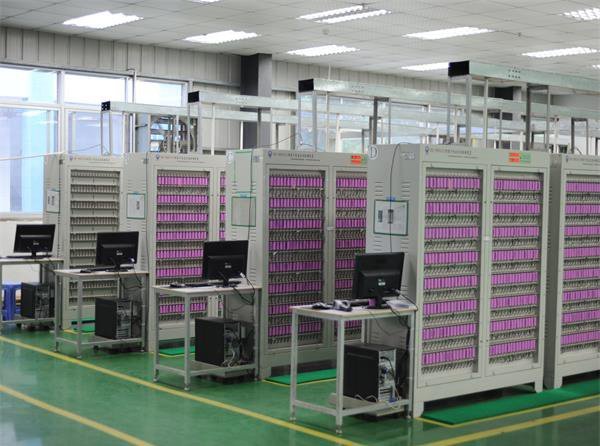
Protection testing is the check most often skipped and the one most likely to cause a field failure. A BMS that reads correctly on the bus but fails to open the MOSFETs during a short-circuit event will pass every other test on this list. Use a test box that can force the fault, record the trip threshold and confirm recovery; if the design supports it, also confirm that the pack enters shipping mode and wakes as documented. The functions a BMS is expected to perform are worth mapping one by one to a bench check.
Mechanical, sealing and label checks
Electrical readings will not reveal a pack that fits badly in the enclosure or leaks in service. Add these:
- Envelope: measure length, width, height and mounting-hole positions against the approved drawing; check that connectors sit at the specified height.
- Mass: weigh each sampled pack. A variation of a few grams usually means a missing potting shot, a different cell, or a shorter harness.
- Terminations: pull-test the connector and inspect solder or weld joints under magnification; flex the harness at the strain relief.
- Sealing: for IP-rated designs, run a sample through the rated immersion or a pressure-decay test, then repeat the insulation resistance check. A seal that passes visually and fails electrically is the common outcome.
- Marking: confirm model, capacity, voltage, polarity, date or batch code and manufacturer identification against the approved artwork. Illegible or missing date codes break traceability later.
- Packaging: inspect carton condition, terminal protection and drop indicators; a shock label that has tripped justifies a full electrical re-check of that carton.
For high-volume or safety-critical programs, add an X-ray of tab welds from one or two packs per lot. Weld voids are invisible from outside and show up months later as rising resistance or an open circuit.
The document package to hold with each lot
Paperwork is part of the product. Keep these with the receiving record, not in someone’s inbox:
- Certificate of conformity referencing the PO, model and lot.
- UN 38.3 test summary and the full test report. Air transport requires the summary, and the IATA dangerous goods framework is the reference most freight forwarders will apply.
- IEC 62133-2 test report and, where relevant, the CB certificate.
- Safety data sheet for the pack and the cells.
- Cell datasheet plus the cell batch codes used in this lot.
- BMS firmware version and release note, so a future change is visible.
- RoHS and REACH declarations covering the current bill of materials.
- Dimensional report or first-article report for the build.
If your quality system is audited, these records are what an auditor will ask for when tracing a field failure back to a shipment. The wider set of certifications and what each one covers is worth keeping alongside the lot file.
Classify defects, then decide disposition
A defect class tells the inspector what to do without calling a meeting. Agree the classification in advance, then apply it without exception.
| Class | Examples | Disposition |
|---|---|---|
| Critical (accept 0) | Swelling beyond drawing tolerance, electrolyte leakage, reversed polarity, insulation failure, BMS fails to trip, cracked terminal | Reject the lot. No sorting, no rework, no concession. |
| Major (AQL 1.0–1.5) | Capacity below limit, DCIR above limit, OCV outlier, damaged harness, wrong label or firmware | Reject, or 100% screen with supplier-paid sorting and a re-inspection |
| Minor (AQL 2.5–4.0) | Cosmetic marks on the sleeve, carton print error, missing manual | Accept with written notification and debit note |
Resist the habit of treating a major defect as minor because the delivery is urgent. The cost of sorting one lot is small against the cost of a containment campaign after the packs are in finished goods.
When a lot fails: containment and corrective action
Quarantine the lot the same day and flag the stock in your ERP so that production cannot draw from it. Then ask four questions in writing:
- Which parameter failed, on how many packs, and what were the actual measurements?
- What changed in production, incoming cells, or firmware since the last accepted lot?
- What is the containment for packs already in transit or in your warehouse?
- What evidence will show the fix worked — which test, on how many units, over how many lots?
A supplier response that says “retested, all good” without a root cause and a changed process is not a corrective action. Under ISO 2859-1 switching rules, a supplier with repeated failures should move to tightened inspection until a defined number of consecutive lots pass; keep them there until the evidence supports a return to normal.
When the failure traces back to cells rather than assembly, the screening routines for verifying cell authenticity in bulk purchasing apply, and capacity or resistance spread across a lot usually points to cell consistency problems that begin before the pack is assembled.
A first-lot routine that holds up over time
- Approve a golden sample. Keep one signed reference pack, sealed, with its test data, in your own storage.
- Run first-article inspection. Full dimensional, electrical and documentation check on the first production lot, with no sampling.
- Apply tightened inspection to the first three lots. Larger samples, same limits.
- Move to normal inspection. Reduce sample size only after three clean lots and a stable capacity and resistance trend.
- Audit one lot per quarter. Pull production records and cell batch codes, and compare against what was shipped.
- Re-qualify annually or on change. Cell supplier, BMS firmware, enclosure tooling or factory relocation each trigger a fresh qualification cycle.
None of this requires a laboratory. A bench meter, a programmable load, a megohmmeter, a protection test box and a temperature-controlled room cover most of the program. What it requires is a written limit for every check and the discipline to reject a lot that misses it.
Frequently asked questions
Is a UN 38.3 report enough to accept a shipment?
No. UN 38.3 is a transport safety test on a design sample. It says nothing about the capacity, weld quality or protection thresholds of the packs in the box.
How many packs should we test per lot?
Use the ISO 2859-1 General Level II sample size for your lot size, plus a small destructive sample for capacity and teardown. Add 100% open-circuit voltage and insulation checks for safety-critical programs.
Do we need to cycle-test every pack?
Usually not. Capacity cycling is slow and consumes cycle life. Sample it, and rely on 100% voltage, resistance and protection checks for the units that go into production.
If you are setting up acceptance criteria for a new pack design, the practical starting point is a specification review with the supplier before the first PO: agree the limits, the sampling plan and the document set, and record them in the technical agreement. Our engineering team supports that review as part of custom battery pack development, and can share the inspection record format used on current programs through the contact page.