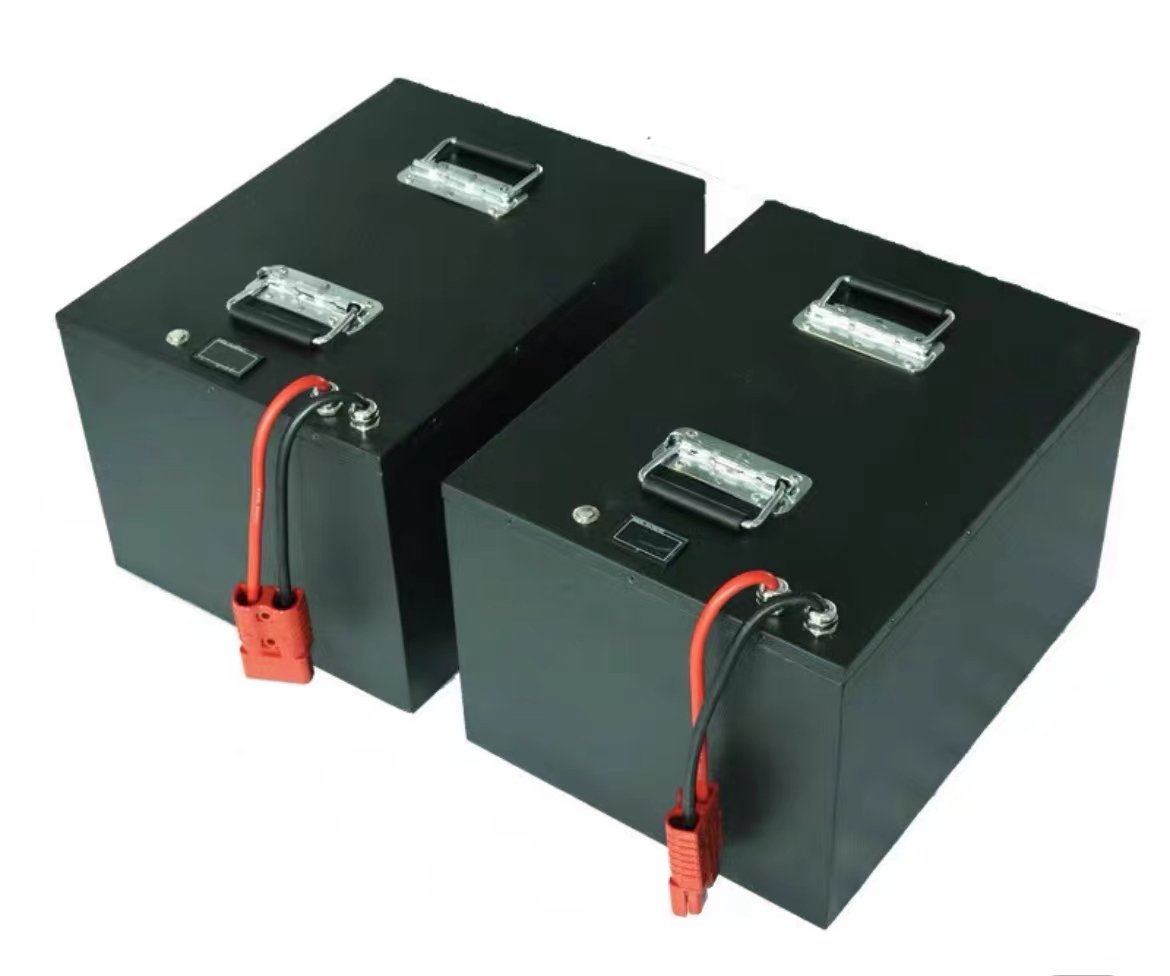
Two standards govern most lithium battery packs inside medical electrical equipment, and they answer different questions. IEC 62133-2 tests the pack as a component: does this cell and battery assembly survive abuse, overcharge, crush and short circuit without fire or leakage? IEC 60601-1 assesses the complete device: with that pack installed, does the equipment remain safe and does it keep performing its essential function under normal and single-fault conditions? A pack with a clean 62133-2 report does not make the device compliant, and a device that passed 60601-1 does not automatically cover a pack change made afterwards. This article explains the split, where the two standards overlap in practice, and what evidence a medical OEM should hold before a submission.

What IEC 62133-2 covers, and what it stops short of
IEC 62133-2 sets safety requirements and tests for portable sealed secondary lithium cells and batteries, covering intended use and reasonably foreseeable misuse. It is a component standard: it looks at the cell and the battery assembly, including the protection circuit where one is fitted, and it asks whether the pack behaves safely when it is short-circuited, crushed, dropped, overcharged, force-discharged, heated or abused. The output is a test report on a defined pack configuration.
What it does not do is just as important. It does not evaluate the host device, does not cover electromagnetic compatibility, does not assess software or alarms, and does not establish that the pack will deliver the therapy or measurement the device promises. It also does not measure service life. A report can be current while the pack’s capacity retention in the field is poor.
Scope also matters for packs that are not portable. Larger industrial and stationary packs are covered by IEC 62619 rather than 62133-2. A cart-mounted device that is moved between rooms is usually still in the portable category, while a fixed installation with a rack of modules is not, and the wrong report will be rejected at review even if the testing behind it was thorough.
What IEC 60601-1 assesses
IEC 60601-1 contains the general requirements for basic safety and essential performance of medical electrical equipment. It applies to the equipment as a system: enclosure, leakage current, mechanical hazards, temperature, single-fault behaviour, marking and instructions for use, and the manufacturer’s risk management process. Battery-powered equipment is within its scope, and the standard addresses the conditions that arise when the supply is a battery rather than mains power.
Because it is a device-level standard, 60601-1 does not contain cell-level abuse tests. Those come from a component standard such as 62133-2, and the component evidence is then used inside the device assessment. Collateral standards add requirements for specific environments and functions: IEC 60601-1-2 for electromagnetic compatibility, IEC 60601-1-11 for the home healthcare environment, and the alarm-system collateral standard for alarm behaviour. A portable home ventilator therefore has a longer standards list than a bench instrument, and the battery pack has to support all of it.
| Question | IEC 62133-2 | IEC 60601-1 |
|---|---|---|
| What is evaluated | Cell and battery assembly as a component | Complete medical electrical equipment, including its supply |
| Who normally applies | Pack manufacturer, as component supplier | Device manufacturer, as legal manufacturer |
| Abuse tests | Short circuit, crush, impact, thermal abuse, overcharge, forced discharge | No cell-level abuse tests; relies on component evidence |
| Protection behaviour | Protection circuit function under fault tests | Device behaviour when protection operates; single-fault safety |
| Thermal assessment | Pack-level temperature during tests | Surface and applied-part temperatures in the device, worst case |
| EMC, software, alarms | Not covered | Covered directly and through collateral standards |
| Essential performance | Not covered | Central requirement, including behaviour on battery depletion |
| Typical output | Test report for a defined pack configuration | Test report plus risk management file and labelling review |
Where the two standards meet in practice
The overlap is not in the test methods but in the questions a reviewer asks about the interface between pack and device.
Protection thresholds and device behaviour. The pack’s protection circuit will at some point open the discharge path: overcurrent during a stall, undervoltage at end of runtime, overtemperature in a warm room. 62133-2 confirms the protection works. 60601-1 asks what the device does next. If the therapy stops without an alarm, or a monitor drops its display before the operator has time to react, the pack passed and the device still fails its essential performance requirement. The alarm threshold, the low-battery warning time and the shutdown sequence belong in the device risk file, not in the pack datasheet.
Temperature inside the enclosure. A pack tested on a bench at 25 °C ambient may sit at 45 °C inside a sealed device housing next to a power supply. Surface temperature limits at device level, and the charge-temperature window enforced by the BMS, have to be assessed together. This is where a pack that is compliant in isolation can create a device-level nonconformity.
Charging while operating. Many medical devices charge and run at the same time. The pack’s charge acceptance, the heat generated, and the behaviour if the charger fails all become device-level questions, and the charging architecture has to be described in the risk analysis even though the pack was qualified separately.
Marking and instructions. Replacement procedure, disposal, warnings about charging temperature and about using approved chargers are user-facing requirements. They are often drafted by the device manufacturer but depend on facts only the pack supplier holds.
Single-fault thinking. A shorted protection MOSFET, a failed thermistor or a stuck gauge are single faults. The device assessment expects them to have been considered; the pack report shows only that the assembled pack met its tests. Fault-injection records from the BMS validation are the bridge between the two.
The evidence file a medical OEM should hold
Reviewers rarely ask for “the battery certificate”. They ask for the specific documents that show the pack in the device is the pack that was tested, and that the device behaves safely with it. The table below is a working structure for that file.
| Document | What it demonstrates | Issued by | What reviewers check |
|---|---|---|---|
| IEC 62133-2 test report, pack level | Abuse safety of the defined assembly | Test laboratory | Pack model, cell model and protection circuit match the production BOM |
| Cell datasheet and UN 38.3 test summary | Cell-level safety and transport classification | Cell maker or test laboratory | Cell in the report is the cell in production, not a predecessor |
| BMS validation record | Protection thresholds and fault response | Pack manufacturer | Firmware version referenced, fault-injection results included |
| Thermal test in the device enclosure | Worst-case pack and surface temperatures | Device manufacturer | Ambient and duty cycle are the declared worst case |
| Risk analysis with battery hazards | Traceability from hazard to control | Device manufacturer | BMS failure modes, depletion, charging faults all represented |
| Charge and discharge specification, IFU text | Instructions match the tested configuration | Both parties | Charger model, temperature limits and replacement steps are consistent |
| Change notification agreement | Evidence stays valid after shipment starts | Supply contract | Definition of what counts as a reportable change |
Two details in that table cause most of the rework. The first is configuration match: reports are issued against a pack drawing and a cell model, and a substitution during production invalidates the match silently. The second is firmware: if protection thresholds live in firmware, the version tested has to be identifiable in the record, otherwise the validation cannot be tied to the shipped product.
Design choices that reduce certification risk
Some pack decisions make the compliance path shorter, and they are worth taking early because they are difficult to reverse after tooling.
- Chemistry with a wider thermal margin. Lithium iron phosphate tolerates abuse conditions with more margin than high-nickel chemistries. The trade-off is energy density, which for a cart-mounted monitor or a home-care device is often acceptable.
- Layered protection. A primary protection circuit plus an independent secondary cutoff, and a resettable fuse or thermal cutoff where the architecture allows, gives the risk analysis something to point at beyond a single IC.
- Charging inhibited below 0 °C. Charge acceptance at low temperature is a plating risk. A BMS that blocks charging outside the cell’s specified window, with a documented recovery condition, is easier to defend than one that relies on user behaviour.
- Gauge accuracy matched to the alarm strategy. If the device alarms at 20% state of charge, the gauge has to be accurate at low SOC and across temperature, not only in the middle of the range.
- Serviceable but not user-serviceable. Where the pack is technician-replaceable, the enclosure and connector design should make incorrect insertion difficult, and the instructions should describe the procedure without inviting field repair of the pack itself.
- Sterilisation compatibility, if the device is sterile. Ethylene oxide, gamma and autoclave cycles affect cells, seals and labels differently; the pack specification should state which process it was evaluated against.
Change control: the usual reason a valid report stops being valid
A 62133-2 report describes one pack. When the cell model changes, when the protection circuit or its firmware changes, or when the internal construction and insulation change, the report no longer describes the product. A new or delta evaluation is then needed, and the scope should be agreed with the test laboratory rather than assumed.
Device-level changes run on a separate track. A new enclosure, a different charger, a moved pack location or a new operating mode can change temperatures and fault behaviour, which is 60601-1 territory even when the pack is untouched. Suppliers that offer a formal change notification clause with a defined list of reportable changes make this manageable; without one, the OEM discovers the change at the next audit or, worse, at a complaint.
Transport, incoming inspection and the gap between them
Compliance evidence does not replace receiving checks. Packs travel as dangerous goods: UN 38.3 test summaries support the transport classification, and air shipments of lithium ion cells and batteries shipped on their own are subject to a state-of-charge limit under the IATA dangerous goods rules, which also set packaging and labelling requirements. A pack that arrives at 80% state of charge has either been mis-declared or mis-handled, and both are worth a supplier conversation.
On arrival, the checks that catch real problems are capacity at a defined rate, DC internal resistance, protection trip verification and cell balance. Our incoming inspection plan for lithium packs sets out the test sequence and the sampling logic behind it.
Questions to put to a pack supplier
These seven questions separate suppliers who manage compliance from suppliers who forward documents.
| Question | Why it matters | What a good answer looks like |
|---|---|---|
| Which report covers this exact pack, including cell and BMS firmware? | Configuration match is the first thing a reviewer checks | Report number with pack drawing revision and cell model named |
| Which laboratory issued it, and to what accreditation scope? | Accredited reports travel better across markets | Laboratory name and accreditation details you can verify |
| Which protection functions were verified by fault injection? | Separates tested behaviour from design intent | A list of injected faults and observed responses |
| What is the charge temperature window, and how is charging inhibited outside it? | Low-temperature charging is a plating and safety issue | Stated window with the BMS mechanism and recovery condition |
| What changes require a new or delta report? | Determines whether the evidence survives year two | A written list, not “we will inform you” |
| What state of charge do packs ship at, and which transport documents come with them? | Air transport limits and handling discipline | Declared SOC, UN 38.3 summary, packing instruction referenced |
| Can you supply DFMEA and BMS validation records for our risk file? | The device risk analysis needs pack-level failure modes | Documents offered before the first purchase order |
Accreditation claims are worth a two-minute check. Certificates and reports issued under the ILAC mutual recognition arrangement can be traced to an accredited body through the ILAC network, and a report from a laboratory outside any accreditation scheme carries less weight in a submission even when the testing was competent.
Frequently asked questions
Is IEC 62133-2 mandatory for medical devices?
It is a standard, not legislation, so it is not “mandatory” in itself. It becomes effectively required through the route you take to market: regulators and notified bodies expect battery safety to be demonstrated, and IEC 62133-2 is the usual evidence for portable lithium packs. The FDA maintains a recognized consensus standards programme in which 62133-2 appears, and European conformity assessment under the Medical Device Regulation expects the corresponding safety evidence in the technical file. Confirm the expectation with your notified body or regulatory consultant rather than treating the standard as a legal checklist.
Does a 62133-2 report on the pack make our device compliant?
No. It supports one part of the device assessment. The equipment still needs its own evaluation of temperature, single-fault behaviour, alarms, essential performance and, where applicable, EMC. Reviewers routinely reject submissions where the battery evidence is complete but the device-level behaviour on battery depletion is undocumented.
Can we reuse an industrial pack tested to IEC 62619?
Only if the application really is industrial rather than portable. 62619 addresses industrial applications and does not substitute for 62133-2 in a portable device. If your product sits between the two definitions, get the classification agreed with the test laboratory before ordering packs, because the answer changes the cell choice and the protection architecture.
Getting the pack and the device evidence aligned
The practical rule is simple: qualify the pack against the component standard, then verify the device with that exact pack installed, and keep the two records tied together by model, revision and firmware. Most compliance delays come from a break in that chain rather than from a failed test.
If you are selecting a pack for a medical device programme, our medical device lithium battery pack page describes the configurations we build, including protection architecture and documentation scope, and the smart battery pack with BMS overview covers the communication and gauge options that support low-battery alarms. For the wider map of certificates by market, see the lithium battery certifications guide, which also explains how a UN 38.3 test summary differs from a safety report. Send your device classification and target markets through the contact page and we will respond with the documentation scope that applies.