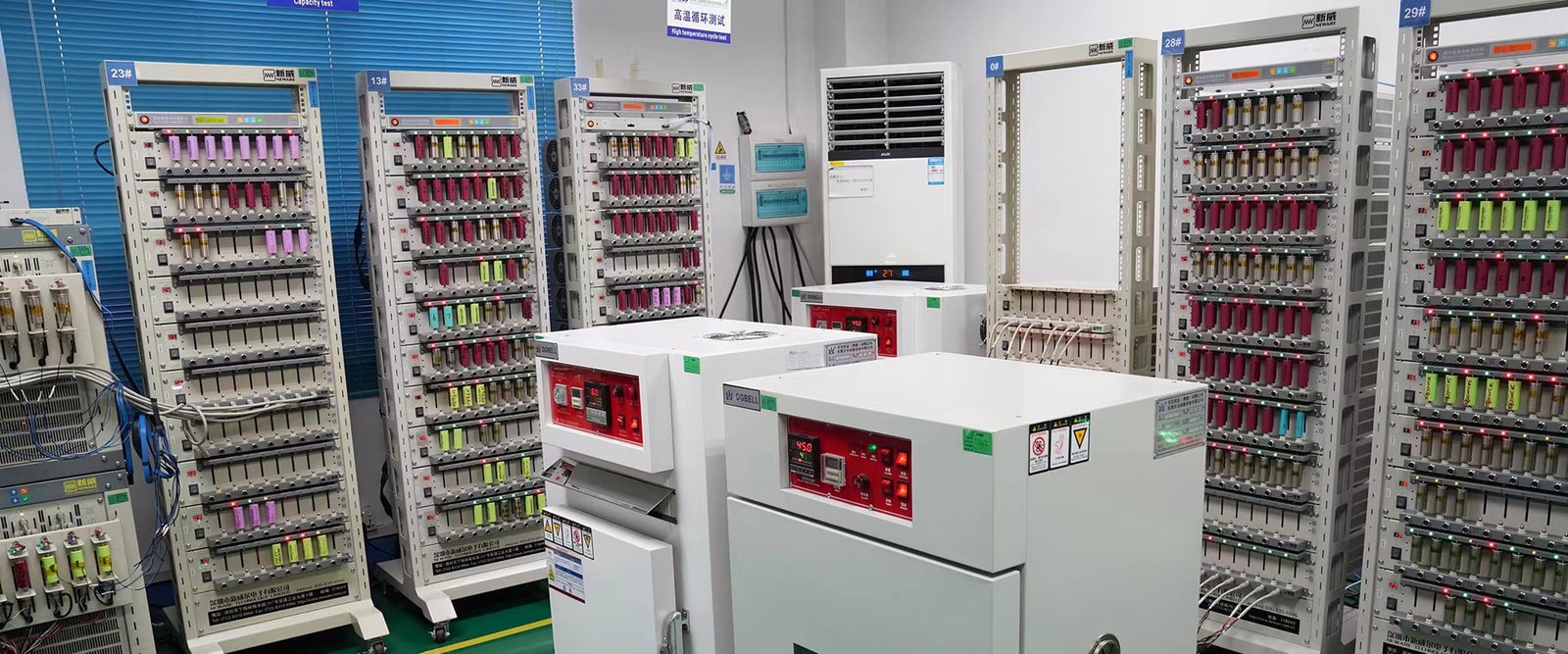
A battery pack supplier process audit answers one question: can this factory repeatedly build the pack it quoted, and can it prove what went into each unit? The audit walks the production line in process order – incoming cell verification, cell matching, interconnection, BMS loading, assembly, end-of-line testing, traceability records and change control – and at each station asks to see the control, the record and the reaction when something is out of tolerance. It is not a product test and not a certificate check: it is an assessment of whether the process is capable and under control. This article gives a station-by-station checklist, the records to request, and how to grade findings. It complements, but does not replace, our second-source qualification guide, which is about what to retest when a supplier or site changes.
Scope matters before the visit. A first-time qualification audit of a primary supplier covers the whole quality system and every process step. A surveillance audit after approval is narrower, focused on the stations that changed or on findings from prior visits. Agree the scope, the models in scope, and who will attend from the supplier’s quality and production teams before arrival, so the records you need are on the table rather than requested by email afterwards. Accreditation context is worth settling early too: the International Accreditation Forum covers accreditation of management-system certification bodies, while ILAC covers accreditation of laboratories and inspection bodies whose test reports travel across markets through mutual-recognition arrangements. A QMS certificate and an accredited test report are different evidence about different things; knowing which is which stops a certificate being accepted in place of a capability record.
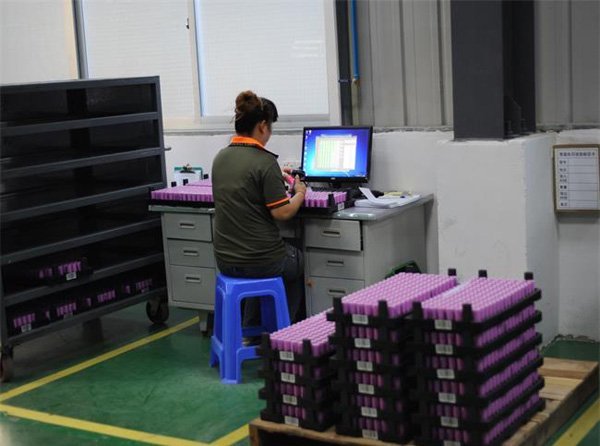
Request the documents before the visit
Most audit time is lost to documents that could have been reviewed in advance. Send a short request list with the audit scope, then spend the visit on the line and on sampling records rather than collecting paper. The table is a desk-review set; each item is evidence about the system, not proof that a specific station is in control.
| Document to request in advance | What it establishes | What to check on receipt |
|---|---|---|
| QMS certificate and its accreditation scope | A management system is certified by an accredited certification body | Scope covers battery pack assembly at the site being audited; certificate is current |
| Accredited test reports for the pack model | Safety and performance evidence recognised across markets | Accreditation scope covers the methods; reports name the production cell and BMS revision |
| Process control plan and work instructions | Which characteristics are controlled at each station, and to what limits | Limits match the approved specification; revision state is current |
| End-of-line test specification with limits | What every pack is tested against before shipment | Limits are no looser than the customer specification; serial-level data is retained |
| Tester and instrument calibration certificates | The measurement system behind the records is traceable | Calibration current for each instrument used on the sampled records |
| Change-notification procedure | How a cell, firmware, process or site change is communicated | Customer notification triggers and re-qualification gates are defined |
| One sample pack genealogy record | That cell lots, BMS revision and EOL data link to a pack serial | The chain can be reconstructed both backwards and forwards from the serial |
Walk the line in process order
An audit that jumps between topics misses the links between stations: a cell-lot code that never reaches the pack serial, a weld parameter that is set but not monitored, a firmware revision that is loaded but not recorded. Walking in build order exposes those gaps. The table below is a walk-through checklist; the “evidence” column is what to ask to see, not what to assume exists.
| Station | What to observe | Records / evidence to request | Red flag |
|---|---|---|---|
| Incoming cell and material store | Cell lots quarantined until released; supplier certificates matched to physical labels | Incoming inspection records, cell lot certificates, quarantine and release status | Cells issued to the line before release, or lot codes on certificates that do not match cell markings |
| Cell grading and matching | Capacity, internal resistance and open-circuit voltage measured before grouping | Grading data, matching rules for series/parallel groups, bin definitions | Cells of mixed grade in one pack, or no defined tolerance for matched groups |
| Cell interconnection | Weld or bond parameters set, monitored, and verified on sample joints | Weld schedules, pull or peel test results, joint-resistance checks, equipment maintenance log | Our tab welding guide details these controls; a red flag is a process with a schedule but no joint verification |
| BMS loading and configuration | Firmware version and protection parameters tied to the specific pack model | Firmware revision list, parameter file, programming record per work order | One firmware image used across unrelated models, or no link between a pack serial and the firmware it carries |
| Assembly and insulation | Torque, insulation, separator and harness routing controls at the point of assembly | Work instructions, in-process check sheets, insulation resistance records | Checks recorded as a single pass/fail tick with no measured value or instrument ID |
| End-of-line (EOL) test | Every pack tested for open-circuit voltage, capacity or load, protection trip and communication | EOL test limits, per-serial test data, tester calibration certificates | Test limits looser than the customer specification, or no serial-level data retained |
| Traceability and labelling | Pack serial linked back to cell lots, BMS revision and EOL data | Genealogy record for a sampled serial, worked backwards and forwards | Genealogy that works on paper but cannot be reconstructed from a finished pack’s serial |
| Change control and nonconformance | How a cell, process, firmware or site change is notified, assessed and approved | Change-notification procedure, deviation records, corrective-action reports | No documented trigger for customer notification when a cell or BMS revision changes |
Values and limits in the records above are the supplier’s own controlled conditions, to be compared with your approved specification – not generic pass marks. Where a station’s limit is looser than what you approved, the conversation is about the change-control process that let it drift, not only about the number.

Ask for capability evidence, not only pass rates
A supplier can show a 100 percent end-of-line pass rate and still have an incapable process if the test limits are wide, the sample is selective, or the measurement system is uncalibrated. Process capability is the extent to which a stable process holds its output inside specification, and the NIST/SEMATECH e-Handbook’s treatment of process capability is a useful reference for the concepts behind the indices a supplier may quote. Ask which characteristic was measured, over what sample and time window, with which instrument, and what the index was – then check the underlying data rather than the headline figure. The same handbook’s guidance on responding when a process is out of control is the right frame for the reaction plan: a capable process needs a documented response when a control point moves, not just a note in a log.
Sampling is the other half. Ask how many units from a lot are tested and on what basis, and compare that with your own receiving plan. The NIST/SEMATECH chapter on lot acceptance sampling sets out the terminology for discussing acceptance criteria and the risk that a sample misses a defect. Our incoming inspection article covers how to build the buyer-side plan; the audit is where you confirm the supplier’s plan is compatible with it rather than two unrelated schemes.
Grade findings and require closure evidence
Not every gap is equal. Grade findings by their effect on product conformity and on your ability to trace a defect, then require evidence of closure proportional to the severity. The table is a grading framework to adapt to your own quality agreement; it is illustrative, not a standard-mandated classification.
| Finding class (illustrative) | Example | Required response | Evidence of closure |
|---|---|---|---|
| Critical | Cells released to the line without incoming verification; no serial-level EOL data | Contain affected lots, quarantine stock, stop shipment pending assessment | Revised control, retrospective record review, and a verified re-run on production-intent units |
| Major | Weld schedule exists but joint verification is not recorded; tester calibration overdue | Corrective action with a defined containment step and a completion date | New records showing the control in use, calibration certificate, and a follow-up sample check |
| Minor | Work instruction present but revision field blank; labelling layout inconsistent | Correction at the next document revision | Updated document and a note in the next surveillance visit |
| Observation | Opportunity to strengthen a control that already meets specification | No mandatory action; record for trend review | Logged and reviewed at the next audit |
Closure is a document, not a promise. Require the revised procedure, the new records, the calibration certificate or the re-test data before marking a finding closed, and keep the sampling basis in the closure record so the fix can be checked at the next visit. For programmes shipping into the EU, the documentation set also has a regulatory dimension: the European Parliament’s summary of Regulation (EU) 2023/1542 describes battery due-diligence obligations on economic operators and an electronic battery passport for the categories in scope, which makes cell-lot genealogy and change control a market-access requirement, not only a quality preference. Our EU regulation documentation article maps those obligations to the records a buyer should request.
What to take away
Three questions summarise a process audit. Can the supplier show, for a sampled pack serial, exactly which cell lots, firmware revision and test results belong to it? Does each critical station have a measured control with a documented reaction when it drifts out of tolerance? And when a cell, process or site changes, is there a defined trigger that notifies you and re-opens qualification? A supplier that answers all three with records is far easier to qualify than one that answers with certificates. If you want to audit a prospective pack supplier against your own specification, contact our team to discuss the process records available for review.
Common questions
Is a supplier process audit the same as a second-source qualification?
No. Qualification asks what must be retested when a supplier, site or component changes. A process audit asks whether the current supplier’s line is capable and traceable. Both belong in supplier quality, but they answer different questions and use different evidence.
Can an ISO certificate replace a line walk-through?
No. A management-system certificate attests that a quality system is certified by an accredited body; it does not show that welds are verified, firmware is revision-controlled, or a pack serial can be traced to its cell lots. Request both, and keep them as separate evidence.
How often should the audit be repeated?
Tie it to change, not only to the calendar. A new cell model, a new site, a firmware revision affecting protection, or a critical finding should trigger a focused re-audit; otherwise a surveillance visit at the agreed interval is the norm.