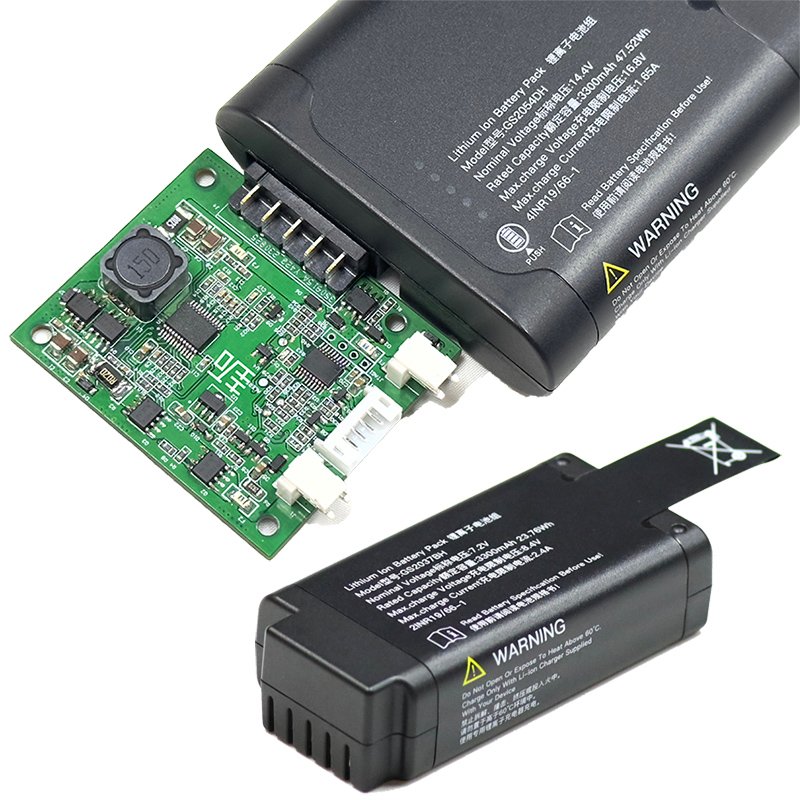
If you buy custom lithium battery packs and your equipment ships into the European Union, Regulation (EU) 2023/1542 – the Batteries Regulation that replaced Directive 2006/66/EC – now governs what the battery must carry, what documents must exist, and what data must be retrievable. In short: batteries placed on the EU market need CE marking and an EU declaration of conformity, all batteries must carry a QR code from 18 February 2027, and larger rechargeable industrial batteries, LMT batteries and electric-vehicle batteries must additionally have an electronic battery passport that the QR code gives access to. This article translates those obligations into a procurement checklist: what to classify, what to demand from your pack supplier, and what evidence to hold in the file before customs or a market-surveillance authority asks for it.
The Regulation applies to all batteries placed on the market or put into service in the Union, across the categories the European Parliament’s legislative summary describes – portable batteries, SLI batteries, LMT batteries, electric-vehicle batteries and industrial batteries. It imposes due diligence obligations on the economic operators placing batteries on the market, alongside sustainability, safety, labelling, marking and information requirements. The European Commission’s batteries policy page tracks the rollout at the policy level.

Who carries the obligation, and what it covers
The Regulation attaches obligations to economic operators – manufacturers, importers and distributors – depending on their role in the supply chain. If your pack is imported into the EU as a separate component or spare part, the import side of your chain carries market-placement obligations for the battery itself. If the pack enters the EU only as a battery incorporated inside your finished device, the responsibilities sit differently, but the underlying documentation chain still has to reach back to the pack and cell manufacturers. Either way, the practical outcome for a buyer is the same: you must be able to produce a defined set of documents on request, and those documents must match the packs actually shipped.
One structural point matters for planning: the Batteries Regulation repealed the old Batteries Directive as of 18 August 2025, so legacy documentation built around the Directive no longer represents the current regime. A certifications file assembled a few years ago needs re-review even if nothing changed on the pack.
| Obligation | Applies to | Timing | Evidence to hold |
|---|---|---|---|
| CE marking | Batteries placed on the EU market or put into service | In force | CE mark present on the battery per the Regulation’s marking provisions |
| EU declaration of conformity (Article 18) | Economic operator responsible for the battery | In force | Signed DoC identifying the battery model and the Union acts covered |
| Conformity assessment | Battery models, by notified or accredited bodies under Regulation (EC) No 765/2008 | In force | Test reports and certificates from accredited bodies |
| Labelling and marking (Annex VI) | All batteries, phased by category | Phase-in; the European Parliament summary states labelling applies by 2026 | Label artwork review against the current Annex VI parts |
| QR code (Article 13(6)) | All batteries | From 18 February 2027 | QR plan per Part C of Annex VI; the Regulation references ISO/IEC 18004:2015 for the QR code |
| Battery passport (Article 77) | LMT batteries, industrial batteries with a capacity greater than 2 kWh, and electric-vehicle batteries | The QR code must give access to the passport from 18 February 2027 | Electronic record per Annex XIII – battery model information plus battery-specific information, including data resulting from use |
| State-of-health data access | Stationary battery energy storage systems, LMT batteries and EV batteries using a BMS | Per the Regulation’s recitals | Read-only access to BMS-stored state-of-health and expected-lifetime data, updated at least daily |
Treat the table as a procurement checklist, not a legal opinion: classification questions and phased dates should be confirmed against the consolidated text of Regulation (EU) 2023/1542 and your conformity-assessment body.
CE marking and the EU declaration of conformity
The Regulation states that the CE marking on a battery indicates its conformity with the Regulation, and it relies on the accreditation and market-surveillance framework of Regulation (EC) No 765/2008 – the same framework that underpins accredited test laboratories worldwide through ILAC mutual-recognition arrangements. For a custom pack buyer, two consequences follow. First, the EU declaration of conformity is not a supplier courtesy document: it is the conformity statement that the Regulation’s information requirements refer to, and its content has to identify the battery model and the Union acts it is declared against. Second, the test reports behind it should come from laboratories whose accreditation actually covers the methods used – checking the accreditation scope is a five-minute step that avoids an unpleasant surprise during a surveillance audit.
The underlying technical file still leans on established safety standards. For packs classified as portable equipment batteries, cell safety is documented through IEC 62133-2; where the pack is an industrial secondary battery, IEC 62619 is the corresponding safety standard. Our lithium battery certifications guide maps the full document set, including transport documentation that sits outside the Regulation.
Labelling and the QR code
The QR code requirement is the one with a hard date worth engineering around: from 18 February 2027, all batteries shall be marked with a QR code as described in Part C of Annex VI. The Regulation’s recitals specify that the QR code is printed or engraved on the battery, or affixed to its packaging and accompanying documents, following ISO/IEC 18004:2015 – so the marking is not a sticker your logistics team adds at the dock; it is a design feature of the pack and its packaging.
What the QR code opens differs by battery category, and this is where many projects get their classification wrong:
- For LMT batteries, industrial batteries with a capacity greater than 2 kWh and electric-vehicle batteries, the QR code gives access to the battery passport in accordance with Article 77.
- For other batteries, it gives access to the applicable information requirements, the declaration of conformity, and the related documentation the Regulation lists.
A pack for a handheld or portable device therefore needs the QR information chain without a passport, while a rack battery for stationary storage above 2 kWh needs both – and the passport is an electronic record per individual battery, not a static PDF per model. Plan the data pipeline accordingly.
| Pack scenario | Typical classification | Battery passport | QR code (from 18 Feb 2027) | SOH data access |
|---|---|---|---|---|
| Pack inside a handheld or portable device | Portable battery | Not required | Required | Not among the categories the Regulation’s SOH provision names |
| Rechargeable pack for industrial equipment, capacity greater than 2 kWh | Rechargeable industrial battery | Required | Required, with passport access | Per the categories named in the Regulation |
| Rack or system for stationary energy storage | Industrial battery / stationary BESS | Required above 2 kWh | Required, with passport access | Named in the Regulation’s SOH provision – read-only, at least daily |
| Battery for a light means of transport | LMT battery | Required | Required, with passport access | Named in the Regulation’s SOH provision |
State-of-health data: a BMS requirement, not just a label
The Regulation’s recitals state that for stationary battery energy storage systems, LMT batteries and electric-vehicle batteries using a battery management system, the end user or any third party acting on their behalf should be able to determine the state of health and expected lifetime of the battery at any time from data stored in the BMS, with read-only access, and that the data should be up to date – updated at least daily. For pack buyers this converts directly into a BMS specification line: the data points, the access method, the update frequency and the permission model need to exist in the BMS you order, not be retrofitted after the type file is submitted. Our article on BMS communication protocols covers how to specify the data interface this provision depends on.
The supplier documentation set
The Regulation’s paperwork is only as strong as the traceability beneath it. A battery passport is, at its core, structured data that must reach back through manufacturing to the specific battery – which makes cell-lot genealogy and change control the raw material of compliance, not an optional quality nicety. The checklist below combines the Regulation-driven documents with the records that make them defensible.
| Document / record | Why the buyer needs it | What to check |
|---|---|---|
| EU declaration of conformity (Article 18) | Conformity statement referenced by the Regulation’s information requirements | Battery model matches shipments; Union acts listed correctly; signature authority current |
| Accredited test reports (ILAC/IAF arrangements) | Recognised evidence behind the DoC and the conformity assessment | Accreditation scope covers the methods; reports name the production cell model |
| Cell and pack safety standard reports | Technical basis for the safety case (IEC 62133-2 / IEC 62619 by classification) | Standard editions match those cited in the DoC |
| Cell lot traceability records | Links each pack serial to the cell lots inside it – the foundation a passport or an investigation stands on | Lot codes on cell certificates match cell labels; retention period defined |
| Change notification (PCN) process | Battery-specific passport information and Annex XIII data assume controlled change | Contractual notice period; re-test triggers defined |
| QR / marking plan per Annex VI Part C | Hard requirement from 18 February 2027 | Marking survives the pack’s environment; QR resolves to the correct data source per category |
| BMS data access specification | SOH and expected-lifetime read-only access for the categories that require it | Data points, access method, and at-least-daily update documented |
Incoming inspection closes the loop: the records above are only trustworthy if the goods that arrive match them, which is the purpose of our lithium battery pack incoming inspection procedure.
What to do now
The QR date is fixed, but the data pipeline behind it takes longer to build than the marking itself. Three actions belong in the current quarter for any EU-bound pack programme: confirm the classification of each pack model against the Regulation’s battery categories; add the documentation checklist above to the RFQ so quotations include compliance deliverables, as our custom battery pack RFQ checklist structures them; and agree the BMS data interface with your supplier before the design freezes. If you want a supplier-side review of your documentation set against the Regulation’s requirements, contact our team with the pack model and its destination market.