When an emergency luminaire fails a duration test, the cause is usually the battery, not the electronics. That is why the 2021 revision of IEC 60598-2-22 – the particular standard for luminaires used in emergency lighting – matters to anyone buying custom packs for this equipment: the fifth edition introduced new requirements for lithium batteries, clarified the high temperature operation tests, and updated the rest and inhibiting modes that decide how often the luminaire draws on its battery. This article summarises what the revision changed, how the battery is treated in the standard, and the type-test and acceptance evidence an OEM buyer should collect from a pack supplier before a luminaire design is signed off.
The standard applies to emergency luminaires for use with electrical lamps on emergency power supplies not exceeding 1 000 V, and it is written for the complete luminaire rather than the battery alone. The pack, however, carries most of the risk in standby duty: it floats on charge for years, is discharged rarely, and must still deliver its rated duration on demand. Our NiMH emergency lighting battery pack overview covers that duty profile from the product side; this article looks at the same hardware through the standard’s requirements.
What the 2021 edition changed for batteries
IEC 60598-2-22:2021, edition 5.0, was published on 6 December 2021 by IEC technical committee TC 34/SC 34D (luminaires) and cancels and replaces the fourth edition from 2014 together with its Amendment 1:2017. The published list of significant technical changes is short and specific, and three of the seven items bear directly on the battery:
- update of requirements for rest mode and inhibiting mode;
- clarification of high temperature operation tests;
- introduction of new requirements for lithium batteries;
- introduction of new requirements for electric double layer capacitors (EDLCs);
- clarification of resistance to heat, fire and tracking;
- clarification of test facilities for self-contained luminaires;
- clarification of the test method for contrast measurements of exit signs.
The full scope text and the change list are published on the IEC 60598-2-22:2021 webstore page, which is the reference to cite in a design file.
| 2021 edition change | What it means for a custom pack |
|---|---|
| New requirements for lithium batteries | Lithium-based packs are now addressed explicitly rather than by analogy; the cell-level safety case (for example IEC 62133-2 for portable cells, IEC 62619 for industrial applications) should be mapped to the luminaire file. |
| Clarified high temperature operation tests | The pack must hold up in the same high-temperature conditions the luminaire is tested in, so the charge and discharge temperature limits in the pack datasheet need to match the luminaire’s declared ambient range. |
| Updated rest mode and inhibiting mode requirements | These operating states change how often the battery is called on during normal building operation; the pack’s standby endurance has to cover them, not just the nominal emergency duration. |
| New requirements for EDLCs | If the luminaire uses capacitive energy storage, the same discipline applies to the storage specification and its evidence. |
| Clarified test facilities for self-contained luminaires | Suppliers of packs for self-contained units should expect the luminaire maker to run duration and mode tests on the finished luminaire, with the pack installed. |
How the standard treats the battery
The battery has been part of the standard for several editions. The 2014 fourth edition states in its published change summary that Annex A includes nickel metal hydride batteries and references cell types in IEC 61951-1, that Clause 22.5 carries requirements for non-replaceable lamps and batteries, and that Clauses 22.17 and 22.19 now only reference the requirements covered in IEC 61347-2-7, the lamp controlgear standard covering emergency lighting controlgear. That allocation matters for pack buyers: the charger and control side is qualified as part of the luminaire, so the pack’s charge limits and communication behaviour must be matched to that controlgear rather than specified in isolation.
Rest mode and inhibiting mode deserve a note. They are operating states defined for emergency lighting systems, and the 2021 edition updated their requirements. In plain terms, they let a building operator switch the emergency function off, or suspend it for a defined period, during events such as room occupation or maintenance. Every hour the pack spends in one of these states is still an hour of standby – and if the state change is handled by the battery rather than the luminaire electronics, the pack requirement must say so explicitly. Confirm with the luminaire designer which modes are implemented, because the pack’s standby endurance calculation depends on it.
Non-replaceable batteries change the risk profile as well. Where the luminaire is designed so the battery cannot be replaced, the pack’s service life has to cover the luminaire’s expected service life, which pushes endurance and calendar-aging requirements onto the pack specification rather than onto field maintenance.
NiMH or lithium for the pack
Both chemistries are viable, and the choice is usually set by the luminaire’s temperature profile, expected service life and the compliance path already in place. NiMH has the longer history in emergency luminaires – the 2014 edition’s Annex A explicitly includes it – and it floats on charge without requiring the same cell-level safety case as lithium. Lithium chemistry brings higher energy density and flatter discharge, and since the 2021 edition the standard addresses lithium batteries directly, so the compliance route is defined rather than improvised. Cell safety is documented through IEC 62133-2 for portable sealed cells, or through IEC 62619 where the pack is treated as an industrial secondary battery.
| Aspect | NiMH pack | Lithium pack (LiFePO4 or Li-ion) |
|---|---|---|
| History in the standard | Included in Annex A of the 2014 edition, referencing IEC 61951-1 cell types | Addressed explicitly for the first time in the 2021 edition |
| Standby float behaviour | Tolerates continuous trickle/float charge; established practice in luminaires | Requires defined charge termination and voltage limits; BMS-managed |
| High-temperature duty | High-temperature NiMH variants exist for hot ceilings and plant rooms | Charge acceptance drops at low temperature and life shortens with sustained heat; chemistry choice matters |
| Cell safety reference | Cell types per IEC 61951-1 | IEC 62133-2 (portable) or IEC 62619 (industrial), depending on classification |
| Typical fit | Shorter rated durations, replaceable-battery designs, cost-driven projects | Longer durations, non-replaceable designs, compact housings, monitoring needs |
Values in this table are selection guidance, not laboratory data; verify temperature limits and endurance against the specific cell datasheets and the luminaire’s declared operating range. For hot-installed luminaires, our high-temperature NiMH battery packs and custom LiFePO4 options both start from the same input: the luminaire’s declared ambient range and rated duration.
Writing the pack requirement
A pack specification for an emergency luminaire should carry, at minimum:
- the rated duration the luminaire must deliver (for example one hour or three hours, as set by the project specification) and the end-of-discharge voltage it is measured to;
- the charge and discharge temperature range, aligned with the luminaire’s declared ambient conditions and the clarified high temperature operation tests;
- rest mode and inhibiting mode behaviour – who commands them, and whether the pack or the luminaire electronics implement them;
- replaceability: if the battery is non-replaceable, the endurance and calendar-life targets that follow from that choice;
- the charge interface, matched to the emergency lighting controlgear requirements that the standard references through IEC 61347-2-7;
- the cell and pack safety references: IEC 62133-2 or IEC 62619 as the classification dictates, plus the luminaire-level tests the pack will be exposed to inside the finished unit.
These inputs slot into the same structure as our custom battery pack RFQ checklist, which covers the general engineering inputs a supplier needs to quote accurately.
Evidence to request from the pack supplier
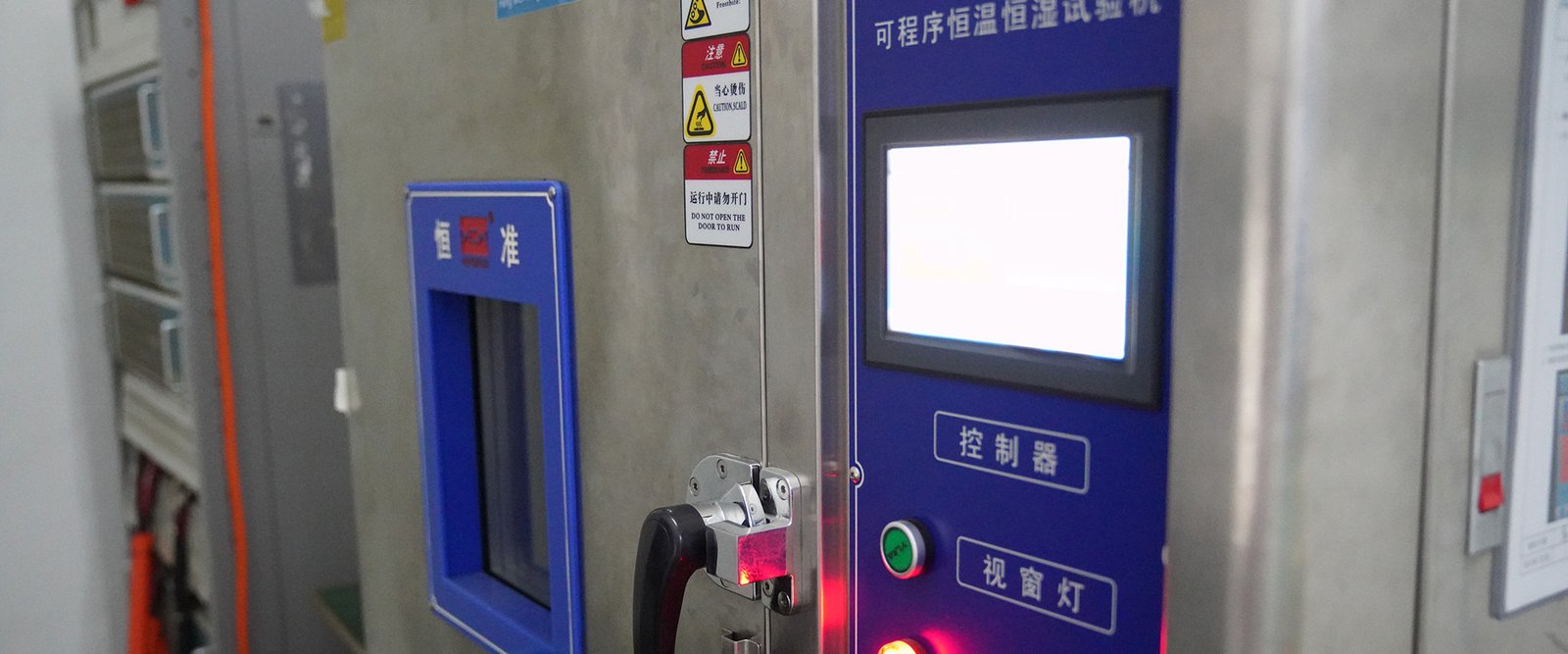
The 2021 edition’s clarifications give buyers a concrete list of documents to demand. Reports from laboratories accredited under ILAC mutual-recognition arrangements carry acceptance across markets, which shortens the discussion when a notified body or market-surveillance authority asks for the file.
| Evidence | What it proves | Notes for the buyer |
|---|---|---|
| High-temperature operation test report at the luminaire’s declared ambient | The pack survives and performs in the conditions the luminaire is tested in | Match the test temperature and duration to the luminaire’s declared range, not to a generic value |
| Duration (autonomy) test at the rated duration and end-of-discharge voltage | The pack delivers the specified emergency run time on a fresh unit | Ask for the discharge curve and the ambient it was run at |
| Standby endurance / float-charge aging evidence | The pack still meets duration after years of continuous standby | Accelerated or extrapolated data should state the basis; no substitute for the luminaire maker’s own field data |
| Cell safety report (IEC 62133-2 or IEC 62619) | The cells meet the safety standard for the pack’s classification | Check the report names the cell model actually used in production |
| Accredited-lab documentation (ILAC member accreditation) | Test results are recognised across markets | Verify the lab’s accreditation scope covers the test methods used |
Compliance evidence is only one layer; the broader document set a pack supplier should provide – UN 38.3 summaries, declarations, shipping papers – is covered in our lithium battery certifications guide.
If you are specifying the battery for a new emergency luminaire and want the requirement and evidence list reviewed against IEC 60598-2-22 before the type-test plan is frozen, contact our engineering team with the luminaire’s rated duration and declared ambient range.