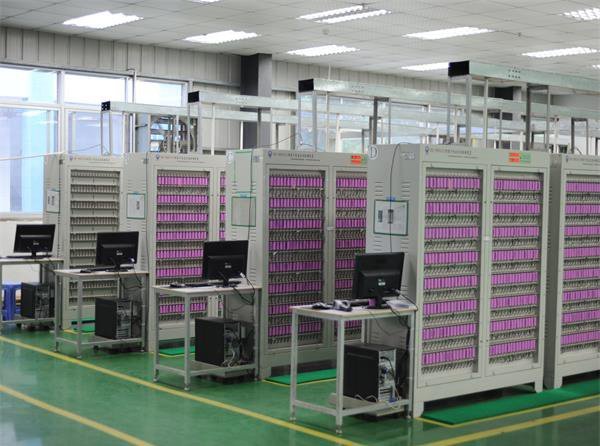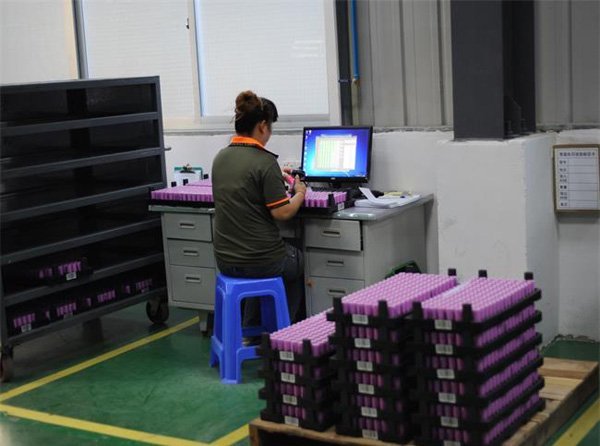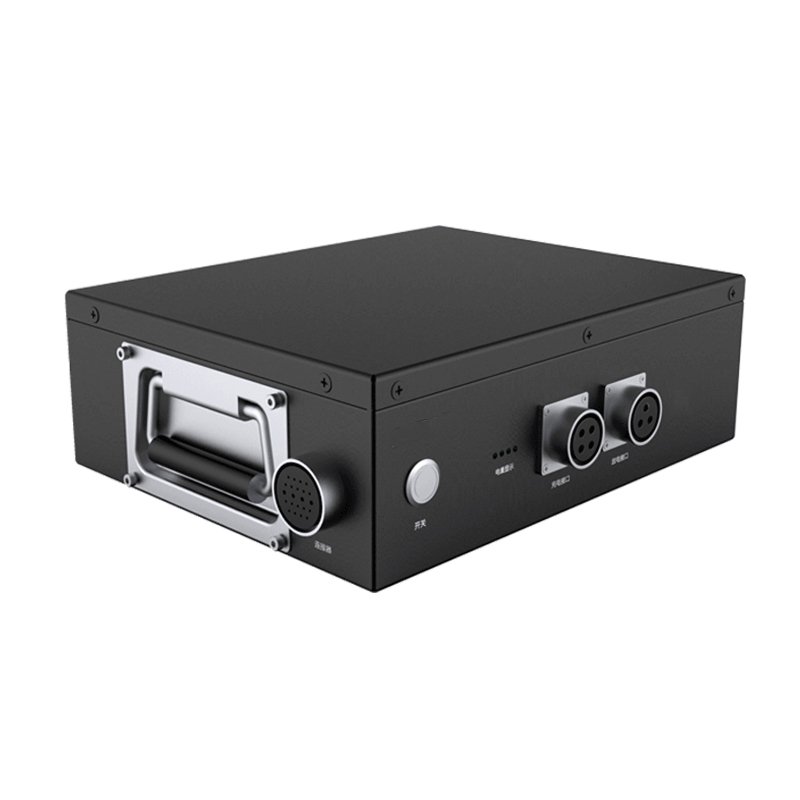
Lithium battery packs do not expire the way primary cells do, but they are not frozen in time either. From the day a pack leaves the factory, self-discharge, the BMS’s own standby drain, and calendar aging pull it toward a state where it fails your incoming checks or, worse, has been damaged by deep discharge while sitting on a shelf. How long a pack can wait depends on its storage state of charge, the temperature of the storeroom, and whether the BMS keeps drawing current with nobody watching. This article gives supply chain and quality teams a working framework: what happens to packs in storage, what conditions to hold, how long to wait between checks, and what to verify before a stored pack is released to production.
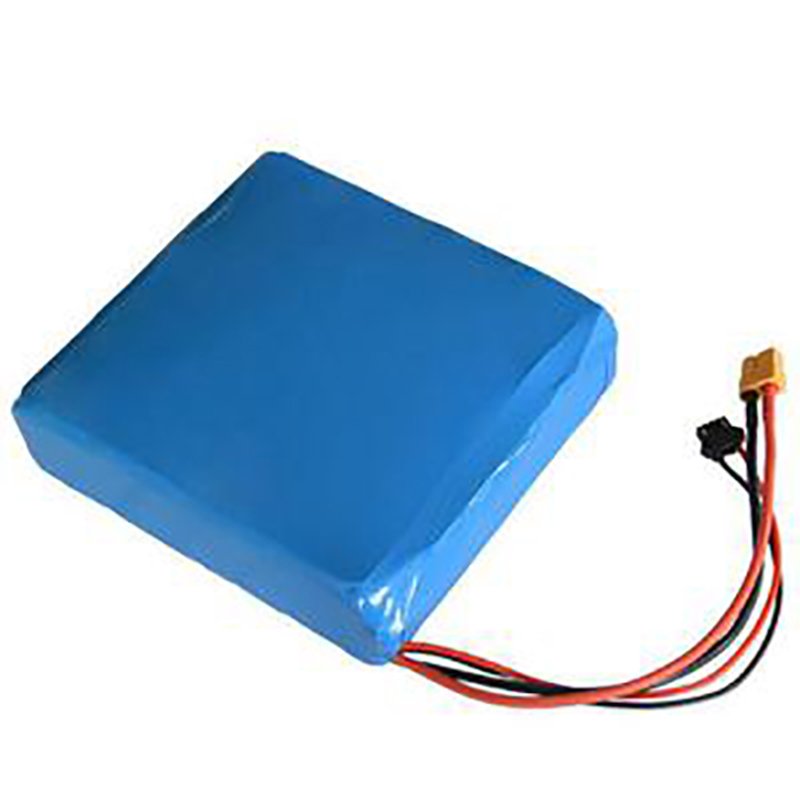
What happens to a pack in storage
Three processes run in parallel, at very different speeds:
- Self-discharge. Cells lose charge through internal side reactions — typically a few percent per month for healthy Li-ion cells at room temperature, faster when warm. The rate itself is a health indicator: a cell with an internal micro-short self-discharges visibly faster than its siblings, which is why the comparative check in incoming inspection matters.
- Standby drain from the BMS. A pack with active electronics keeps consuming current in storage — microcontroller sleep current, gas-gauge sampling, protection circuit leakage. Individually tiny, this drain runs continuously for months, and unlike cell self-discharge it does not slow down as the pack empties. Packs stored with the BMS powered and no recharge schedule are the classic candidates for deep-discharge lockout.
- Calendar aging. Independently of use, the cell’s internal interface grows and consumes cyclable lithium, and its high-rate capability decays. A recent peer-reviewed study following cells through a decade of calendar aging showed severe attenuation of high-rate performance after long storage, confirming that time alone — heat and time, specifically — degrades cells even with no cycling at all.
The first two processes determine whether a stored pack still turns on; the third determines how much of its original capacity and power is left when it does. A storage policy has to manage both.
Storage conditions that actually matter
| Parameter | Typical practice | Rationale |
|---|---|---|
| Storage state of charge | Approximately 30–50% SOC for storage beyond a few months; not stored at full charge | Calendar aging accelerates at high SOC and high temperature; a partially charged pack also has headroom before over-discharge |
| Temperature | Cool and stable, roughly 10–25 °C; avoid sustained storage above 30 °C and avoid freezing in a discharged state | Every rule of thumb in battery aging points the same way: heat shortens storage life steeply |
| Humidity / environment | Dry, non-condensing; packs protected from conductive dust and floor contact | Connector corrosion and creepage paths cause failures that look like electronics faults at first power-up |
| Check interval | Open-circuit voltage check every 3–6 months; recharge toward storage SOC when pack voltage approaches the manufacturer’s storage minimum | Catches both fast self-dischargers and cumulative BMS drain before the protection circuit locks the pack out |
| Rotation | First-in-first-out by date code, with a visible received-date label | Prevents the “oldest packs ship to the most demanding customer” failure mode |
| Records | Log date code, storage SOC at receipt, and each voltage reading with the date taken | A voltage trend is the only cheap early warning of an abnormal cell |
One transport-related note belongs here because it shapes what you find at receipt: standalone lithium-ion cells shipped by air are regulated to a reduced state of charge — the IATA Dangerous Goods Rules cap it at 30% of rated capacity for UN 3480 shipments — so freshly received cells and packs often arrive low, not full. Plan the first charge and the storage-SOC top-up accordingly, and see our explanation of UN 38.3 transport testing for the surrounding framework.
Storage-related failure modes and disposition
| Failure mode | How it presents | Typical disposition |
|---|---|---|
| Deep discharge to BMS lockout | Pack voltage below the protection threshold; no response to charger; balance leads read uneven low values | Quarantine — recovery charging is supplier-level work with fire-watch precautions; do not force-charge on the production floor |
| Abnormal self-discharge (internal micro-short) | One cell or pack drops voltage visibly faster than its date-code peers between checks | Reject; escalate to supplier with the voltage-vs-time record; never ship regardless of remaining capacity |
| Cell imbalance after storage | Pack charges to reduced capacity or trips over-voltage protection early on some groups | Supplier-level rebalancing or reject depending on imbalance magnitude and pack value |
| Connector / busbar corrosion | Raised contact resistance, intermittent operation, local heating under load | Clean and retest if superficial; reject if corrosion reaches the plating or inside the connector |
| Swelling (pouch cells) | Visible pouch distension, pack no longer flat, enclosure stress marks | Reject immediately; store in a fire-safe location pending disposal through the supplier’s process |
| Calendar-aged capacity shortfall | Pack passes voltage checks but delivers noticeably reduced runtime or sags under load | Catch with pre-deployment capacity testing, not voltage checks — this is why the verification table below exists |
Pre-deployment verification for stored packs
Voltage alone cannot clear a pack for production use after long storage: it says nothing about capacity, internal resistance, or whether the BMS still reports and protects correctly. The battery performance standard IEC 61960-3 defines the capacity and charge-retention test framework for prismatic and cylindrical lithium cells, and while most storerooms cannot run the full standard, a scaled-down version of the same logic catches nearly all practical problems.
| Step | Method | What it detects | Example acceptance approach |
|---|---|---|---|
| Visual and connector check | Inspect for swelling, corrosion, damaged leads; verify date code against records | Physical storage damage; record mix-ups | No swelling; connectors clean and undamaged |
| Open-circuit voltage | Measure pack and (where accessible) cell-group voltages; compare with the storage log trend | Abnormal self-discharge; over-discharge drift | Voltage consistent with log trend and above storage minimum |
| Full charge under observation | Charge with the designated charger while observing temperature and charge termination | Protection circuit function; premature termination from imbalance | Normal charge profile and termination; case temperature within specification |
| Capacity recovery test | Standard discharge at the datasheet current after the full charge; compare against rated capacity | Calendar-aging shortfall; internal resistance growth | Delivered capacity within the agreed band of rated capacity (e.g., ≥ 90–95% for packs stored within their design window) |
| Internal resistance / load test | Measure impedance or apply a defined load step and record voltage sag | Power capability loss that capacity numbers hide | Sag and impedance within the supplier’s stated limits |
| BMS reporting check | Read SOC, SOH, and protection flags over the pack’s communication interface | Stale capacity estimates; corrupted gauge data | Reported values coherent with measured behavior |
For packs that were stored well but still show reduced capacity after the recovery test, one full charge-discharge cycle sometimes restores usable capacity as the cell interfaces re-stabilize — this is the “recovery” behavior that standards-based capacity testing accounts for. But recovery has limits; a pack that needs multiple cycles to approach its rating has aged, and the shortfall belongs in the supplier conversation, not in production. For the acceptance-testing context around first articles and incoming lots, see our guide to battery pack incoming inspection, and for the capacity side of datasheet claims, our article on cycle life verification. Independent testing references such as Sandia National Laboratories’ energy storage test publications are useful when you need to formalize the capacity-verification method for a quality procedure.
Setting a shelf-life policy you can defend
A defensible policy has three numbers in it, each traceable to something you can measure:
- A maximum storage interval before a voltage check — driven by your worst-case self-discharge plus BMS drain versus the distance between the storage SOC and the protection threshold.
- A maximum total storage time before mandatory capacity verification — driven by calendar aging at your storeroom temperature, and shortened sharply for packs stored warm.
- A hard rejection trigger — any pack that shows abnormal self-discharge trend, swelling, or failure to recover capacity within the agreed band.
Frequently asked questions
Should I store packs fully charged so they are ready to ship?
No. Full-charge storage accelerates calendar aging, and a full pack that slowly self-discharges through a BMS loses its headroom faster in absolute terms. Store at the manufacturer’s recommended storage SOC, top up on schedule, and run the pre-deployment verification sequence before the pack ships — readiness comes from the verification record, not from the charge level on the shelf.
Can a deeply discharged pack be recovered by pushing current into it?
Do not attempt it on the production floor. A pack below its protection threshold may have copper dissolution or internal damage that forced charging can turn into a safety event. Recovery, where the supplier judges it worthwhile, happens under controlled conditions with monitoring and fire precautions, and the disposition should be documented either way.
Suppliers who store finished packs before shipping should be able to state their own storage SOC, storeroom conditions, and pre-shipment voltage records. If your supplier cannot produce a storage log, that is itself a finding. When storage discipline and supplier transparency both hold, “shelf life” stops being a vague worry and becomes an inventory parameter like any other. If you need packs specified with storage-friendly BMS settings — low standby drain, storage mode, or scheduled top-up requirements — start from our turnkey battery pack solutions page or contact us with your expected storage profile.