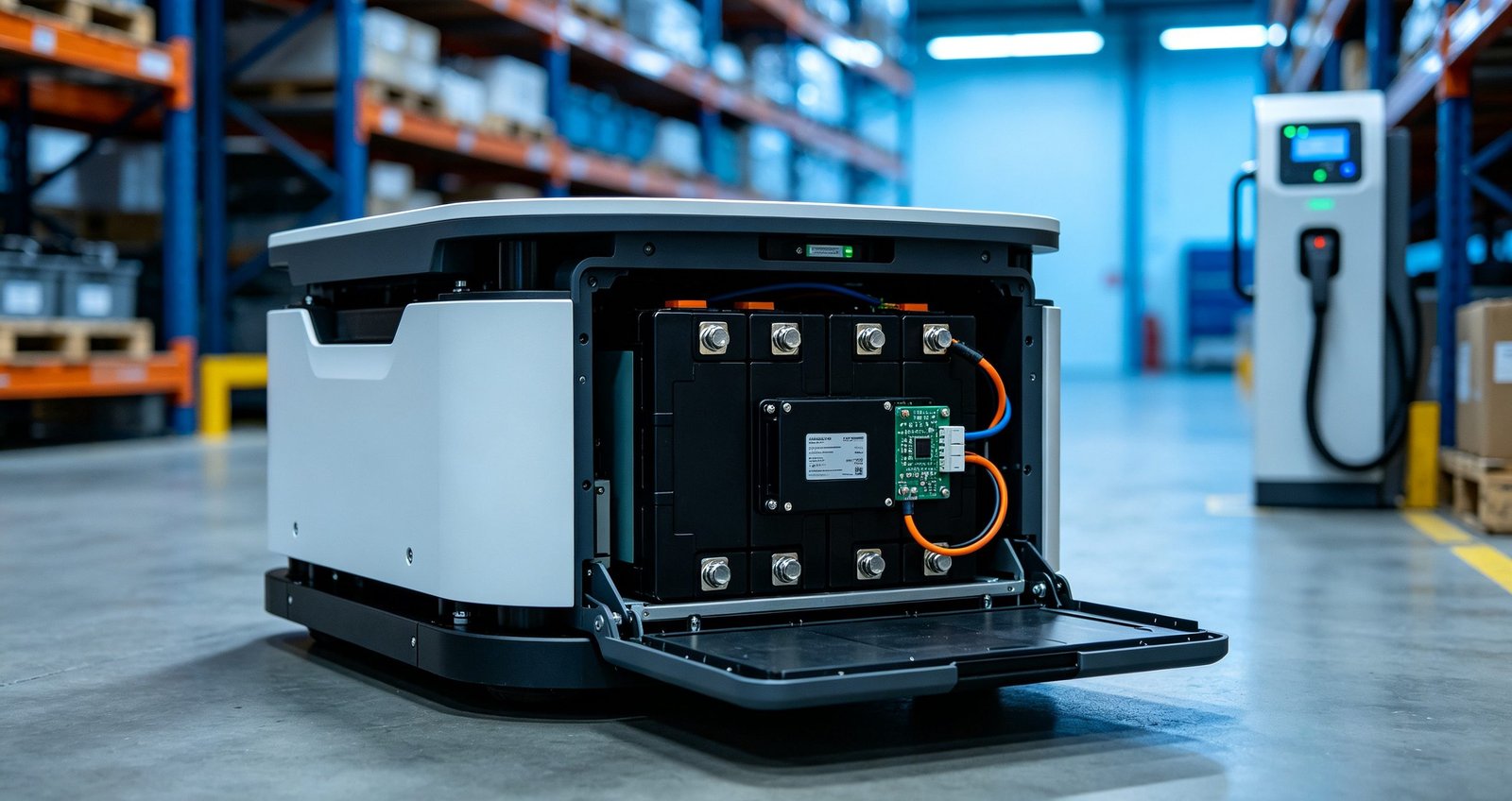
An enclosure decision is where most of the practical risk in a custom lithium battery pack gets locked in. The cells, the BMS and the charger can all be correct on paper and the pack can still fail in the field because the housing cannot do three jobs at once: keep the environment out, let the heat out, and keep the assembly serviceable when something needs inspection or replacement. Every one of those jobs pushes the design in a different direction, and the compromise you land on should be a deliberate engineering choice rather than whatever the mechanical team had room for. This article walks through the trade-offs a design engineer needs to settle before releasing the pack drawing, and what to write into the specification so the manufacturer can quote and build to it.
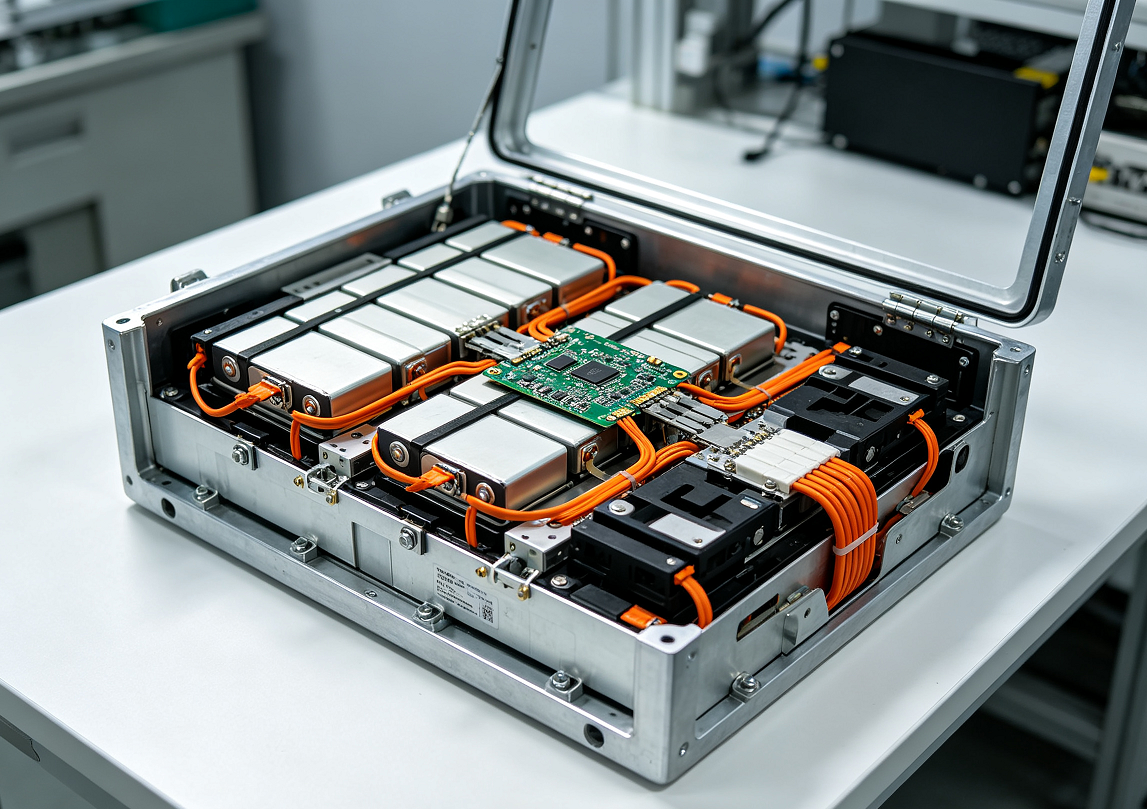
Four jobs the enclosure has to do at once
It helps to separate the enclosure’s responsibilities before comparing options, because most design arguments are really about which of these four is dominant for a given product.
Mechanical protection. The enclosure carries handling loads, mounting loads and, in mobile equipment, vibration. A pack that lives inside a rugged host cavity may need little more than a rigid frame, while a pack mounted on the outside of a machine needs impact resistance and fixation points designed for real service loads.
Environmental protection. Dust, water, humidity and condensation are the classic enemies. A sealed housing with a gasket solves ingress but creates the thermal problems described below, and gaskets age: compression set, UV exposure and repeated thermal cycling all reduce sealing performance over years of service.
Thermal management. Cells age faster and deliver less usable energy when they run hot, so the enclosure is usually the largest thermal resistance between the cells and the outside world. Sealing and heat rejection are in direct conflict, which is why this article treats the combination rather than each topic separately.
Serviceability. Cells wear out and connectors wear out while housings do not. A design that allows the pack to be opened, inspected and rebuilt keeps the host equipment alive for longer, but every opening, fastener and cable gland is a potential leak path.
| Application | Dominant constraint | Typical enclosure direction |
|---|---|---|
| Industrial equipment, shop floor | Dust, washdown, vibration | Gasketed metal or engineering-plastic housing, conduction path to the chassis |
| Medical device, patient-near | Disinfection chemicals, quiet operation, low surface temperature | Sealed plastic housing, heat spreader into the device chassis, no external vents |
| Outdoor energy storage | Sun load, rain, wide temperature range | Large metal enclosure, ventilation or active cooling, serviceable racks |
| AGV / mobile robot | Shock, vibration, opportunity-charging heat | Rigid frame within the chassis, mounting through vibration isolators |
| Portable instrument | Weight, drop, hand-held comfort | Moulded plastic housing, pouch or small cylindrical cells, minimal IP beyond splash |
IP ratings describe a test, not your use case
Ingress protection ratings under IEC 60529 are the standard vocabulary for sealing. The code has two numerals: the first rates protection against solid objects and access to hazardous parts on a scale from 0 to 6, where 6 means dust-tight; the second rates protection against the ingress of liquids on a scale from 0 to 9, with higher numerals meaning more severe test conditions. The rating system is widely used throughout industry because it gives buyers and suppliers a common language.
What the code does not tell you is how the product will behave in your service environment. A rating is a description of the test that was passed, not a warranty about where the product can be used: water that passes a specific immersion test is not the same thing as water under pressure, a solvent washdown or a month of condensation cycles. When you specify an IP rating, therefore, treat it as a floor and add the service conditions explicitly.
| Commonly quoted rating | What it confirms | What to check separately |
|---|---|---|
| IP54 | Dust-protected housing, splash resistance | Gasket material and compression set, drainage of condensation |
| IP65 | Dust-tight, protected against water jets | Heat rejection path, since venting is now closed; connector gland sealing |
| IP67 | Dust-tight, short-duration immersion test | Pressure cycling when temperature changes, which can pump moisture past gaskets |
| “IP68 (custom)” | Continuous immersion under agreed conditions | Ask exactly which depth, duration and test method was agreed, in writing |
One more practical point: the IP rating applies to the enclosure as built, including every hole that was added afterwards. A vent drilled for wiring, a faceplate for the fuel gauge display or a replacement connector with a different gland size can silently drop the real protection level below the rating on the drawing.
Sealing versus heat rejection: the core conflict
A fully sealed housing has no convective path to the outside air, so all the heat generated during charge and discharge must leave by conduction through the housing walls or through a dedicated thermal path. Whether that works depends on the power level, not on intent. At low continuous currents, a sealed plastic housing with a modest surface area can be adequate. As continuous power rises, wall temperatures climb, and the BMS ends up derating the pack to protect the cells — a failure mode that looks like an undersized battery but is actually an undersized thermal design.
The usual engineering responses, roughly in order of increasing complexity:
Conduction path to the host chassis. Mount the pack so its hottest surfaces press against a metal surface of the device, with a thermal interface material in the joint. This is the cheapest effective fix and works well in industrial and medical equipment where a chassis is available.
Internal heat spreader. A metal plate inside the housing that equalises temperature between cells and moves heat toward the housing wall. It also reduces the cell-to-cell gradient, which matters because the hottest cells age fastest and a widening spread shortens pack life; our article on cell consistency, matching and balancing covers that mechanism.
Controlled ventilation. For larger industrial and stationary packs, filtered vents or forced airflow give up some ingress protection in exchange for far better heat rejection. Standards for stationary and industrial lithium systems, such as IEC 62619 for industrial applications, expect thermal behaviour to be demonstrated, not assumed, so the ventilation decision belongs in the specification, not in the shop’s discretion.
Active cooling. Fans, cold plates or liquid loops. Justified mainly in high-power or high-ambient installations where passive paths genuinely cannot keep cell temperatures in the chemistry’s preferred window.
Venting: what the enclosure must never block
Lithium cells carry their own safety vents, which are part of the protection concept described in cell safety standards such as IEC 62133-2. An enclosure that fully encapsulates the cells and blocks those vents converts a cell that was designed to relieve pressure safely into one that cannot. Pack enclosures therefore need a deliberate answer to the question “if a cell vents, where does the gas go?” — typically a vent path away from personnel and sensitive electronics, and in larger installations venting provisions sized with the manufacturer rather than improvised.
The second, quieter venting topic is pressure equalisation. A gasketed, nearly sealed housing breathes with temperature changes and altitude changes; over enough cycles this pumping action moves moisture inward even if the gasket itself is intact. Vent plugs that equalise pressure while shedding liquid are a standard solution on outdoor enclosures, and they belong in the drawing rather than being added by the assembler.
Potting, coating and the repair question
Potting a pack in resin solves several problems at once: it immobilises cells against vibration, seals out moisture and removes the need for a tight gasket. The costs are equally real. Resin adds thermal resistance precisely where the design needs heat to escape, the different thermal expansion of resin, cells and PCB can load solder joints over temperature cycles, and a potted pack cannot be opened — a failed BMS means scrapping the assembly. Conformal coating on the electronics gives a useful middle ground: moisture protection for the board without losing the ability to service the pack.
Serviceability is not only about repair. Replacing cells at end of life, upgrading a BMS firmware, or inspecting a connector that a field report has flagged — all of these need an enclosure that opens. As a rule of thumb, pot packs that are cheap enough to be disposable and hard enough to service that opening them is not worth the labour; keep gasketed or screw-built enclosures for anything a customer will own for years.
| Enclosure approach | Ingress protection tendency | Heat rejection | Serviceability | Relative cost tendency |
|---|---|---|---|---|
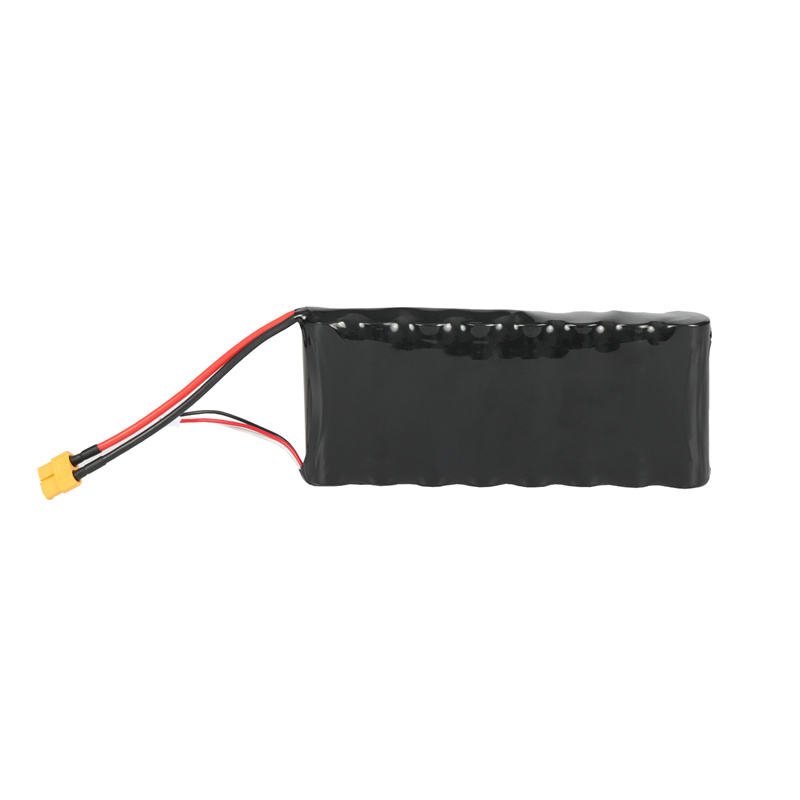
| Shrink wrap over cells | Low; relies on host product | Poor, but low power packs may be adequate | Not repairable; pack is disposable | Lowest |
| Moulded plastic housing, gasket | Good, to IP65–IP67 class designs | Limited by plastic wall conduction | Opens with screws | Low to intermediate |
| Welded metal case | Very good; few joints | Metal walls help conduction to mounting | Poor once welded; plan access before welding | Intermediate |
| Gasketed metal enclosure with vents | Good, depends on vent fittings | Strongest passive option for larger packs | Good; racks and modules accessible | Intermediate to higher |
| Potted assembly | Excellent for the potted volume | Worst; resin is an insulator | None; assembly is disposable | Higher at pack level, may save housing cost |
What to write into the drawing and the RFQ
Enclosure problems show up late and expensively when the specification leaves them implicit. A short list of items that should appear in the pack specification, not in an email thread:
IP rating with the test method named. “IP67 to IEC 60529, tested on the finished assembly including connectors” is a requirement; “waterproof” is not.
Continuous and peak power with ambient temperature. The thermal design cannot be sized without the duty cycle. State the worst case: continuous discharge current, ambient, and whether the pack is mounted against metal or plastic.
Mounting and load definition. Mounting points, expected vibration environment and whether the pack is serviceable in place or removed for service.
Venting expectation. Whether the design should include pressure equalisation, and how a cell vent event is to be handled.
Service policy. Who opens the pack, what they may replace, and what the re-test requirement is after opening.
A structured way to capture these inputs is the custom battery pack RFQ checklist, which lists the engineering information a manufacturer needs in order to quote accurately. For the certification side, the enclosure also affects which standards apply to the finished device, which the certifications guide summarises; the BMS protection functions that interact with the housing (temperature sensing, charge inhibit at low temperature) are covered in the BMS overview. When the thermal and environmental questions are settled, our team can review the housing concept against the pack design before tooling is committed — start through the contact page.
Closing checklist
Before the enclosure drawing is released, confirm in one pass: dominant environmental constraint named; IP rating chosen with test method; thermal path quantified against worst-case continuous power; venting and pressure equalisation decided; service and repair policy agreed; connector glands and any post-assembly holes accounted for. Most enclosure failures in service are traceable to one of those six items being left to assumption, and none of them are expensive to settle on paper.