

Introduction
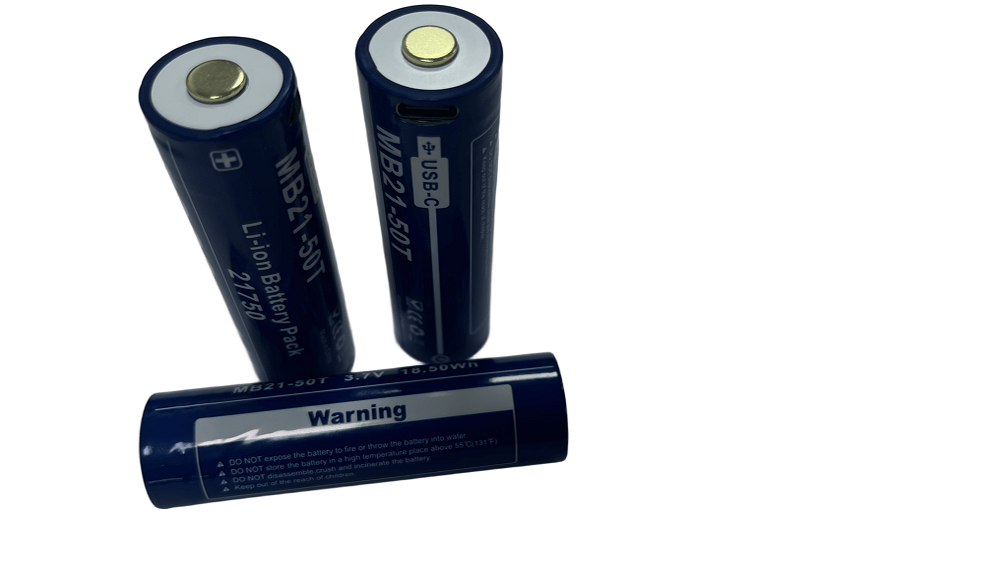
21700 battery has become the preferred cylindrical lithium cell for applications demanding more energy than the 18650 format can deliver. With 21mm diameter and 70mm length, this cell format provides 35–50% greater volume per cell, enabling higher capacity and power output without moving to pouch or prismatic formats. This guide covers the entire model range — from 3,000mAh standard-drain ICR cells to 5,000mAh high-drain INR variants — so OEM engineers and procurement teams can select the right tier for power tools, e-bikes, energy storage, and consumer electronics.
What Is a 21700 Battery
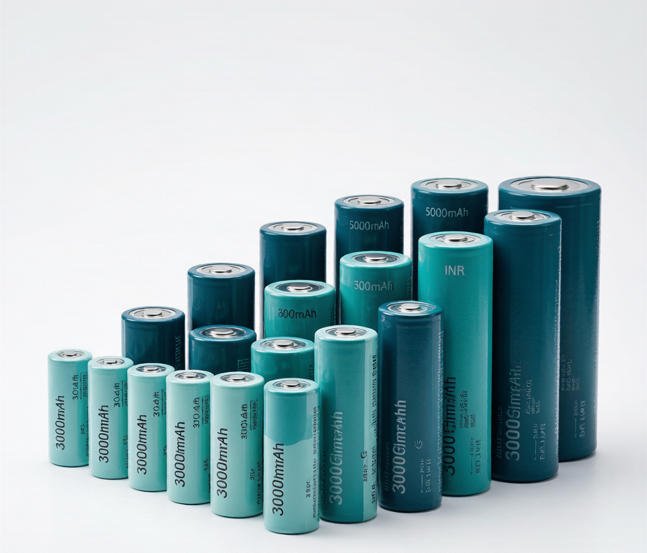
A 21700 battery is a cylindrical lithium-ion cell measuring 21mm in diameter and 70mm in length — larger than the 18650 (18×65mm) format that dominated the market for two decades. The extra 3mm diameter and 5mm length give the 21×70 format approximately 48% more internal volume, which translates to higher energy density per cell. The model range typically includes two chemistry families and five capacity tiers:
| Model | Chemistry | Capacity | Max Continuous Drain | Energy | Weight | Best Use |
| ICR 3000mAh | LiCoO₂ | 3,000 mAh | 2–3A | 11.1 Wh | ~68g | Low-drain consumer, IoT |
| ICR 4000mAh | LiCoO₂ | 4,000 mAh | 3A | 14.8 Wh | ~70g | Backup power, medical |
| ICR 5000mAh | LiCoO₂ | 5,000 mAh | 2–3A | 18.5 Wh | ~72g | Maximum runtime, sensors |
| INR 4000mAh | LiNiMnCoO₂ | 4,000 mAh | 8–10A | 14.8 Wh | ~70g | E-bikes, power tools |
| INR 5000mAh | LiNiMnCoO₂ | 5,000 mAh | 10–15A | 18.5 Wh | ~72g | High-power EV, e-scooter |
ICR (LiCoO₂) standard-drain 21700 battery cells maximize runtime at low current. INR (NMC) high-drain cells trade 5–10% capacity for sustained 8–15A output.
Why Choose the 21700 Battery Over 18650
OEMs switch to the 21×70 format for three measurable advantages:
- Higher energy per cell — A 21700 5000mAh cell stores 18.5Wh versus a 18650 3500mAh cell at 12.95Wh — a 43% increase that reduces pack cell count and assembly cost.
- Better thermal margin — The larger surface area (21mm vs 18mm diameter) dissipates heat faster, critical for high-drain applications where INR 21700 battery cells sustain 10–15A continuously.
- Lower pack cost per watt-hour — Fewer cells means fewer welds, fewer BMS channels, and smaller enclosure volume, cutting total pack cost by 15–25% at equivalent energy output.
Key Factors Before Selecting a 21700 Battery
- Drain profile determines chemistry — Continuous draw ≤3A → ICR standard drain. Sustained draw ≥8A → INR high drain. Brief 5–8A peaks may tolerate ICR 4000mAh.
- Capacity vs. power trade-off — INR 5000mAh delivers both high capacity and high drain but at premium cell cost. ICR 5000mAh maximizes runtime at lower cost but limits drain to 2–3A.
- Pack design implications — 21700 cells require 21mm-diameter tube slots or holders. Confirm your pack enclosure tolerates the larger format versus 18650.
- Protected vs. unprotected — Protected 21700 battery cells add 4–5mm length. For pack configurations with BMS, specify unprotected cells.
- Certifications — UN38.3 (transport), IEC 62133-2 (safety), MSDS, and RoHS are mandatory for international OEM shipments.
- Cell grading — Grade A 21700 battery cells must show ≤5mV voltage matching and ≤5mΩ IR matching per batch to prevent pack imbalance.
21700 Battery Applications by Industry
| Industry | Recommended Model | Typical Device |
| Power Tools | INR 4000–5000mAh | Cordless drills, impact drivers, saws |
| E-Bikes & E-Scooters | INR 4000–5000mAh | Hub motors, throttle controllers |
| Energy Storage | ICR 4000–5000mAh | Residential solar backup, telecom UPS |
| Medical Devices | ICR 3000–4000mAh | Portable monitors, diagnostic equipment |
| Consumer Electronics | ICR 3000–5000mAh | Laptops, high-end flashlights, speakers |
| EV Light Vehicles | INR 5000mAh | Golf carts, forklifts, AGV platforms |
Safety, Certifications & Procurement
All lithium-ion cells shipped internationally must comply with UN38.3 transport testing requirements. For product safety, IEC 62133-2 governs secondary lithium cell and battery standards. Battery University provides independent reference data on 21700 battery performance, charging behavior, and thermal characteristics.
When sourcing the 21700 battery at scale, request cell grading reports with voltage and IR matching data per tier, sample discharge curves at 0.5C and 1C for ICR and 2C for INR, MSDS and RoHS documentation, and shelf-life verification (≤2% annual self-discharge for premium Grade A cells). For OEM orders, confirm lead times per model tier and negotiate warranty terms for batch-level quality guarantees.
FAQ About 21700 Battery
Q: What is the difference between 21700 and 18650?
The 21700 has 21mm diameter and 70mm length versus 18650’s 18mm and 65mm. This gives the format approximately 48% more volume, enabling 35–50% higher capacity per cell.
Q: Which model is best for power tools?
INR 4000mAh and INR 5000mAh models are designed for sustained 8–15A discharge — the standard requirement for cordless power tool applications.
Q: Can I use ICR 5000mAh in a high-drain device?
No. ICR chemistry is rated for 2–3A continuous. Sustained draw above 3A will cause overheating, voltage sag, and permanent cell degradation. Select INR models for high-drain applications.
Q: What is the cycle life of a 21700 battery?
ICR cells at ≤0.5C charge/discharge deliver 800–1,000 cycles at 80% DOD. INR cells at 1C deliver 500–800 cycles depending on drain intensity and thermal management.
Q: Protected or unprotected — which should I specify for OEM pack orders?
Unprotected 21700 battery cells are standard for pack configurations where the BMS handles protection. Protected cells add 4–5mm length and unnecessary redundancy.
Q: What MOQ applies to the full 21700 battery range?
ICR standard tiers: 1,000 units minimum. INR high-drain tiers: 2,000–5,000 units minimum due to tighter grading and safety testing requirements.
Conclusion
The full model range — spanning ICR 3000–5000mAh standard-drain and INR 4000–5000mAh high-drain tiers — delivers more energy per cell than any 18650 equivalent. For OEM buyers and distributors, the decision framework is straightforward: match your device’s drain profile to ICR or INR chemistry, select the capacity tier that meets runtime targets, and source Grade A cells with verified grading data and full certification documentation.
Need a reliable 21700 battery supplier across the full model range? Contact us for cell specifications, OEM branding, and volume pricing for every tier. Our engineering team responds within 24 hours.