
Introduction
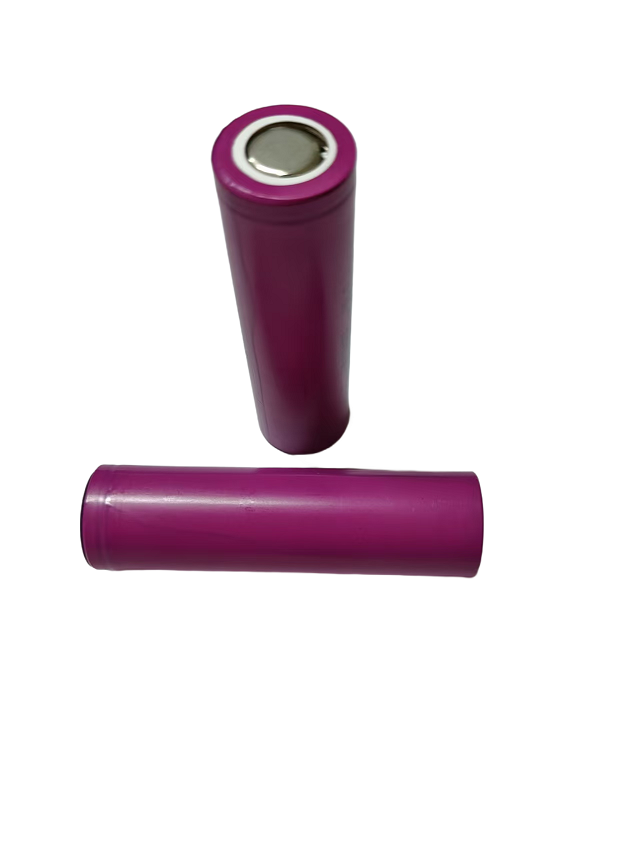
18650 standard drain battery series is the backbone of low-to-medium power applications where long runtime, stable voltage, and cost efficiency matter more than peak discharge current. From 2,000mAh economy cells to 3,500mAh high-capacity ICR variants, this series spans the full range that procurement teams and OEM engineers need for medical devices, IoT sensors, backup power, and consumer electronics. This guide walks through every capacity tier in the 18650 standard drain battery lineup — chemistry, specs, best-fit applications, and sourcing criteria — so you can match the right cell to your product without overspending on unnecessary high-drain performance.
What Is an 18650 Standard Drain Battery?
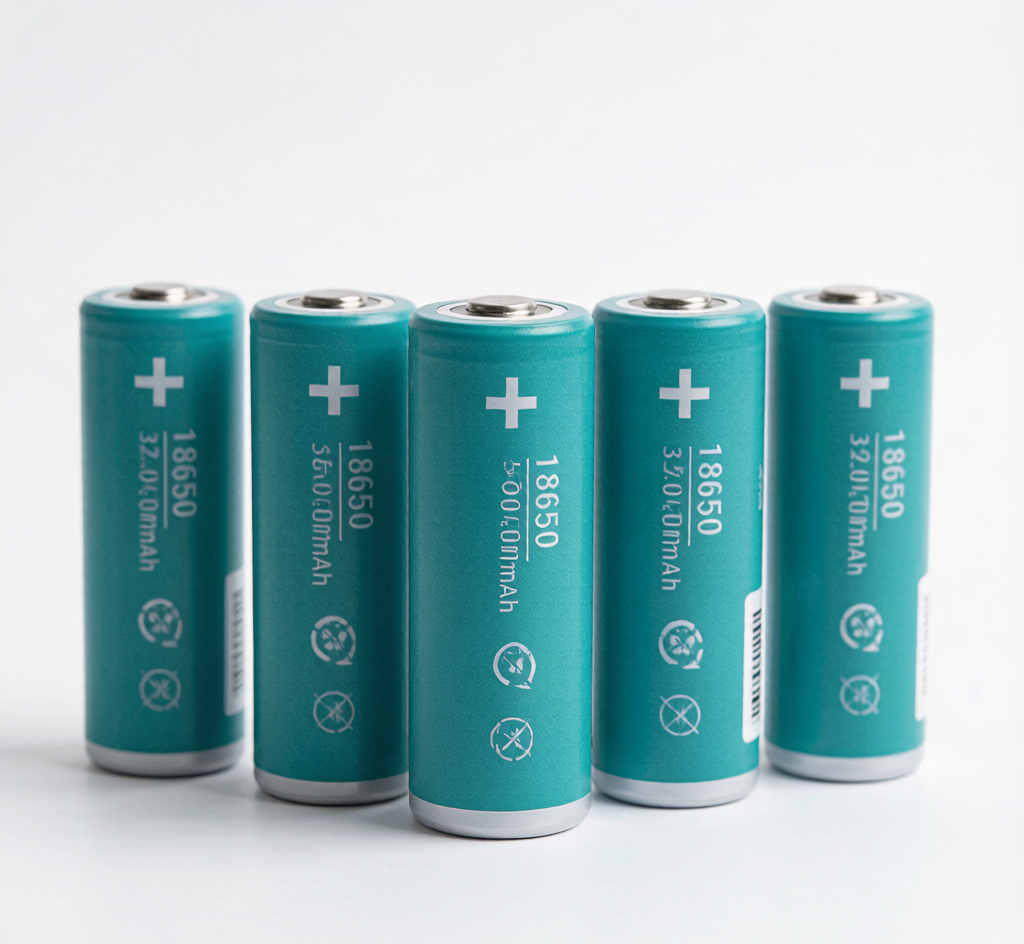
An 18650 standard drain battery uses ICR (lithium cobalt oxide, LiCoO₂) chemistry and is designed for applications where continuous discharge stays below 2–3A. Unlike INR high-drain cells that sacrifice some capacity for 10–30A output, ICR standard-drain cells maximize stored energy per cell and deliver a flat, stable 3.7V output curve. The 18650 standard drain battery series typically covers five capacity tiers:
| Model | Capacity | Max Continuous Drain | Energy | Weight | Best Use |
| ICR 2000mAh | 2,000 mAh | 2A | 7.4 Wh | ~44g | Economy consumer devices |
| ICR 2200mAh | 2,200 mAh | 2A | 8.14 Wh | ~45g | Bluetooth speakers, sensors |
| ICR 2600mAh | 2,600 mAh | 2–3A | 9.62 Wh | ~46g | Medical monitors, IoT |
| ICR 3000mAh | 3,000 mAh | 2–3A | 11.1 Wh | ~47g | Backup power, UPS standby |
| ICR 3500mAh | 3,500 mAh | 2A | 12.95 Wh | ~48g | Maximum runtime, low-drain |
Why Choose the 18650 Standard Drain Battery Series
OEMs and distributors select the 18650 standard drain battery over high-drain alternatives for four practical reasons:
- Maximum runtime per cell — ICR chemistry stores more energy at each capacity tier than INR equivalents, extending device operating time by 5–15%.
- Flat voltage curve — Stable 3.7V output across 80–90% of discharge simplifies power management design and eliminates voltage-sag issues in sensitive circuits.
- Lower cost per watt-hour — Standard-drain cells use less nickel and manganese in the cathode, reducing material cost by 10–20% versus INR at the same capacity.
- Longer cycle life at low drain — ICR cells cycled at ≤2A deliver 800–1,000 cycles at 80% DOD, outperforming INR cells that are typically rated 500–800 cycles under high-load conditions.
Key Factors Before Choosing an 18650 Standard Drain Battery
- Match drain profile to cell tier — If your device draws ≤2A, any tier works. For 2–3A peaks, select ICR 2600mAh or ICR 3000mAh which have higher discharge tolerance.
- Capacity vs. cost trade-off — ICR 2000mAh offers the lowest unit price; ICR 3500mAh delivers maximum runtime. Calculate total pack energy needs and compare per-cell cost.
- Cycle life vs. service life — At 0.5C charge/discharge, ICR cells deliver 800–1,000 cycles. Define your product’s expected years of service and match accordingly.
- Protected vs. unprotected — Protected cells add a PCB cap (+4–5mm length) for standalone consumer safety. Unprotected cells suit pack configurations where a BMS handles protection.
- Certifications — UN38.3 (transport), IEC 62133-2 (safety), MSDS, and RoHS are required for international shipping and retail compliance.
- Cell grading — Insist on Grade A cells with ≤5mV voltage matching and ≤5mΩ IR matching per batch to prevent pack imbalance and premature failure.
18650 Standard Drain Battery Applications by Industry
| Industry | Recommended Tier | Typical Device |
| Medical & Healthcare | ICR 2600–3000mAh | Portable monitors, glucose meters, diagnostic tools |
| IoT & Sensors | ICR 2000–2600mAh | Smart sensors, GPS trackers, environmental monitors |
| Consumer Electronics | ICR 2200–3000mAh | Bluetooth speakers, remote controls, portable radios |
| Backup & UPS | ICR 3000–3500mAh | Telecom standby, data center float, emergency lighting |
| Lighting (Low-Drain) | ICR 2600–3500mAh | Reading lights, emergency lamps, ambient lighting |
| Industrial Monitoring | ICR 2600–3000mAh | Process sensors, SCADA backup, handheld testers |
Safety, Certifications & Procurement
All lithium-ion cells shipped internationally must comply with UN38.3 transport testing requirements. For product safety, IEC 62133-2 governs secondary lithium cell and battery standards. Battery University provides independent reference data on ICR cell performance, charging behavior, and cycle life characteristics.
When sourcing the 18650 standard drain battery series at scale, request cell grading reports with voltage and IR matching data per tier, sample discharge curves at 0.5C and 1C rates, MSDS and RoHS documentation, and shelf-life verification (≤2% annual self-discharge for premium cells). For OEM orders, confirm lead times for each 18650 standard drain battery capacity tier and negotiate warranty terms for batch-level quality guarantees.
FAQ About 18650 Standard Drain Battery
Q: What is the difference between standard drain and high drain 18650 cells?
Standard drain (ICR) cells max out at 2–3A continuous discharge and prioritize capacity and cycle life. High drain (INR) cells support 5–30A continuous discharge but sacrifice 5–15% capacity.
Q: Can I use a standard drain cell in a device that occasionally peaks at 5A?
Brief peaks (<30 seconds) at 5A are tolerable for ICR 2600–3000mAh cells, but sustained 5A draw will cause overheating and permanent damage. Use INR cells for sustained high-drain applications.
Q: Which tier in the 18650 standard drain battery series is most popular for OEM orders?
ICR 2600mAh and ICR 3000mAh are the two most requested tiers — they balance cost, runtime, and moderate discharge capability (2–3A) for the broadest range of low-to-medium power devices.
Q: What is the shelf life of ICR standard drain cells?
Premium Grade A ICR cells maintain ≤2% annual self-discharge, yielding 8–10 years shelf life at 3.7–3.8V storage voltage in a dry, temperature-stable environment.
Q: Protected or unprotected — which should I specify for OEM pack orders?
Unprotected cells are standard for pack configurations where the BMS provides overcharge, over-discharge, and short-circuit protection. Protected cells add unnecessary redundancy and 4–5mm length.
Q: What MOQ applies to the full series?
Standard tiers (2000–3000mAh): 1,000 units minimum. ICR 3500mAh: 2,000–5,000 units minimum due to tighter cell grading requirements.
Conclusion
The 18650 standard drain battery series offers a complete capacity ladder — from 2,000mAh economy cells to 3,500mAh maximum-runtime ICR variants — that covers every low-to-medium power application. For OEM buyers and distributors, the key is matching drain profile, runtime targets, and cost constraints to the right tier, then sourcing Grade A cells with verified grading data and full certification documentation.
Need a reliable 18650 standard drain battery supplier across the full series? Contact us for cell specifications, OEM branding, and volume pricing for every capacity tier. Our engineering team responds within 24 hours.