
Introduction
Medical battery selection is one of the most consequential decisions OEM engineers face when designing portable healthcare equipment. Unlike consumer electronics, where a failed battery simply frustrates a user, a healthcare cell failure in a patient monitor, infusion pump, or defibrillator can directly compromise patient safety. This guide walks through every chemistry option — ICR, INR, LiFePO4, and LiPo — that powers portable medical devices, along with the certification framework (IEC 62133-2, UN38.3, ISO 13485) and procurement criteria that OEM buyers must verify before committing to a certified supplier.
What Is a Medical Battery
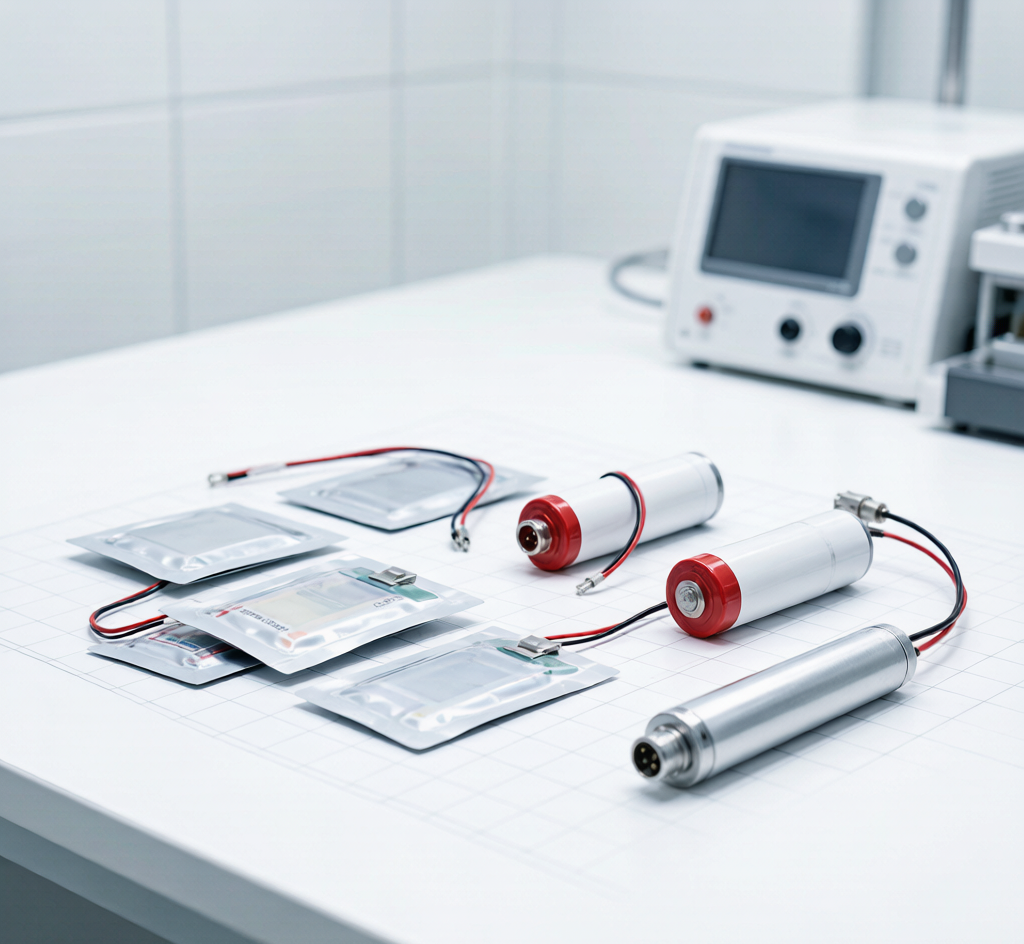
A medical battery is a lithium-based cell or pack specifically designed, tested, and certified for use in healthcare equipment where reliability, safety, and regulatory compliance are non-negotiable. Unlike generic consumer cells, a medical battery must satisfy three additional requirements:
- Predictable end-of-life behavior — No sudden voltage collapse; graceful capacity fade that device firmware can monitor and alert.
- Regulatory certification — IEC 62133-2 (safety), ISO 13485 (quality management for medical devices), and often FDA 510(k) device-level clearance that references the battery as a critical component.
- Traceability — Batch-level tracking from raw material to finished cell, enabling root-cause analysis if any field failure occurs.
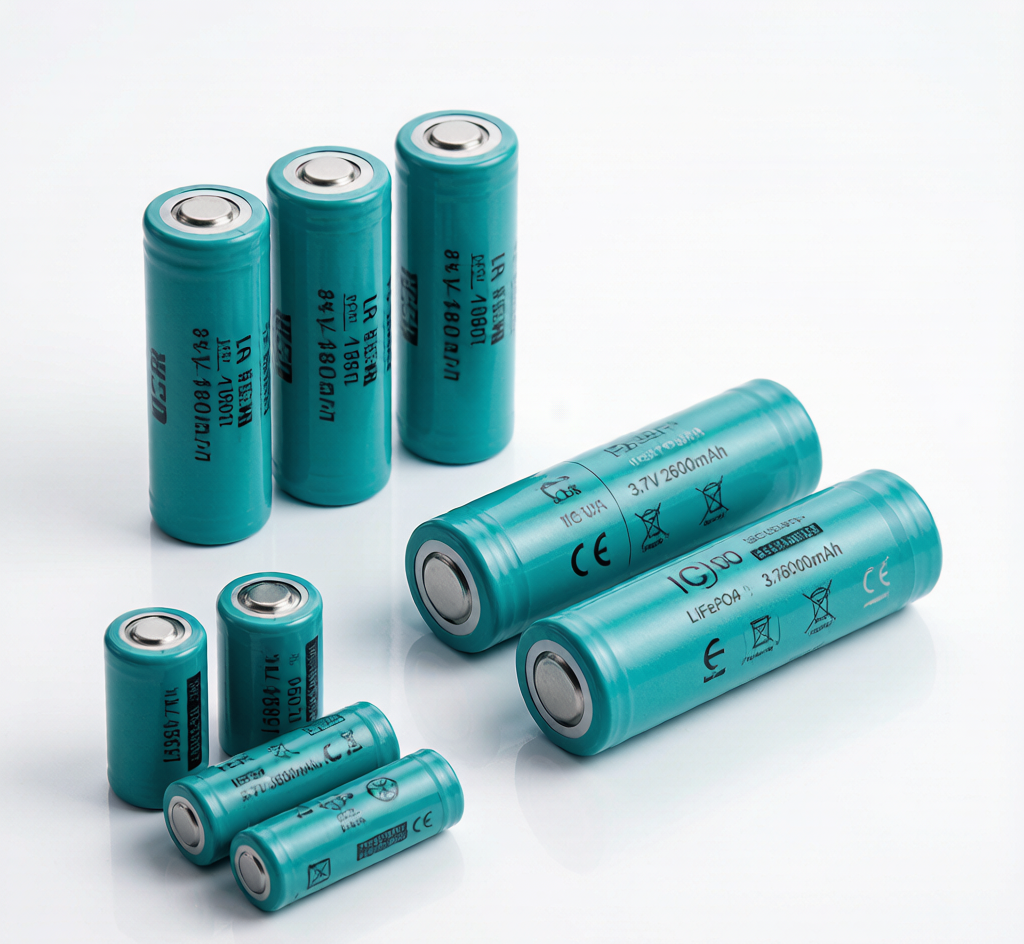
Four chemistry families serve the healthcare power market:
| Chemistry | Cell Format | Capacity Range | Max Drain | Cycle Life | Best Medical Use |
| ICR (LiCoO₂) | 18650 / 21700 | 2,000–5,000mAh | 2–3A | 800–1,000 | Portable monitors, sensors |
| INR (NMC) | 18650 / 21700 | 3,000–5,000mAh | 8–15A | 500–800 | Surgical tools, defibrillators |
| LiFePO4 | 26650 / prismatic | 3,000–20,000mAh | 2–5A | 2,000–3,000 | ICU backup, imaging carts |
| LiPo | Pouch | 100–5,000mAh | 5–20A | 300–500 | Wearables, handheld scanners |
Why Choose the Right Medical Battery Chemistry
Selecting the correct chemistry is not about finding the “best” cell — it is about matching the cell to the device’s operational reality:
- ICR for long runtime, low drain — Portable glucose meters, Bluetooth patient monitors, and environmental sensors draw ≤3A continuously. ICR chemistry delivers the longest runtime per charge and the most predictable discharge curve.
- INR for high-power bursts — Surgical power tools and defibrillators require 8–15A pulses. INR cells handle high drain without voltage sag that could interrupt a procedure.
- LiFePO4 for maximum cycle life in stationary equipment — ICU bedside monitors and mobile imaging carts operate 24/7 with frequent recharge cycles. LiFePO4 delivers 2,000+ cycles, eliminating annual battery replacement cost.
- LiPo for compact, lightweight wearables — Continuous glucose monitors, pulse oximeters, and smart inhalers need thin, lightweight form factors. LiPo pouch cells fit 3–8mm enclosures.
Key Factors Before Selecting a Medical Battery
- Drain profile and duty cycle — Continuous draw ≤3A → ICR or LiFePO4. Burst draw ≥8A → INR. Ultra-compact with moderate draw → LiPo.
- Runtime vs. recharge frequency — Devices that recharge daily (portable monitors) tolerate 800-cycle ICR cells. Devices that recharge 3–4 times daily (ICU equipment) demand LiFePO4 for 2,000+ cycle longevity.
- Regulatory pathway — Confirm whether your device requires IEC 62133-2 only, or also ISO 13485 and FDA listing. The medical battery supplier must provide documentation matching your target market’s regulatory tier.
- End-of-life indication — Device firmware must read cell voltage, IR, and cycle count to predict remaining capacity. Specify cells with consistent fade behavior, not generic consumer grades with unpredictable drop-off.
- Sterilization compatibility — Batteries in surgical tools must survive autoclave or chemical sterilization. Confirm cell housing and vent mechanism integrity after repeated sterilization cycles.
- Batch traceability — Insist on lot-level QR tracking and full material traceability for every medical battery shipment, enabling root-cause investigation for any field incident.
Medical Battery Applications by Device Category
| Device Category | Recommended Chemistry | Typical Battery |
| Portable Patient Monitors | ICR 2600–3500mAh | 18650 × 2–4 series |
| Infusion Pumps | ICR 3000–4000mAh | 18650 × 3 series + BMS |
| Defibrillators | INR 4000–5000mAh | 21700 × 4–6 series |
| Surgical Power Tools | INR 4000mAh | 18650 / 21700 × 3–5 series |
| ICU Bedside Monitors | LiFePO4 26650 | 26650 × 4–8 series |
| Mobile Imaging Carts | LiFePO4 prismatic | Custom pack 24V/48V |
| Wearable CGM / Pulse Ox | LiPo 100–500mAh | Custom pouch |
| Handheld Ultrasound | LiPo 2000–5000mAh | Custom pouch + BMS |
Safety, Certifications & Procurement
All lithium cells for medical applications must comply with UN38.3 transport testing. For medical device safety, IEC 62133-2 governs secondary lithium cell standards. Quality management for medical manufacturing follows ISO 13485. Battery University provides independent reference data on lithium cell performance, safety testing, and degradation behavior relevant to healthcare applications.
When sourcing a medical battery at scale, request IEC 62133-2 test reports per cell model, ISO 13485 quality management certification, batch-level traceability documentation with QR codes, cell grading reports (≤5mV voltage matching, ≤5mΩ IR matching), and sterilization compatibility verification for surgical applications. For OEM orders, negotiate warranty terms that cover full device service life, not just the standard 12-month cell warranty.
FAQ About Medical Battery
Q: What makes a medical battery different from a consumer battery?
A medical battery requires predictable end-of-life behavior, regulatory certification (IEC 62133-2, ISO 13485), full batch traceability, and documented safety testing — none of which are mandatory for consumer-grade cells.
Q: Which chemistry lasts the longest for healthcare devices?
LiFePO4 delivers 2,000–3,000 cycles at 80% DOD, far exceeding ICR (800–1,000) and INR (500–800). For 24/7 ICU equipment that recharges 3–4 times daily, LiFePO4 eliminates annual replacement cost.
Q: Can I use a standard 18650 cell in a Class II medical device?
Only if the cell carries IEC 62133-2 certification and your device’s risk analysis documents the battery as a non-critical component. For most portable monitors and infusion pumps, the battery is classified as critical and requires full medical battery documentation.
Q: How do I verify sterilization compatibility for a medical battery in surgical tools?
Request the supplier’s autoclave and chemical sterilization test data — specifically housing integrity, vent mechanism function, and capacity retention after 50+ sterilization cycles.
Q: What MOQ applies to medical battery orders?
ICR/INR certified cells: 2,000 units minimum. LiFePO4 medical-grade: 1,000 units minimum. Custom LiPo pouch: 5,000 units minimum due to tooling and certification costs.
Q: Does the medical battery supplier need ISO 13485 certification?
Yes, if your device targets FDA or CE medical device clearance. ISO 13485 ensures the battery manufacturing process meets medical quality management standards, which is required for regulatory submissions.
Conclusion
The right medical battery choice — ICR for low-drain portability, INR for high-power surgical tools, LiFePO4 for long-cycle stationary equipment, or LiPo for compact wearables — directly impacts device reliability, patient safety, and regulatory approval timeline. For OEM buyers, the selection framework is clear: match chemistry to drain profile and duty cycle, verify IEC 62133-2 and ISO 13485 certification, demand batch traceability, and source from a manufacturer with documented medical battery experience.
Need a certified medical battery supplier for your next healthcare device? Contact us for cell specifications, regulatory documentation, and OEM volume pricing. Our engineering team responds within 24 hours.