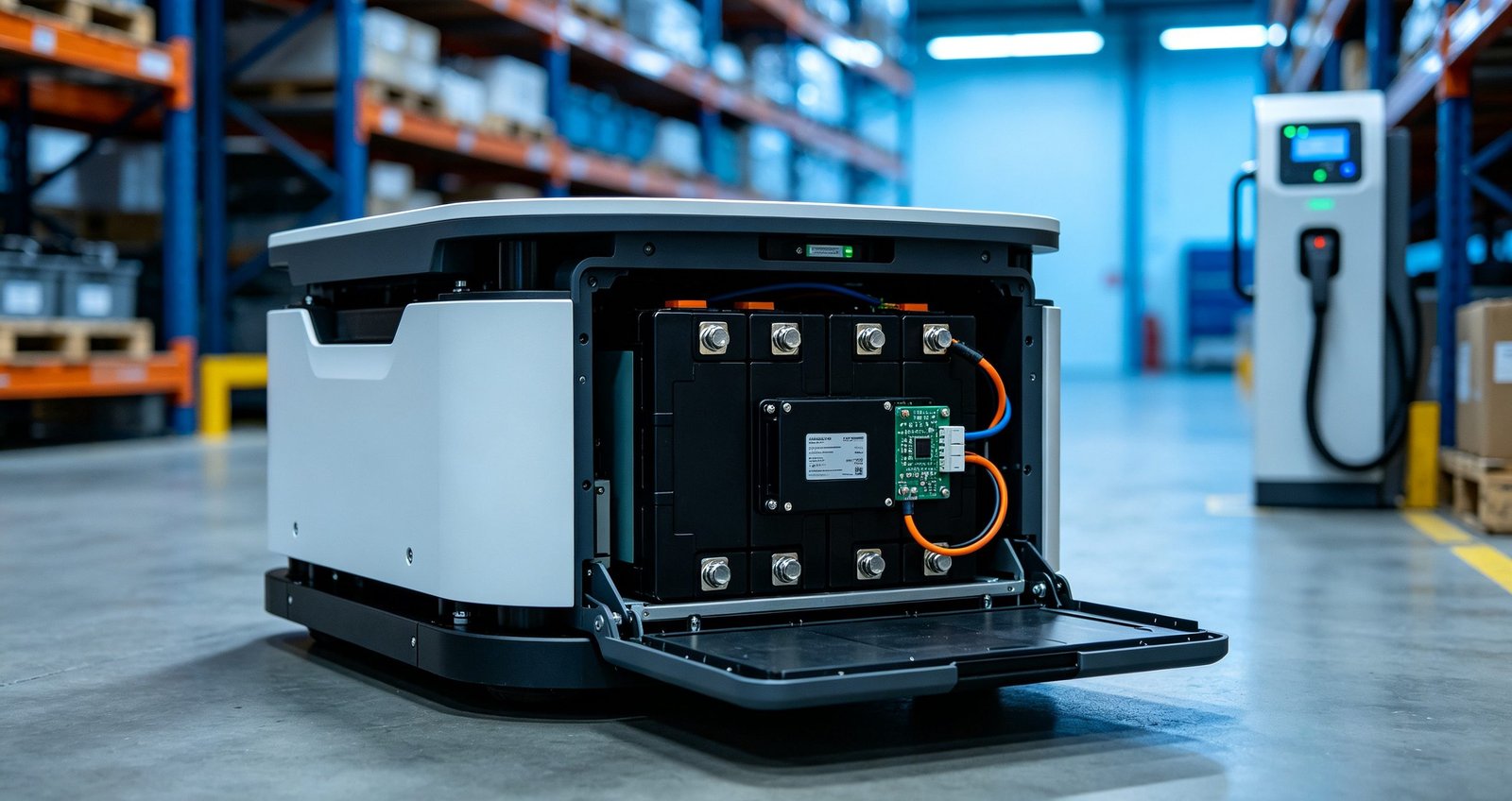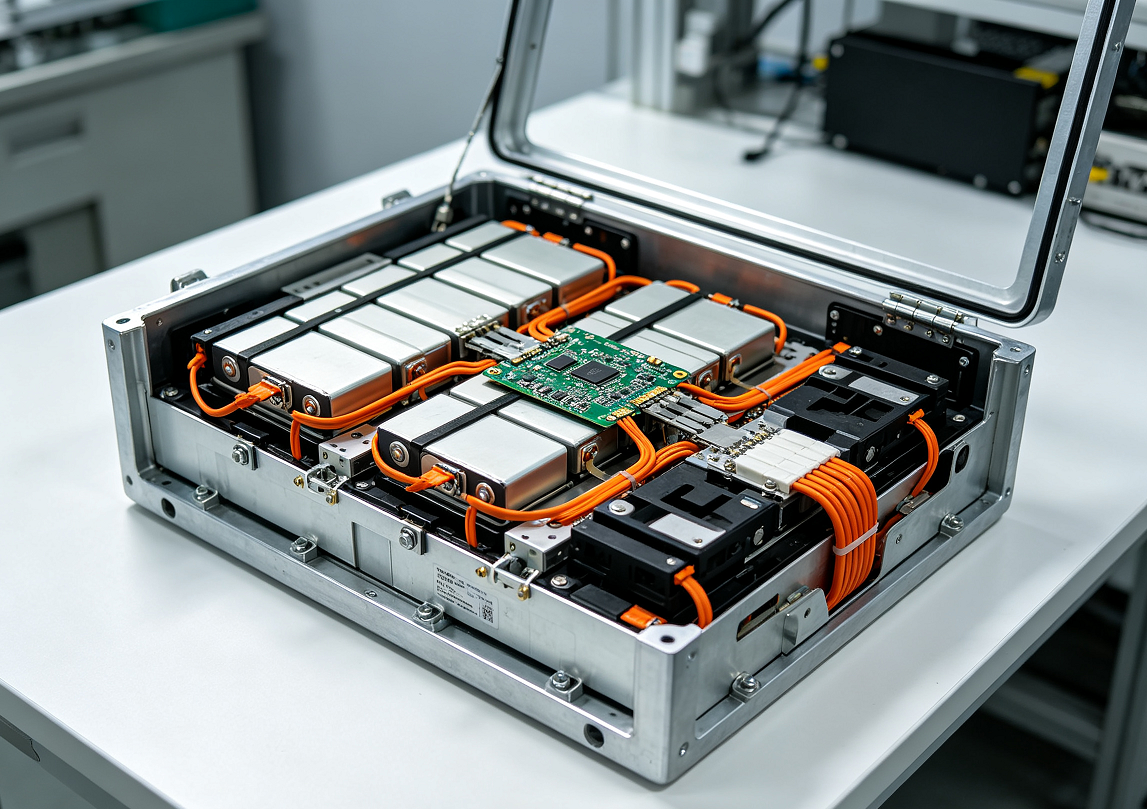
“What does a custom lithium battery pack cost?” is the first question every sourcing team asks and the one no responsible manufacturer can answer from a single number, because the price is determined by engineering decisions that are made before the RFQ is even written. Two packs with the same energy can differ enormously in price once chemistry, BMS complexity, certification scope and enclosure requirements are settled. That is not supplier padding — it is where the money actually goes. This article gives buyers a should-cost framework: the drivers that move a custom pack price, which of them you control, and how to negotiate on the right axis instead of simply asking for a discount off an under-specified quote.
One deliberate omission: this article quotes no unit prices. Pack prices depend on volume, cell market conditions, certification scope and specification detail, so any number printed here would be wrong somewhere. What follows is the cost structure, which does not change.

The cell is most of the cost, and the cell decision is yours
Cell cost dominates a custom pack’s bill of materials, which means the buyer’s chemistry and cell choices carry more pricing leverage than any negotiation later in the process. Four cell-level decisions move the number:
Chemistry. Lithium iron phosphate (LiFePO4) cells typically trade energy density for cycle life and thermal robustness; nickel-rich lithium-ion and lithium polymer cells deliver more energy per kilogram at a different cost position. Choosing a chemistry by duty cycle — how deep and how often the pack cycles — rather than by headline energy avoids paying for capability the application never uses. The NCM versus LiFePO4 comparison on this site walks through that choice.
Format. Cylindrical, prismatic and pouch cells each carry different assembly costs: cylindrical cells need more welding points per watt-hour, pouch cells need more mechanical support inside the enclosure, prismatic cells reduce part count but constrain layout. The format that fits the host product’s geometry with the least supporting structure is usually the economical one.
Capacity headroom. Specifying energy well above what the duty cycle requires buys cost twice — once in cells, and again in the enclosure, thermal path and certification that grow with the pack’s size. A capacity calculation based on measured device consumption beats one based on a competitor’s spec sheet.
Cell brand tier and supply chain. Tier-one cells cost more and bring documented manufacturing consistency, which is worth it in medical, safety-relevant and high-cycle applications; for cost-driven industrial products, second-tier cells with verified incoming inspection may be the rational choice. What matters is that the decision is conscious and that the incoming inspection regime matches the risk — the article on avoiding counterfeit cells in bulk purchasing covers what that inspection needs to catch.
| Cost driver | Why it moves cost | Buyer’s lever | Relative impact |
|---|---|---|---|
| Cell chemistry and grade | Cell cost is the largest BMS-less element of the build | Match chemistry to duty cycle; choose brand tier consciously with inspection matched to risk | High |
| Energy / capacity spec | Cells scale directly, and enclosure, thermal path and certification scale with them | Size from measured device consumption, not competitor claims | High |
| BMS complexity | Protection-only boards are simple; gauges, communication buses and heating add engineering and test | Specify only the functions the device firmware actually consumes | High |
| Enclosure and IP rating | Sealed housings, glands and vent fittings add parts, tooling and test | Set the rating from the real service environment, with the test method named | Medium to high |
| Certification scope | Each standard adds test samples, lab time and often redesign | Confirm which standards the target market actually requires before quoting | Medium |
| Order quantity and repeatability | Setup, tooling and qualification cost amortise across the order | Consolidate variants; forecast honestly; negotiate amortisation explicitly | Medium |
| Assembly processes | Welding, potting and manual operations differ in throughput and yield | Design for the manufacturer’s proven processes rather than exotic joins | Medium |
Where cost lives outside the cells
Buyers who fixate on cell price tend to be surprised by the second tier of the build. Three areas deserve attention during specification.
BMS complexity tiers. A protection-only board (overcharge, over-discharge, over-current, short circuit) is the baseline. Adding a fuel gauge introduces state-of-charge estimation and calibration. Adding a communication bus — CAN or RS485 — introduces protocol work, firmware versions and test cases. Adding pack heating or functional-safety features adds the most, because each function brings its own verification burden. The smart BMS pack description shows how these functions layer, and the engineering question is always the same: which functions does the device’s own firmware use? A pack whose gauge is never read by the host is paying for electronics the product throws away.
| BMS tier | Functions added | What it changes for the project |
|---|---|---|
| Protection only | Charge/discharge protection, over-current, short circuit | Baseline cost; verify trip points and temperatures at incoming inspection |
| + Fuel gauge | SOC estimation, cycle counting | Adds gauge IC, calibration and accuracy verification workload |
| + Communication bus | CAN / RS485 / SMBus reporting | Adds firmware, protocol testing, version control across the product life |
| + Heating / thermal control | Heater element, temperature-based charge gating | Adds wiring, control logic and safety cases for the heater circuit |
Enclosure and environment. As covered in the article on pack design and manufacturing, the enclosure decision couples sealing, heat rejection and serviceability. For cost purposes, the rule is to buy the ingress protection the service environment demands and no more: each step up in sealed-housing class adds gasket engineering, connector glands and test, and each serviceability feature adds fasteners and assembly time. Over-specified housings are one of the quietest ways custom packs become expensive.
Testing and certification. Transport regulations make UN 38.3 testing a fixed requirement for lithium cells and batteries shipped commercially, and product safety standards such as IEC 62133-2 apply to portable applications in many markets. The UN 38.3 explainer and the certifications guide detail which tests apply to which product. For cost planning the important point is timing: certification runs against a specific design, so late design changes re-open test scope. Freezing the design before samples are submitted for lab testing is itself a cost control.
Volume, freight and paperwork
Beyond engineering, three commercial factors shape the landed cost, and all three are negotiable if raised early.
Volume and variant consolidation. Qualification and tooling costs amortise across the order, and they multiply with every pack variant. Consolidating electrically equivalent variants — same cell and BMS, different harness length, for example — is frequently worth more than a unit-price discount.
Freight classification. Lithium batteries ship as dangerous goods, with packaging, labelling and documentation obligations set out by transport authorities; IATA’s lithium battery guidance summarises the air transport requirements. State of charge at shipment, packaging configuration and mode of transport all affect freight cost, and the shipping plan is part of the commercial package, not an afterthought. For the storage market broadly, the technology and deployment context collected by the U.S. Department of Energy’s energy storage programme is a useful neutral reference when sizing a storage product line.
Engineering setup. Custom packs carry one-time engineering: design review, sample builds, fixture making, firmware. Ask for these as explicit line items rather than letting them hide in the unit price. Hidden setup costs become refund disputes when the order is cancelled; explicit ones become amortisation schedules you can negotiate.
Questions that reveal the cost structure before you negotiate
| Question to the supplier | What the answer tells you |
|---|---|
| Which cost line does my enclosure requirement actually drive? | Whether the IP rating is doing real work or inflating the quote |
| What is the price at 10% and 30% volume, and what amortises? | The real setup burden and how much of the quote is fixed cost |
| Which cell was quoted, and what is the second-source policy? | Whether the price is pinned to one cell market and how supply risk is handled |
| What does the certification package cover, and what re-triggers it? | Which design changes would re-open test scope and cost |
| Which BMS functions does my device firmware actually need? | Whether the pack is carrying electronics the product will never use |
Negotiating without eroding the design
Cost pressure applied to the wrong axis produces silent de-scoping: a cheaper cell tier without the incoming inspection to match, a protection board without the accuracy verification the gauge spec assumed, or an enclosure gasket that no longer matches the rating on the drawing. A more productive negotiation moves along the structure above: right-size the capacity from measured consumption, strip BMS functions the firmware does not consume, consolidate variants, and make setup and amortisation explicit. Those levers remove cost the application genuinely does not need, which is why they hold up through production instead of resurfacing as field failures.
When you are ready to put numbers against this framework, send the specification inputs listed in the RFQ checklist — a structured RFQ gets comparable quotes and shows each supplier where your cost sensitivities are. Our team quotes with the cost structure visible, including cell selection options and the certification scope for your target markets; begin through the contact page or review the custom pack manufacturing overview and the turnkey solutions description first. For endurance expectations that belong in the same negotiation — cycle life claims are a cost variable, since warranty terms price them — see the article on verifying cycle life claims.