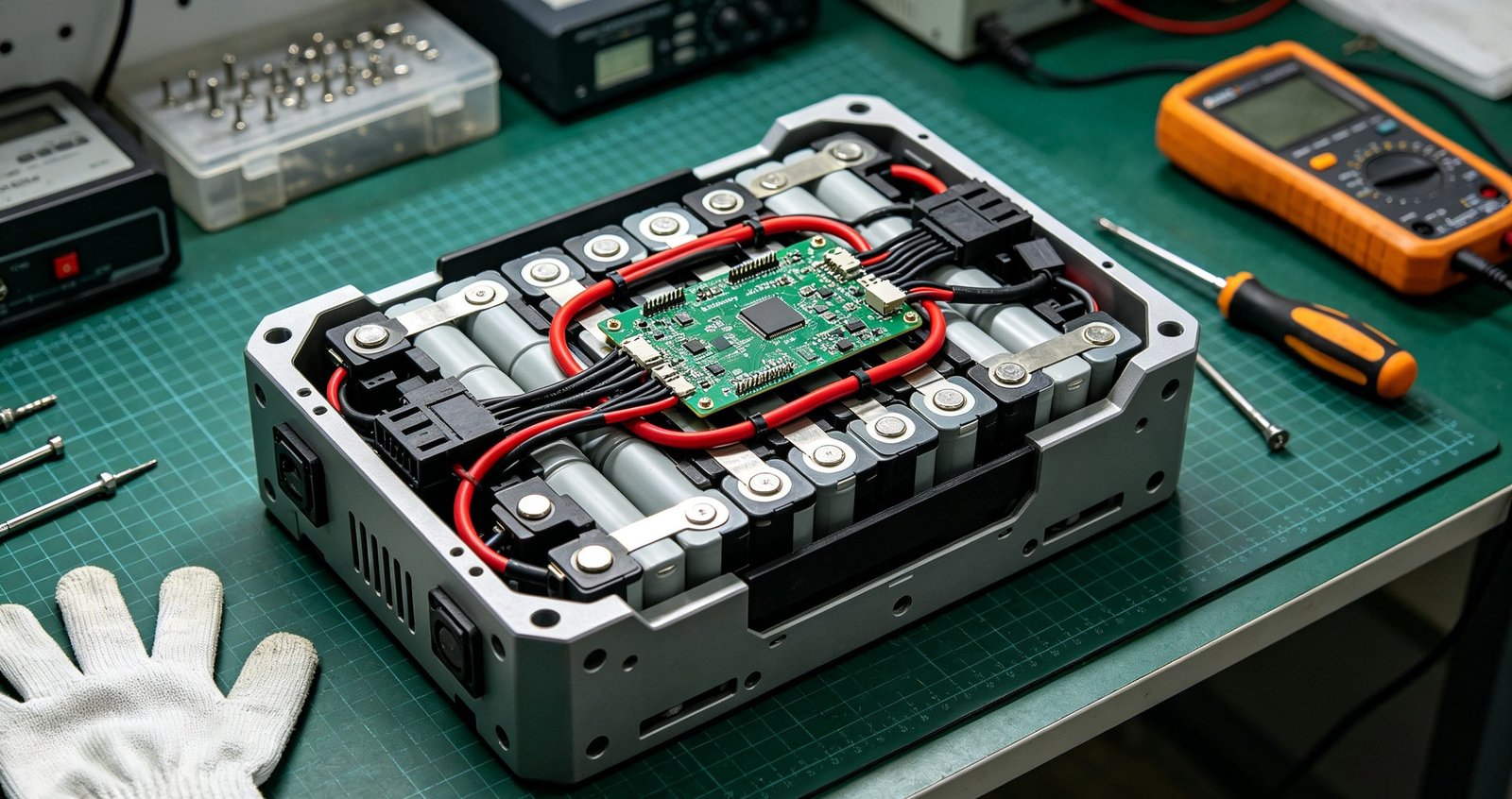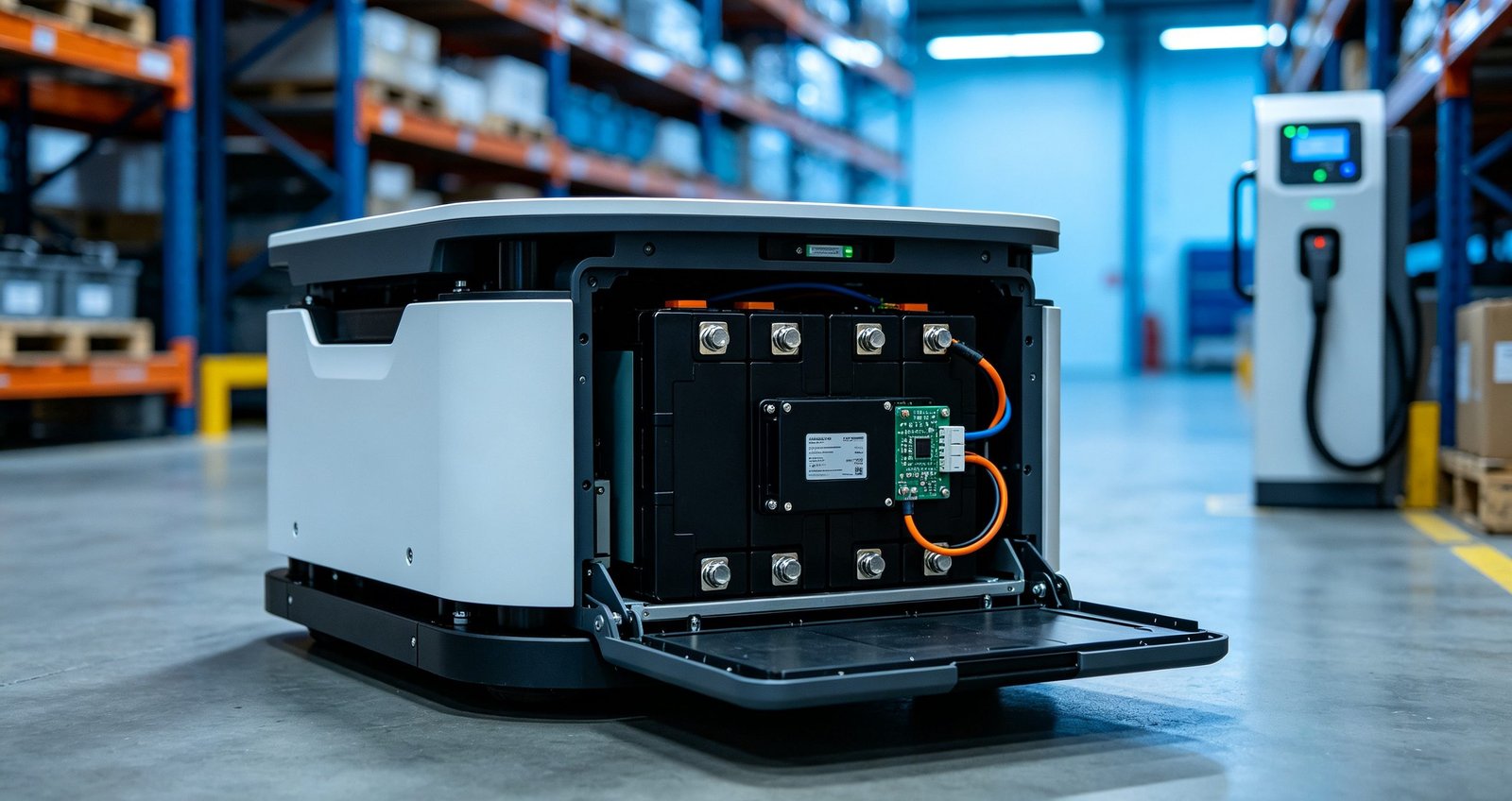
A request for quotation (RFQ) for a custom battery pack is an engineering document, not a purchasing form. When the RFQ only states a voltage and a capacity, suppliers have to guess the rest — peak currents, temperature limits, communication protocols, compliance targets — and the quotes that come back are not comparable. This article lists the twelve inputs an OEM engineering team should supply before asking any battery pack manufacturer to quote, why each one changes the design, and how to structure the package so responses can be compared line by line.
What a battery pack RFQ has to accomplish
Three things. First, it must let the supplier judge feasibility: whether the electrical, mechanical and thermal requirements can be met in the requested envelope with producible cells. Second, it must let two or more suppliers quote the same object, so price differences reflect cost and capability rather than different assumptions. Third, it must expose the requirements that drive compliance cost — safety certification, transport classification, and documentation — early enough that lead times in the quote are real.
Most quoting delays come from four missing items: peak current and its duration, the ambient temperature range during charging, the communication protocol between the battery management system (BMS) and the host device, and the certification targets for the end market. A supplier can propose a cell for a 7.4 V, 5 Ah pack in an afternoon; it cannot commit to a price or a schedule until it knows whether that pack must fast-charge at 15 °C, talk CAN at 500 kbit/s, and carry an IEC 62133-2 test report.
The 12 engineering inputs, grouped by discipline
1. Electrical load profile
Provide average current, peak current with duration, and the duty cycle of both. Peak current determines cell selection (power cells versus energy cells), nickel/busbar cross-section, and BMS overcurrent thresholds. A 2 A average with 12 A, 200 ms pulses leads to a completely different pack than a steady 4 A draw at the same average energy.
2. Voltage window
Nominal voltage, maximum charge voltage, and the device’s low-voltage cutoff. If the device tolerates 6.0–8.4 V, a 2S lithium pack is feasible; if the input range is narrower, the BMS may need to cut off above the cell minimum, which sacrifices usable capacity and should be stated explicitly.
3. Capacity requirement, with conditions
Capacity only means something with a discharge rate, a temperature, and an end-of-discharge voltage attached. “5 Ah” should read “≥ 5 Ah at 0.2C, +25 °C, 2.75 V per cell cut-off, after 50 cycles”. Performance standards such as IEC 61960-3 define how capacity and internal resistance are measured and reported for prismatic and cylindrical lithium cells, so referencing its measurement conditions in the RFQ removes ambiguity without inventing your own test.
4. Chemistry and cell format constraints
State whether the cell model is fixed, restricted to a vendor list, or open to supplier proposal with a rationale. If the application demands high cycle life or thermal stability, say so and let suppliers propose LFP; if energy density at minimum weight governs, say that too. If the pack may not use reclaimed or unbranded cells, put it in writing — the counterfeit cell problem in bulk purchasing is real and the RFQ is the cheapest place to exclude it.
5. BMS functional requirements
Protection thresholds (overcharge, over-discharge, overcurrent, short circuit, temperature), fuel-gauging accuracy, and the host interface: SMBus, CAN, RS-485 or a simple gauge pin. Define which data the device reads (SOC, SOH, cycle count, fault registers) and the protocol timing. A pack that only protects is a different product from one the device interrogates, and the price gap is structural. Our battery management system overview describes the functional blocks you are specifying.
6. Mechanical envelope and mounting
A STEP model of the available cavity, mass limit, mounting points, connector positions and strain-relief expectations. State tolerance-critical dimensions, because a pack that fits the CAD cavity but ignores harness bend radius becomes an assembly-line problem later.
7. Environment and ingress
Operating temperature range for discharge and separately for charge — charging a lithium-ion pack below 0 °C without cell heating causes lithium plating, and most cell datasheets restrict charge temperatures to 0 °C to 45 °C. Add IP rating, vibration and shock profile (with the applicable test standard), and any chemical exposure. Outdoor or washdown equipment changes connector and gasket choices at the quoting stage.
8. Safety and compliance targets
Name the end market and the applicable standards: IEC 62133-2 for portable sealed lithium packs, IEC 62619 for industrial applications such as AGVs and stationary storage, UN 38.3 for transport, and application-level standards your device must meet. Ask which tests the supplier performs in-house versus at a third-party laboratory. If your market requires test reports from accredited laboratories, say so in the RFQ — ILAC-accredited labs issue reports that carry mutual recognition across signatory economies, which matters when the same pack ships to Europe, North America and the Middle East. Our lithium battery certifications guide maps the common certificates to markets.
9. Charging interface and charger strategy
Nominal and maximum charge current, charger location (on-board, dock, bench), connector type, and whether the supplier or you own the charger design. State the target charge time to a defined SOC, with the ambient temperature it must hold at. Charging strategy interacts with cycle life claims, so the supplier cannot quote a warranty without it.
10. Life and reliability expectations
Cycle life with the discharge depth, temperature and rate it applies at; calendar life at the storage temperature; and the warranty structure you expect. A “1,000 cycles” claim without depth-of-discharge and temperature conditions cannot be priced, because the same cells can deliver very different cycle counts at different depths.
11. Quality documentation
List the deliverables per lot and per design change: certificate of conformance, cell sourcing declaration, BMS test records, and the acceptance sampling plan. If your industry expects automotive-style first-article and PPAP-type documentation on design changes, request it now — retrofitting a documentation requirement after SOP is expensive for both sides.
12. Volumes, logistics and supply terms
Annual volume, ramp shape, target unit price at that volume, and delivery terms. State whether packs ship by air: lithium packs are classified dangerous goods and the IATA Dangerous Goods Regulations for lithium batteries impose state-of-charge, packaging and labelling constraints on air shipments that affect packaging design and freight cost. Sea freight changes the equation but adds weeks to lead time.
RFQ input checklist
| Input | What to specify | Common omission |
|---|---|---|
| Load profile | Average and peak current, duration, duty cycle | Peak current stated without duration |
| Voltage window | Nominal, max charge voltage, device cut-off | Only nominal voltage given |
| Capacity | Ah with rate, temperature, end-of-discharge voltage | Bare “5 Ah” with no conditions |
| Chemistry / cells | Fixed model, approved list, or open proposal | No policy on cell sourcing |
| BMS | Protection limits, gauging, protocol and data set | Protocol and register map left undefined |
| Mechanical | STEP envelope, mass limit, connectors, mounting | Envelope without connector positions |
| Environment | Discharge and charge temp ranges, IP, vibration | Charge temperature range missing |
| Compliance | Standards by market, report type required | End market not stated |
| Charging | Current, charger ownership, target charge time | Charger assumed to be supplier’s problem |
| Life | Cycles at defined DOD and temperature; calendar life | Cycle number with no conditions |
| Quality docs | COC, sampling plan, first-article scope | Nothing specified until first delivery |
| Supply terms | Volume, ramp, price target, freight mode | Air freight assumption unstated |
Specifying parameters so quotes are comparable
The fastest way to make quotes comparable is to write every electrical parameter in the same format: value, unit, test condition. The table below shows the format applied to a hypothetical 2S pack — the format is the deliverable, not the values.
| Parameter | Specification format (example) | Note |
|---|---|---|
| Nominal voltage | 7.4 V (2S Li-ion) | Series count drives BMS topology |
| Capacity | ≥ 5.0 Ah at 0.2C, +25 °C, 2.75 V/cell cut-off | Add rate and temperature or the number is undefined |
| Peak discharge | 12 A for 200 ms, duty ≤ 10% | Duration matters as much as amplitude |
| Charge current | Standard 0.5C; fast 1C, +15 °C to +45 °C only | Fast charge window is narrower than discharge window |
| Standby current | BMS quiescent draw ≤ 50 µA at 25 °C | Governs shelf life in the field |
| Insulation | ≥ 20 MΩ at 500 V DC, terminal to case | Standard HIPOT-class line item |
Documentation deliverables to request with the quote
A quotable RFQ also asks the supplier to declare what arrives with the hardware. The minimum set for an OEM program:
| Document | Purpose | When it should exist |
|---|---|---|
| DFMEA and design review record | Shows failure-mode thinking, not just compliance | Design phase, before tooling |
| Cell sourcing declaration | Ties the quote to a real cell, not a placeholder | With the quotation |
| Safety test report (IEC 62133-2 or IEC 62619) | Evidence the design meets the standard named in the RFQ | Before pilot production |
| UN 38.3 test summary | Required for shipping the pack as dangerous goods | Before first shipment |
| First-article inspection report | Dimensional and electrical verification of pilot units | With the pilot lot |
| Lot COC and sampling records | Basis for your incoming inspection | Every production lot |
Where a certificate is the deliverable — quality management or product safety — verify it rather than filing it. Accreditation-body databases such as those operated under the IAF and ILAC arrangements let you confirm that the certificate was issued by an accredited body and is current. The IAF maintains a global certificate validation database, and ILAC publishes the mutual recognition arrangement that makes accredited laboratory reports portable across borders.
Frequently asked questions
How many suppliers should receive a custom pack RFQ?
Two to four is the practical range. Below two there is no price signal; above four the engineering effort of answering technical clarifications dominates. Give every recipient the same input package and a fixed clarification window so the responses stay comparable.
Should the RFQ specify the cell model or leave it to suppliers?
Specify what must be fixed (format constraints, chemistry class, sourcing policy) and leave the model open with a requirement to declare it in the quote. You learn more about a supplier from the cell it proposes and its justification than from a compliance checkbox.
What if we cannot yet fill in all twelve inputs?
Send the RFQ with explicit “to be confirmed” flags rather than silent gaps. A supplier can quote a pack against a declared open point; it cannot quote against an assumption it discovered only after the design was frozen. If the missing information is on the design side, a structured design review with the supplier usually closes the gap in one or two sessions.
From RFQ to a decision
Score the responses on four axes: technical completeness (did the supplier flag real constraints or just agree with everything), evidence quality (test reports, certificates, traceability), compliance fit for your target markets, and commercial terms at your stated volume. A supplier that quotes the pack exactly as specified, attaches its assumptions, and proposes two alternatives with trade-offs is giving you a better signal than the lowest price with a two-week expiry. When you are ready to issue the package, our custom battery pack manufacturing team responds to structured RFQs with a feasibility note and a cell-level cost breakdown, and you can send the input package through the contact page.