
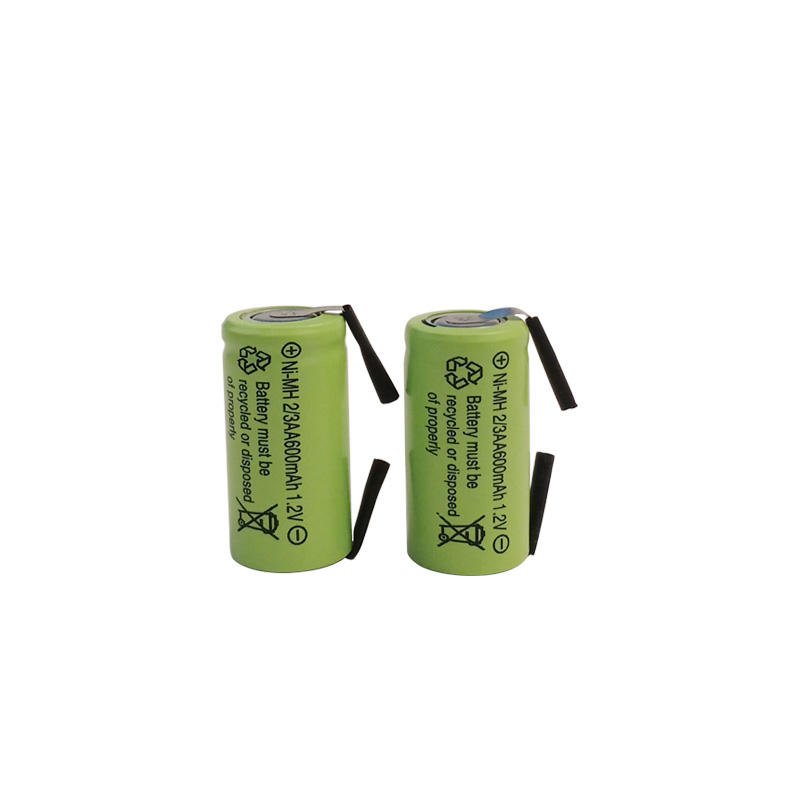
Many OEM device failures — such as short service life, uneven power output, and sudden shutdowns — stem not from defective end products, but from substandard NiMH AA battery pack assembly. Most small and mid-sized manufacturers prioritize fast mass production over precise assembly processes, resulting in high after-sales failure rates and increased warranty costs for downstream brands.
AA NiMH cells are the most widely used rechargeable cells for low-power portable devices, favored for their stable voltage, excellent safety, and cost advantages. However, high-quality NiMH AA battery pack assembly relies on refined production processes rather than simple cell splicing. This article shares practical mass production standards and error-prevention techniques to help OEM buyers screen reliable manufacturers and reduce batch quality risks.
Why Poor NiMH AA Battery Pack Assembly Causes Batch Failures
Unlike single independent AA cells, assembled battery packs require unified matching, connection and protection design. Tiny flaws in the assembly process will be amplified during long-term charge and discharge cycles, triggering various quality problems.
The most common issues caused by irregular NiMH AA battery pack assembly include inconsistent cell aging, local overheating, poor contact conduction, and insulation failure. These problems rarely appear in sample testing but break out in batches after customers use the products for 2–3 months, bringing huge losses to OEM brands.
Key Pre-Assembly Cell Screening Process (Core of Batch Consistency)
Cell selection and sorting is the foundation of qualified NiMH battery pack assembly, and it is also the process most cut corners on by low-cost factories. Before formal assembly, all AA NiMH cells must undergo full parameter testing and grouping.
Professional manufacturers strictly screen cells based on three core indicators: open-circuit voltage, internal resistance, and capacity. Only cells with consistent parameters can be assembled in series or parallel. Mismatched cells will cause individual cells to overcharge and overdischarge, drastically reducing the overall cycle life of the battery pack.
For long-standby devices such as solar lights and remote controllers, we recommend prioritizing low self-discharge AA NiMH cells in NiMH AA battery pack assembly to ensure stable power storage during long-term inventory and standby use.
Standard Assembly Process to Avoid Overheating & Poor Connection
1. Precision Spot Welding Instead of Manual Soldering
Formal nimh aa battery pack assembly uniformly adopts spot welding technology using pure nickel strips for connection. Manual electric soldering is strictly prohibited for mass production. High-temperature soldering will damage the cell’s internal sealing structure and electrolyte, leading to battery bulging and leakage in the later stage.
Spot welding features low thermal impact and a firm connection, which effectively avoids poor contact and heat generation during high-frequency discharge, ensuring the long-term stability of the battery pack.
2. Custom Wiring & Polarity Calibration
According to OEM product design drawings, adjust wire gauge, wire length and connector types. Every batch of NiMH AA battery pack assembly must undergo 100% polarity inspection to eliminate reverse connection risks that may burn out end devices.
3. Multi-Layer Insulation & Fixed Packaging
After cell assembly and wiring, use insulating gaskets and high-temperature heat shrink tubes for overall wrapping and fixing. This process prevents short circuits caused by vibration, extrusion and wire falling off during product transportation and daily use, greatly improving the safety and durability of the battery pack.
Full Performance Testing for Mass Production Batches
Qualified nimh aa battery pack assembly cannot leave the factory with only a visual inspection. Finished battery packs need to pass strict performance tests, including open-circuit voltage detection, load discharge test, cycle aging test and vibration simulation test.
Batch sampling and aging tests can effectively screen out defective products with unstable performance, ensuring that the quality of each batch of battery packs is consistent and meets the long-term use requirements of OEM terminal equipment.
Customization Options for OEM NiMH AA Battery Packs
Different terminal devices have differentiated requirements for battery pack specifications. Reliable NiMH AA battery pack assembly suppliers support full personalized customization:
- Voltage configuration: Custom 2.4V, 3.6V, 4.8V, 6V and other voltage combinations through series cell connection
- Capacity matching: Adjust capacity via parallel assembly to adapt to different device power consumption
- Accessory customization: Match different connectors, terminal blocks, and plastic fixing brackets
- Standard compliance: Support CE, RoHS, UN38.3 certification to meet cross-border shipping and market access requirements
High-Frequency Application Scenarios of NiMH AA Battery Packs
Thanks to high safety and low cost, customized packs from professional NiMH AA battery pack assembly are widely used in low-power portable devices:
- Solar garden lights and outdoor landscape lighting
- Industrial and household remote control equipment
- Portable detection instruments and measuring tools
- Emergency lights and backup power supplies
- RC toys, wireless handheld devices and small smart equipment
Common Assembly Defects & OEM Screening Tips
To reduce mass production failure rates, OEM purchasers need to focus on the following low-quality assembly phenomena when auditing suppliers:
- Using recycled cells or mismatched parameter cells to reduce costs
- Replacing spot welding with manual soldering for quick production
- Saving insulation processes, leading to hidden short-circuit dangers
- Omitting aging testing, resulting in unstable batch performance
It is recommended that OEMs conduct sample testing and small-batch trial orders before bulk procurement to verify the stability of NiMH battery pack assembly quality.
FAQ
Is spot welding necessary for NiMH AA battery pack assembly?
Yes. Spot welding is the standard process for formal mass production. Manual soldering will damage the cell structure due to high temperature, which is the main cause of battery failure in the later stage. Only spot welding can ensure stable and safe long-term use of the battery pack.
What voltage specifications can be customized for AA NiMH battery packs?
A single AA NiMH cell has a nominal voltage of 1.2V. Professional assembly can realize multiple voltage combinations such as 2.4V, 3.6V, 4.8V, and 6V through series connection, and support capacity expansion through parallel connection to meet different equipment needs.
How to judge the quality of NiMH AA battery pack assembly?
High-quality assembly has uniform cell parameters, firm spot welding, complete insulation protection, stable voltage output and no heat generation during discharge. Meanwhile, it has complete industry certifications and batch test reports, with consistent quality of finished products.
Final Thoughts
Excellent nimh aa battery pack assembly is never a simple cell splicing work, but a systematic production process integrating cell screening, precision welding, safety protection and performance testing. For OEM manufacturers, choosing a standardized assembly supplier is the key to reducing product failure rates, cutting after-sales costs, and stabilizing terminal market reputation.
If you have customized voltage, capacity, structural, and certification requirements for NiMH AA battery packs, contact our team to get professional OEM assembly solutions and a batch quotation.