
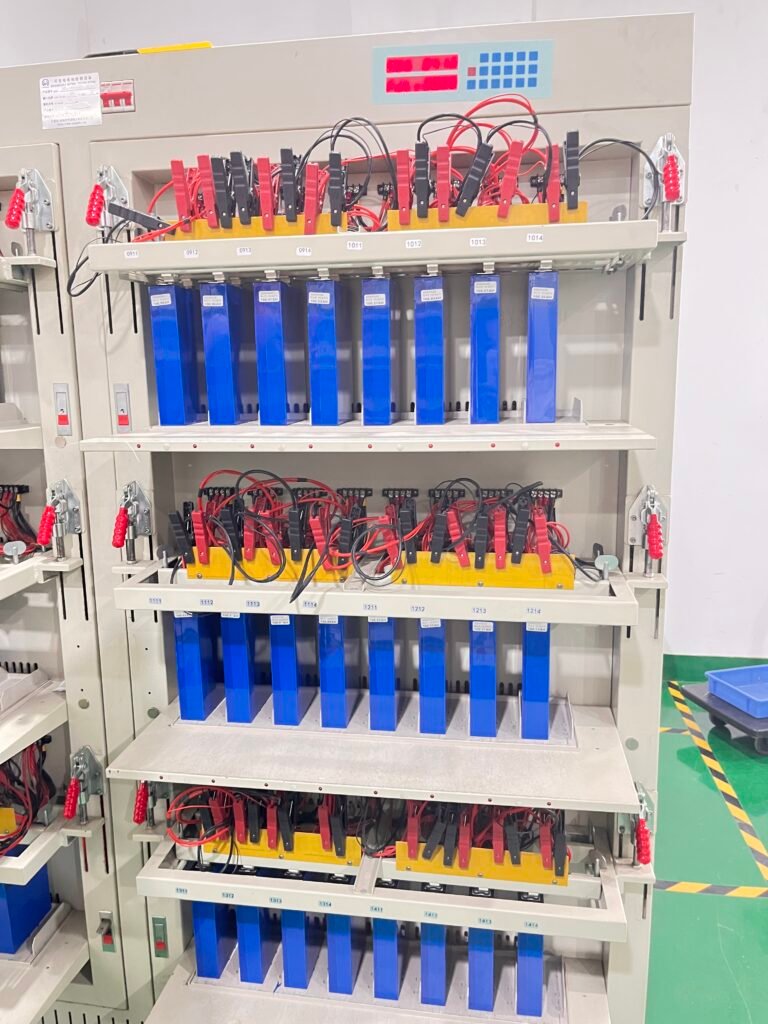
LiFePO4 battery for solar storage has become the most mainstream energy storage solution for residential off‑grid solar systems, commercial solar projects, industrial backup power, and RV solar setups in 2026. Compared with traditional lead‑acid batteries and ternary NCM lithium batteries, LiFePO4 solar storage batteries provide unparalleled advantages in safety, cycle lifespan, energy efficiency, depth of discharge, and long‑term operating costs. For solar system integrators, bulk distributors, and end users pursuing stable, low‑maintenance, and long‑lifespan energy storage, LiFePO4 battery for solar storage is no longer an optional upgrade but a standard configuration.
Solar power is inherently intermittent and unstable. Solar panels only generate electricity during daytime hours, and power output drops sharply on cloudy, rainy, or foggy days. Without a high‑performance energy storage system, excess solar energy generated during peak sunlight hours will be wasted, and users will face power shortages at night or during bad weather. This fundamental problem makes high‑quality LiFePO4 battery for solar storage the core foundation of a reliable photovoltaic power generation system.
In recent years, with the continuous maturity of LiFePO4 battery technology and the decline of large‑scale production costs, major solar energy projects worldwide have completely replaced lead‑acid and ordinary lithium batteries with LiFePO4 energy storage batteries. This article comprehensively analyzes the working principles, core advantages, performance comparisons, application scenarios, purchasing standards, and maintenance guidelines of LiFePO4 battery for solar storage, providing professional sourcing guidance for global solar energy buyers and engineering teams.
What Is LiFePO4 Battery for Solar Storage?
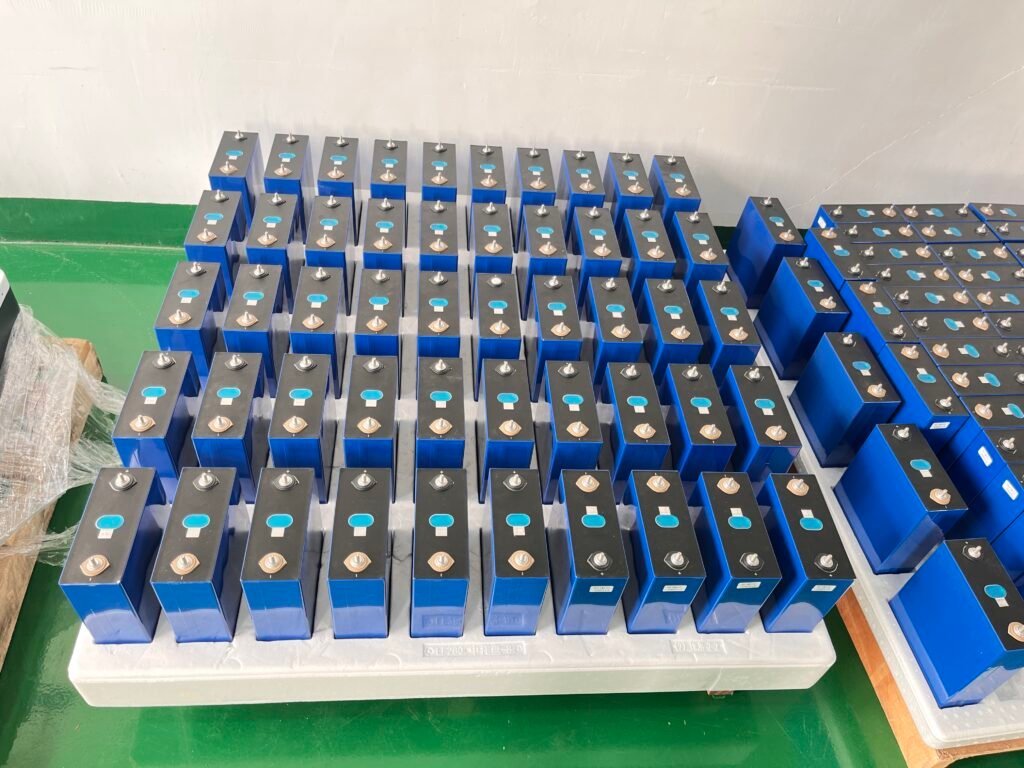
LiFePO4 (Lithium Iron Phosphate) battery for solar storage is a special lithium‑ion rechargeable battery designed for stationary photovoltaic energy storage scenarios. It uses lithium iron phosphate as the cathode material and graphite as the anode material. Different from cobalt‑based NCM batteries used in consumer electronics and electric vehicles, LiFePO4 cells feature ultra‑stable chemical structures, no thermal runaway risks, and excellent cycle durability, making them perfectly adapted to long‑term, high‑frequency charge‑discharge solar working conditions.
Unlike power batteries that pursue high burst discharge rates,LiFePO4 battery for solar storage is optimized for low‑rate, long‑cycle, and wide‑temperature environment operation. It focuses more on safety stability, cycle life, and energy conversion efficiency, fully matching the intermittent power generation characteristics of solar photovoltaic systems.
Core Advantages of LiFePO4 Battery for Solar Storage
1. Industry‑Leading Safety Performance
Safety is the primary consideration for outdoor and long‑term stationary solar energy storage. LiFePO4 batteries adopt a stable phosphate crystal structure, which will not decompose or release heat even under high temperature, extrusion, short circuit, and overcharge conditions. There is no risk of fire or explosion, which completely solves the safety hazards of traditional lithium batteries and lead‑acid batteries.
For large commercial and industrial solar energy storage power stations and household rooftop solar systems installed in living areas, the high safety of LiFePO4 battery for solar storage avoids potential safety accidents caused by long‑term unattended operation.
2. Ultra‑Long Cycle Life, Greatly Reducing Replacement Costs
Cycle life is the biggest gap between LiFePO4 batteries and traditional batteries. High‑quality LiFePO4 battery for solar storage can achieve 4000–6000 full charge‑discharge cycles at 80% DOD (depth of discharge), and the service life can reach 8–15 years in actual solar system operation.
In contrast, traditional lead‑acid batteries only have 500–1200 cycles and a service life of only 2–4 years. NCM ternary lithium batteries have 1500–2500 cycles and are prone to capacity attenuation after long‑term outdoor use. For solar projects that require long‑term stable operation, LiFePO4 battery for solar storage effectively reduces repeated procurement and maintenance costs and improves the long‑term return on investment of solar systems.
3. High Energy Conversion Efficiency, Less Solar Energy Waste
Solar energy storage batteries need high charging and discharging efficiency to convert photovoltaic power into usable electricity to the maximum extent. The energy conversion efficiency of LiFePO4 battery for solar storage reaches 90%–95%, while that of lead‑acid batteries is only 70%–85%, and the efficiency will drop sharply when the power is low.
Under the same solar panel power configuration, LiFePO4 energy storage batteries can store more effective electricity, significantly improving the power supply capacity of off‑grid solar systems and reducing electricity purchase costs for grid‑connected energy storage users.
4. Support High Depth of Discharge (DOD)
Traditional lead‑acid batteries can only be discharged to 30%–50% of the capacity for daily use. Excessive discharge will cause permanent damage to the battery and greatly shorten the service life. However, LiFePO4 battery for solar storage supports 80%–90% ultra‑deep discharge without obvious capacity loss.
This means that users can make full use of the battery capacity, effectively reducing the required battery capacity and initial investment cost of the solar system under the same power demand.
5. Excellent Wide Temperature Adaptability
Solar energy storage equipment is mostly installed in outdoor open environments, facing extreme weather such as high temperature in summer and low temperature in winter. LiFePO4 battery for solar storage can work stably in the temperature range of ‑20℃ to 60℃, with low self‑discharge rate and no low‑temperature freezing failure.
It is suitable for solar energy storage projects in tropical high‑temperature areas, temperate four‑season alternating areas, and subtropical low‑temperature areas all over the world.
6. Low Self‑Discharge Rate & Strong Standby Performance
The monthly self‑discharge rate of qualified LiFePO4 solar batteries is less than 3%, which is far lower than that of lead‑acid batteries. It can maintain stable power storage for a long time during rainy seasons or long‑term non‑use, avoiding frequent charging failures of solar systems caused by battery self‑discharge.
LiFePO4 vs Lead‑Acid vs NCM Battery for Solar Storage (Full Comparison Table)
The following authoritative comparison table clearly shows why LiFePO4 battery for solar storage has become the mainstream choice for modern photovoltaic energy storage:
| Parameter | LiFePO4 Solar Battery | Lead‑Acid Battery | NCM Ternary Lithium Battery |
|---|---|---|---|
| Cycle Life (@80% DOD) | 4000–6000 Cycles | 500–1200 Cycles | 1500–2500 Cycles |
| Energy Conversion Efficiency | 90%–95% | 70%–85% | 85%–90% |
| Max Safe DOD | 80%–90% | 30%–50% | 70%–80% |
| Service Life | 8–15 Years | 2–4 Years | 4–7 Years |
| Safety Level | Excellent (No Thermal Runaway) | Moderate (Leakage Risk) | General (Fire Risk at High Temp) |
| Low Temperature Resistance | ‑20℃ Normal Operation | Poor, Easy Failure | Medium |
| Maintenance Cost | Zero Maintenance | Frequent Maintenance | Low Maintenance |
| Total Cost of Ownership (TCO) | Lowest (Long Lifespan) | High (Frequent Replacement) | High (Expensive & Short Life) |
Main Application Scenarios of LiFePO4 Battery for Solar Storage
With its comprehensive performance advantages, LiFePO4 battery for solar storage covers almost all mainstream solar energy storage scenarios in 2026:
1. Residential Off‑Grid Solar Systems
For families in remote areas without stable grid power and households with self‑built rooftop solar power generation systems, LiFePO4 solar batteries store daytime photovoltaic power to supply electricity for lighting, household appliances, and water equipment at night, completely solving the problem of power outages and unstable grid power.
2. Commercial & Industrial Solar Energy Storage
Factory rooftops, commercial buildings, and industrial parks are equipped with large‑scale solar photovoltaic arrays matched with LiFePO4 energy storage battery packs, which can realize peak shaving and valley filling, reduce industrial electricity costs, and provide emergency backup power for equipment to avoid production losses caused by power failures.
3. RV & Mobile Solar Energy Storage
Lightweight, high‑safety LiFePO4 battery for solar storage is widely used in RVs, campers, and outdoor mobile power systems. It cooperates with vehicle‑mounted solar panels to provide stable power support for outdoor travel, field operations, and camping scenarios.
4. Remote Monitoring & Communication Base Station Power Supply
Outdoor meteorological monitoring stations, forest monitoring equipment, road monitoring systems, and communication base stations in remote areas rely on solar + LiFePO4 battery energy storage systems for long‑term unattended power supply, which is stable and maintenance‑free.
5. Emergency & Backup Power Storage
For hospitals, laboratories, data rooms, and key public facilities, LiFePO4 solar storage batteries are used as backup power to ensure continuous power supply in case of grid power failure and avoid safety accidents and data loss.
Key Buying Guide for Bulk Buyers in 2026
When sourcing high‑quality LiFePO4 battery for solar storage in bulk, solar integrators and purchasing engineers must avoid low‑quality batteries with inflated capacity and unstable performance. The core purchasing standards are as follows:
1. Strict Safety Certification Compliance
Qualified solar LiFePO4 batteries must pass IEC 62619 energy storage battery safety certification, UN38.3 transportation certification, and CE certification. These certifications ensure that the batteries meet international energy storage safety standards and are suitable for global project delivery and long‑term outdoor use.
2. Intelligent BMS Protection System
High‑end LiFePO4 battery for solar storage is equipped with a dedicated solar‑grade BMS battery management system, which supports overcharge protection, over‑discharge protection, overcurrent protection, short‑circuit protection, high and low temperature protection, and balanced cell management. Intelligent BMS can effectively prolong battery life and avoid damage caused by abnormal solar charging voltage.
3. True Capacity & Stable Consistency
Many low‑cost batteries on the market have virtual capacity and inconsistent cell performance. Bulk purchasing must require suppliers to provide third‑party test reports to ensure that the actual capacity, cycle attenuation, and voltage consistency of the batteries meet the standard, avoiding project failure caused by battery attenuation.
4. Inverter Compatibility
High‑quality LiFePO4 battery for solar storage is compatible with all mainstream solar inverters on the market, supporting MPPT solar charging protocols and adaptive voltage matching, without additional modification costs.
5. Professional After‑Sales Warranty
Solar energy storage batteries belong to long‑term investment products. Formal manufacturers provide 5–10 years long‑term warranty and professional technical after‑sales support, which is an indispensable condition for bulk project procurement.
Daily Maintenance Tips for LiFePO4 Solar Storage Batteries
Although LiFePO4 battery for solar storage is almost maintenance‑free, standardized use can further extend the service life and ensure stable operation:
- Avoid long‑term full power or zero power storage; keep the battery power between 40%–80% for long‑term standby.
- Regularly check the battery surface for dust and water vapor accumulation to keep the installation environment dry and ventilated.
- Do not disassemble or squeeze the battery pack privately to avoid damaging the internal BMS and cells.
- For long‑term rainy seasons without sunlight, regular low‑rate supplementary charging is recommended.
Frequently Asked Questions (FAQ)
Q1: Is LiFePO4 battery the best choice for solar storage in 2026?
Yes. At present, LiFePO4 battery for solar storage has the best comprehensive performance in terms of safety, service life, energy efficiency, and total cost of ownership. It is the unanimously recognized mainstream energy storage solution in the global solar industry and completely replaces traditional lead‑acid and ordinary lithium batteries.
Q2: How many years can LiFePO4 solar storage batteries last?
Under standard installation and normal use, high‑quality LiFePO4 battery for solar storage can be used stably for 8–15 years, far exceeding the service life of other types of solar batteries.
Q3: Can LiFePO4 batteries be deeply discharged for solar systems?
Absolutely yes. Different from lead‑acid batteries that cannot be deeply discharged, LiFePO4 solar batteries support 80%–90% deep discharge, which can maximize the use of solar power resources and reduce system configuration costs.
Q4: Are LiFePO4 solar batteries safe for household use?
Very safe. LiFePO4 material has ultra‑stable chemical properties, no thermal runaway, no fire and explosion risks, and is the safest battery type for household solar energy storage scenarios.
Final Conclusion
As global solar energy projects continue to popularize and energy storage technology continues to iterate, LiFePO4 battery for solar storage has become the core standard configuration for new photovoltaic energy storage systems by virtue of its high safety, long cycle life, high energy efficiency, and low total cost. Whether it is household small‑scale solar power generation or commercial and industrial large‑scale energy storage projects, choosing professional and reliable LiFePO4 solar storage batteries can bring stable, efficient, and low‑operation‑cost energy storage benefits for a long time.