
Introduction
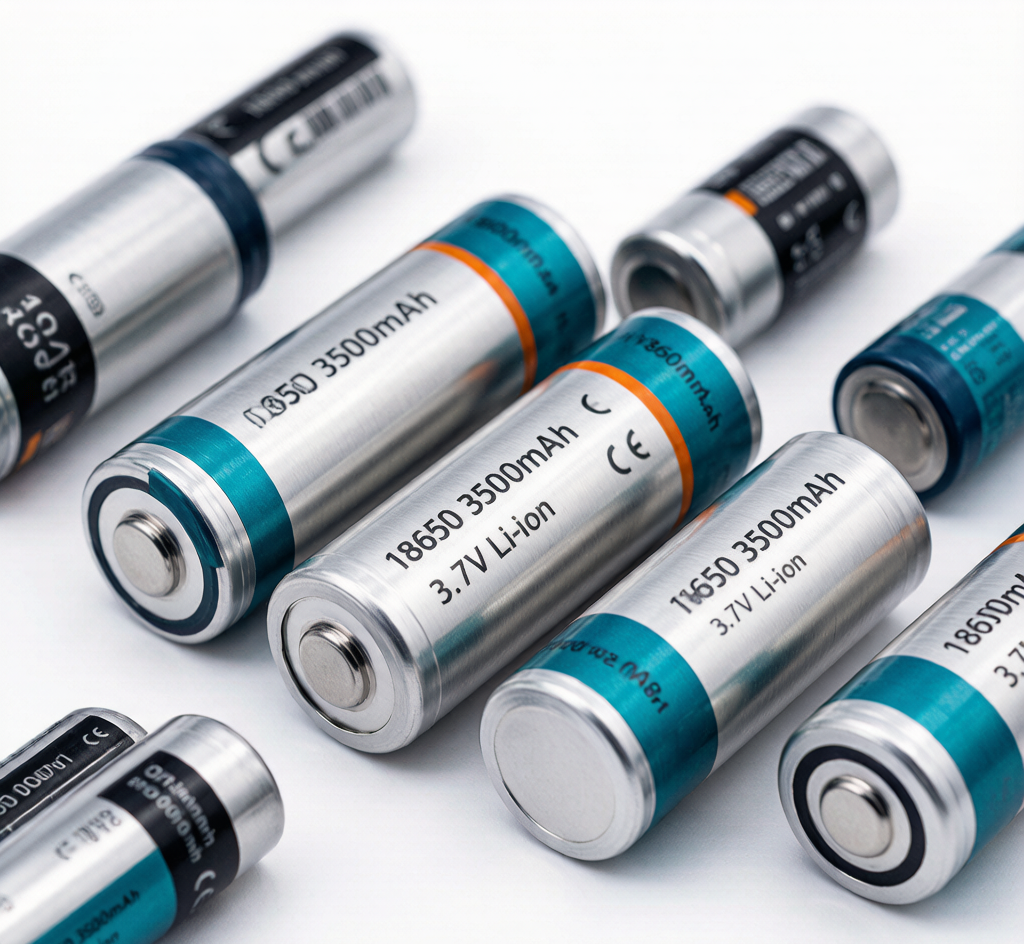
18650 3500mAh battery is the sweet spot between runtime and reliability that procurement teams and OEM engineers keep coming back to. With 3.7V nominal voltage and 12.95Wh energy per cell, this capacity tier delivers 30–40% more runtime than standard 2,500–2,600 mAh options while staying within the proven INR/ICR chemistry safety envelope. Whether you source cells for flashlights, power tools, e-bikes, or medical devices, understanding what makes a quality 18650 3500mAh battery — from cell grading to BMS integration to certification — determines whether your product performs reliably for years or becomes a warranty headache.
What Is an 18650 3500mAh Battery?
An 18650 3500mAh battery is a cylindrical lithium-ion cell measuring 18mm in diameter and 65mm in length, with a nominal capacity of 3,500 milliamp-hours. The two dominant chemistries at this capacity are INR (lithium nickel manganese cobalt, NMC) and ICR (lithium cobalt oxide, LCO). INR cells handle higher continuous discharge (5–10A) and are preferred for power-hungry devices; ICR cells prioritize maximum capacity and lower self-discharge, suited for standby and low-drain applications.
| Parameter | INR 3500mAh | ICR 3500mAh |
| Nominal Voltage | 3.7V | 3.7V |
| Capacity | 3,500 mAh | 3,500 mAh |
| Energy | 12.95 Wh | 12.95 Wh |
| Max Continuous Discharge | 5–10A | 2–3A |
| Cycle Life (80% DOD) | 500–800 | 500–1,000 |
| Weight | ~48g | ~47g |
| Dimensions | 18mm × 65mm | 18mm × 65mm |
Why Choose an 18650 3500mAh Battery
OEMs and distributors select the 18650 3500mAh battery for four key reasons:
- Extended runtime — 3,500mAh delivers 30–40% more operating time than 2,500mAh cells, reducing replacement frequency in field-deployed equipment.
- Proven chemistry maturity — INR and ICR 3500mAh cells have been in mass production since 2017; failure rates for Grade A cells are below 0.01%.
- Flexible discharge profiles — INR variants support 5–10A continuous drain for power tools and flashlights; ICR variants suit medical devices and IoT sensors.
- Cost per watt-hour advantage — At 12.95Wh per cell, the 18650 3500mAh battery offers a lower energy cost than smaller-capacity cells requiring more units to reach the same total pack energy.
Key Factors Before Buying an 18650 3500mAh Battery
- Cell grade — Insist on Grade A cells with ≤5mV voltage matching and ≤5mΩ internal resistance matching across every batch to prevent pack imbalance.
- INR vs. ICR chemistry — Choose INR for high-drain devices (flashlights, power tools, e-bikes); choose ICR for low-drain or standby use (medical monitors, sensors).
- Discharge rate — Verify continuous and peak discharge ratings match your device’s load profile. Overloading a 3A ICR cell at 5A causes permanent damage.
- Cycle life expectations — INR 3500mAh: 500–800 cycles; ICR 3500mAh: 500–1,000 cycles at 80% DOD. Define your product’s expected service life and match accordingly.
- Certifications — UN38.3 (transport), IEC 62133 (safety), MSDS, and RoHS are mandatory for international shipping and retail compliance.
- Brand vs. generic — Brand-name cells (Samsung, LG, Panasonic) carry documented spec sheets; generic cells require independent batch testing to verify claimed capacity and discharge curves.
18650 3500mAh Battery Applications by Industry
| Industry | Preferred Chemistry | Typical Use |
| Flashlights & Lighting | INR 5–10A | High-lumen tactical and EDC flashlights |
| Power Tools | INR 8–10A | Cordless drills, impact drivers |
| Electric Bicycles | INR 5–8A | Pack configurations (4S–13S) |
| Medical Devices | ICR 2–3A | Portable monitors, glucose meters |
| Vaping & Consumer Electronics | INR/ICR | Personal vaporizers, Bluetooth speakers |
| IoT & Sensors | ICR 2A | Low-drain standby, long-life deployments |
Safety, Certifications & Procurement
All lithium-ion cells shipped internationally must meet UN38.3 testing requirements for safe transport. IEC 62133-2 establishes safety standards for secondary lithium cells and batteries. Battery University provides independent reference data on 18650 cell performance, charging protocols, and cycle life optimization.
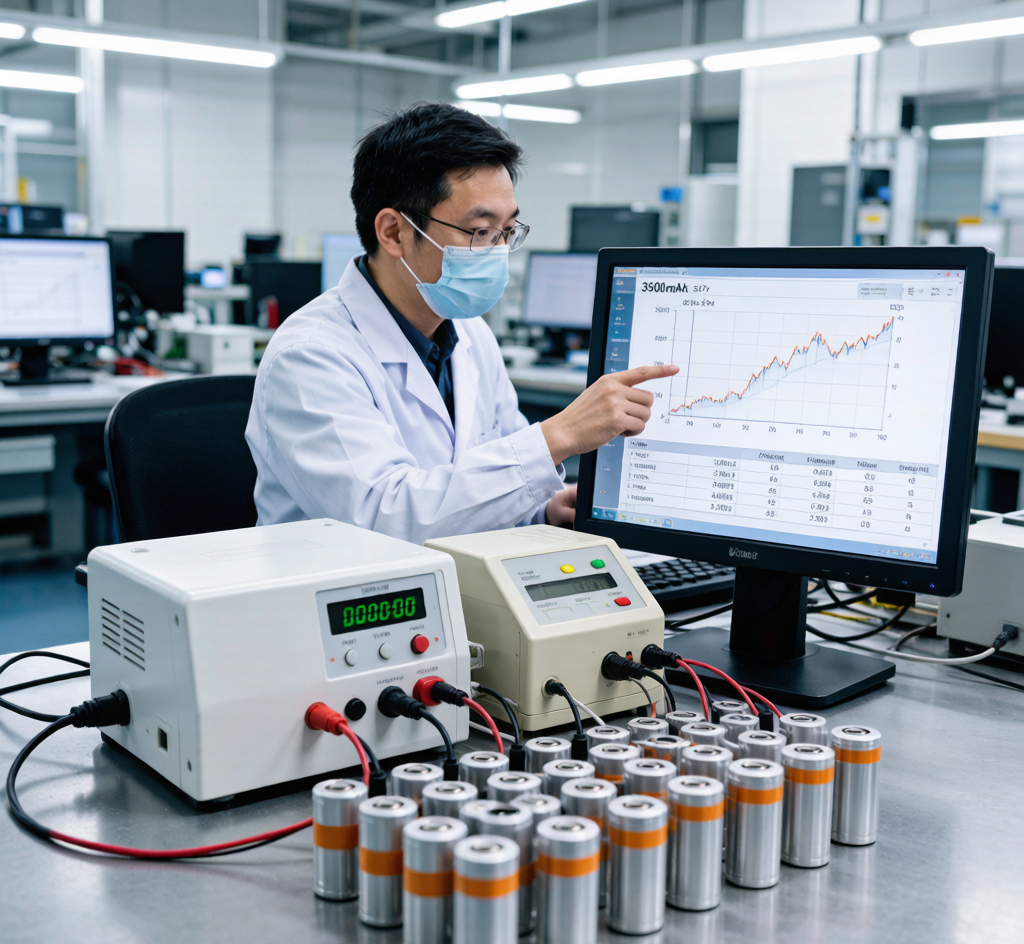
When sourcing at scale, request cell grading reports with voltage and internal resistance matching data, sample discharge curves at your target load, MSDS documentation, and shelf-life verification. For OEM orders, confirm lead times for both stock and custom-branded labeling, and negotiate warranty terms for batch-level quality guarantees.
FAQ About 18650 3500mAh Battery
Q: What is the actual measured capacity of a quality 18650 3500mAh battery?
Grade A cells typically deliver 3,400–3,550mAh at 0.2C discharge. Cells measuring below 3,300mAh should be rejected.
Q: Can I use an 18650 3500mAh battery in any 18650 device?
Yes, if the device accepts 3.7V lithium-ion input. Check the compartment length — protected cells (with PCB cap) are 69–70mm vs. 65mm for unprotected.
Q: Protected vs. unprotected 18650 3500mAh battery — which should I choose?
Protected cells add a PCB cap that provides overcharge, over-discharge, and short-circuit safety. Choose protected for standalone consumer use; unprotected for pack configurations where the BMS handles protection.
Q: What is the typical MOQ for OEM branded 18650 3500mAh battery?
Most manufacturers offer custom labeling and packaging starting from 1,000–5,000 units, depending on label design and packaging format.
Q: How should I store 18650 3500mAh batteries before deployment?
Store at 3.7–3.8V (40–50% charge) in a dry, temperature-stable environment (15–25°C). Avoid full-charge storage, which accelerates capacity degradation.
Q: What charger settings are recommended?
Charge at 0.5C (1.75A) standard rate to 4.2V cutoff. Fast charge at 1C (3.5A) is acceptable for INR cells but reduces cycle life by 15–20%.
Conclusion
A quality 18650 3500mAh battery delivers the runtime, reliability, and energy-per-cell efficiency that professional devices demand. For OEM buyers and distributors, success starts with Grade A cell sourcing, matching the right INR or ICR chemistry to your device’s discharge profile, and verifying full certification documentation from your supplier.
Need a dependable 18650 3500mAh battery supplier?
Contact us for cell specifications, OEM branding, and volume pricing. Our engineering team responds within 24 hours.