
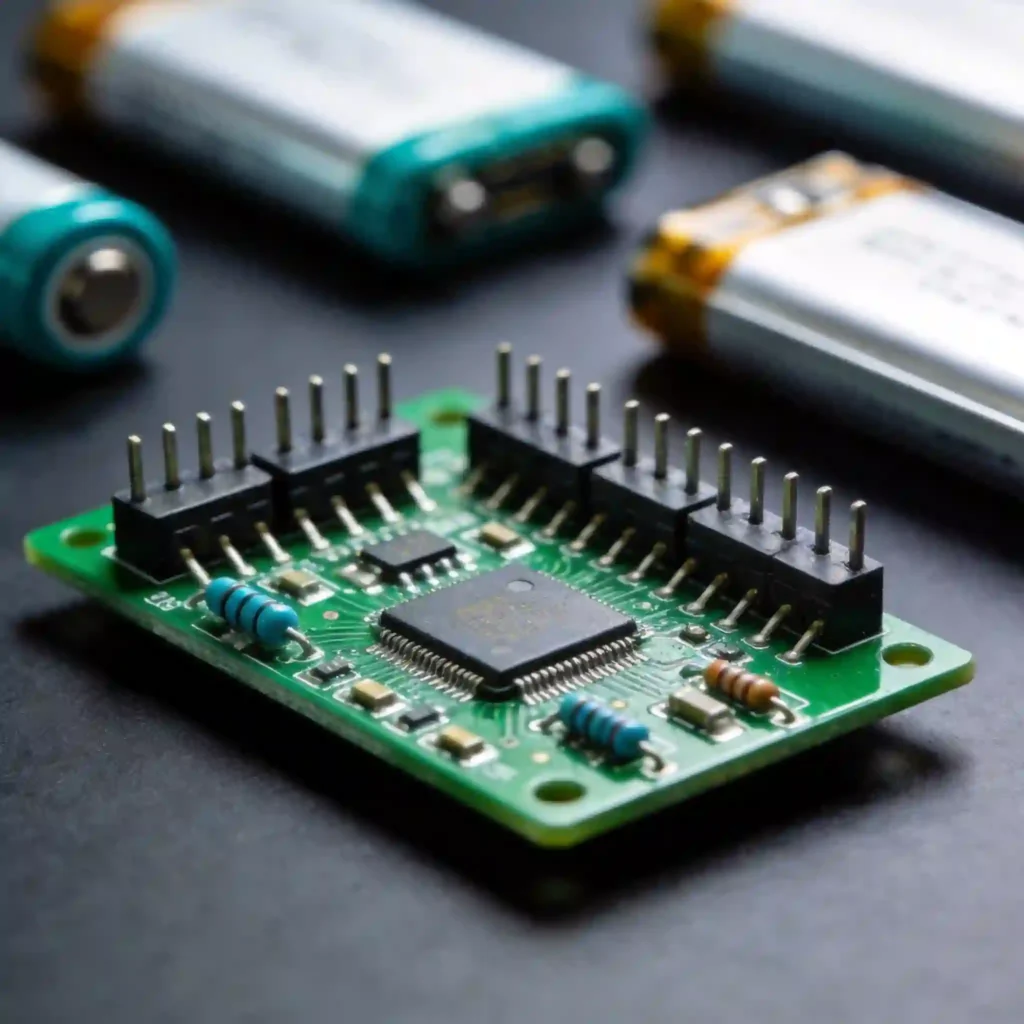
Battery Management System technology plays a critical role in modern lithium-ion battery packs. Whether used in medical equipment, industrial devices, aerospace systems, or energy storage applications, a reliable BMS helps improve safety, extend battery life, and optimize overall performance.
For manufacturers, distributors, and equipment designers, understanding the key functions of a BMS can help reduce maintenance costs, improve product reliability, and enhance user satisfaction.
Real-Time Monitoring and Data Collection
The primary responsibility of a Battery Management System is continuous monitoring. The system collects essential operating data, including:
- Cell voltage
- Pack voltage
- Charge and discharge current
- Cell temperature
- Communication signals
This real-time monitoring allows the battery pack to operate within safe limits. If abnormal conditions occur, the system can immediately trigger protective actions before damage develops.
For applications that require high reliability, such as medical devices or aerospace equipment, accurate monitoring is especially important.
Battery State Estimation
A modern BMS constantly calculates several key battery indicators:
- State of Charge (SOC)
- State of Health (SOH)
- State of Function (SOF)
- State of Energy (SOE)
SOC helps estimate remaining battery capacity, while SOH evaluates long-term battery aging. These parameters help users better understand battery performance and improve maintenance planning.
Accurate state estimation also supports more efficient charging strategies, helping maximize battery lifespan.
Fault Detection and Safety Protection
Safety is one of the most valuable functions of a lithium battery BMS.
The system continuously detects:
- Overvoltage
- Undervoltage
- Overcurrent
- Overtemperature
- Internal short circuits
- Insulation failures
When a fault is detected, the BMS can activate alarms, limit current, or disconnect the battery pack if necessary. Early warning functions help prevent serious failures and improve overall system reliability.
Cell Balancing and Thermal Management
No battery cells are perfectly identical. Over time, differences between cells can reduce overall pack capacity.
To address this issue, a BMS performs cell balancing by equalizing the charge level among cells. This helps maximize available capacity and improve cycle life.
At the same time, thermal management functions monitor temperature distribution inside the battery pack. Depending on operating conditions, the system can adjust heating or cooling to maintain optimal battery performance.
This function is especially valuable for outdoor equipment, energy storage systems, and applications operating in extreme temperatures.
Charging Management
Safe charging is another essential BMS function.
A dedicated charging control module adjusts charging current and voltage based on:
- Battery chemistry
- Cell condition
- Operating temperature
- Charger capability
By optimizing charging parameters, the system helps prevent overcharging while maintaining efficient charging performance.
Communication and Data Storage
Modern battery packs often communicate with external devices through protocols such as CAN Bus.
The BMS enables communication between the battery pack and host controllers while supporting:
- Remote diagnostics
- Firmware updates
- Online calibration
- Performance monitoring
In addition, important operating information such as charge cycles, fault records, and battery history can be stored for future analysis and maintenance.
Why Choosing the Right Battery Management System Matters
A high-quality battery pack protection system can significantly improve battery safety, reliability, and service life.
When selecting a battery supplier, consider factors such as:
- BMS design capability
- Safety certifications (CE, UL, UN38.3)
- Traceability systems
- Customization options
- Technical support
A well-designed Battery Management System is not simply an accessory—it is a key component that protects both the battery and the end application.
FAQ About Battery Management System
What does a Battery Management System do?
A Battery Management System monitors battery voltage, current, temperature, charging status, and safety conditions while protecting the battery pack from damage.
Why is cell balancing important?
Cell balancing helps maintain consistent voltage across battery cells, improving usable capacity and extending battery life.
Can a BMS improve battery lifespan?
Yes. Accurate monitoring, balancing, and charging control help reduce battery stress and support longer service life.
What certifications should battery packs have?
Common certifications include CE, UL, and UN38.3, depending on the target market and application requirements.
Can a Battery Management System be customized?
Yes. Communication protocols, voltage ranges, protection thresholds, and battery configurations can often be customized to meet specific project requirements.