
Polymer batteries for AED systems are becoming a preferred power solution for modern emergency medical equipment because safety and reliability are now more important than ever. In Automated External Defibrillator (AED) applications, the battery is not just a power source — it is part of the device’s overall safety architecture.
AED devices are expected to remain in standby mode for long periods while still being ready to operate instantly during emergencies. This creates unique requirements for battery stability, storage performance, and structural safety. Compared with traditional lithium-ion battery structures, polymer battery technology offers several advantages that better match the needs of medical device manufacturers and global healthcare distributors.
Why Polymer Batteries for AED Devices Offer Better Safety
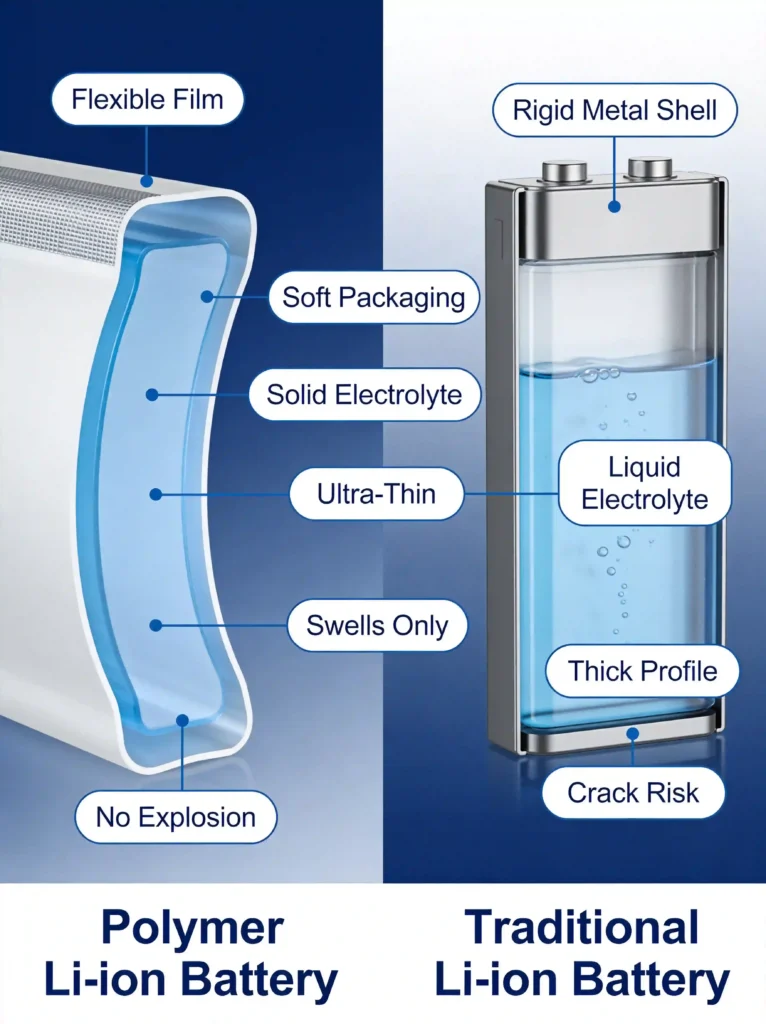
Traditional lithium-ion batteries usually use liquid electrolytes inside rigid metal casings. Under certain conditions such as impact, vibration, overheating, or long-term storage, structural risks may increase over time.
A Li-polymer battery uses polymer or gel-based electrolyte technology combined with soft aluminum laminated packaging. This structure significantly reduces leakage risks and improves overall safety performance for sensitive medical applications.
For AED products installed in airports, schools, offices, and public facilities, reducing potential safety concerns is essential. A reliable medical device battery helps manufacturers improve product confidence while supporting international compliance expectations such as CE or UL-related standards.
For more information about AED safety standards, manufacturers often reference resources from the International Electrotechnical Commission (IEC)
Flexible Battery Design Supports Compact AED Structures
Modern AED devices are becoming lighter, smaller, and easier to transport. This trend creates engineering challenges because compact medical products require highly efficient internal layouts.
One major advantage of polymer batteries for AED applications is design flexibility. Polymer cells can be customized into different thicknesses and shapes, allowing battery packs to fit complex device structures more efficiently.
This flexibility helps manufacturers achieve:
- Slimmer AED housings
- Better internal space utilization
- Reduced overall device weight
- Improved ergonomic design for portable emergency equipment
For OEM medical projects, customized battery integration can simplify product development and improve manufacturing efficiency.
You may also find our related article helpful:
→ How Custom Lithium Battery Packs Improve Portable Medical Devices
Higher Energy Density for Longer Standby Performance
AED systems often remain unused for long periods but must operate immediately during emergencies. This means energy efficiency and long standby capability are critical.
A well-designed Li-polymer battery can provide high energy density within a relatively compact structure. In practical terms, this may support:
- Longer standby periods
- Smaller device dimensions
- Reduced maintenance frequency
- Improved portability for field deployment
For distributors managing international supply chains, smaller and lighter battery systems may also help optimize shipping and packaging efficiency.
Improved Structural Behavior in Critical Conditions
Another reason why polymer batteries for AED products are gaining attention is their structural response under abnormal conditions.
Instead of relying on rigid metal enclosures, polymer cells use flexible laminated packaging. In situations involving internal pressure buildup, the structure may visibly swell rather than creating sudden rupture-related risks associated with hard metal shells.
For emergency healthcare products used in public environments, this additional layer of operational safety can be extremely valuable.
This is especially important as healthcare equipment becomes increasingly portable and integrated into mobile medical systems.
Supply Stability Matters for Medical Device Buyers
For B2B buyers and OEM manufacturers, choosing the right battery supplier is just as important as selecting the right battery chemistry.
A professional medical device battery supplier should provide:
- Stable production consistency
- Protection circuit integration
- Support for certification requirements
- Reliable export packaging
- Long-term supply capability
Consistency across production batches helps reduce after-sales issues and improves overall product reliability in healthcare markets.
If your company develops AED systems or portable healthcare devices, selecting the right polymer batteries for AED solution early in the design stage can help avoid costly engineering adjustments later.
FAQ About Polymer Batteries for AED
1. Why are polymer batteries suitable for AED devices?
Polymer batteries for AED applications offer improved structural safety, flexible design options, and reduced leakage risks compared with traditional lithium-ion battery structures.
2. Can Li-polymer batteries be customized for medical devices?
Yes. A Li-polymer battery can be customized in size, thickness, voltage, capacity, and connector configuration to match different medical equipment designs.
3. Are polymer batteries safe for long-term standby applications?
A properly designed medical device battery can provide stable standby performance for emergency devices stored over long periods.
4. What should distributors check before bulk purchasing?
Buyers should confirm certification support, production consistency, protection functions, packaging methods, and lead time planning before placing large-volume orders.
5. Besides AED devices, where else are polymer batteries used?
Polymer battery technology is also widely used in portable monitors, wearable healthcare devices, handheld diagnostic equipment, and compact medical electronics.
Conclusion
As emergency medical equipment continues evolving toward lighter, smarter, and more portable designs, polymer batteries for AED systems are becoming an increasingly practical solution for manufacturers worldwide.
With advantages including improved safety structure, flexible customization, high energy density, and compact integration capability, polymer battery technology supports the growing demands of modern healthcare devices.
For OEM manufacturers and global distributors looking to improve medical product reliability, investing in a high-quality Li-polymer battery solution is an important step toward safer and more efficient device development.