
Introduction
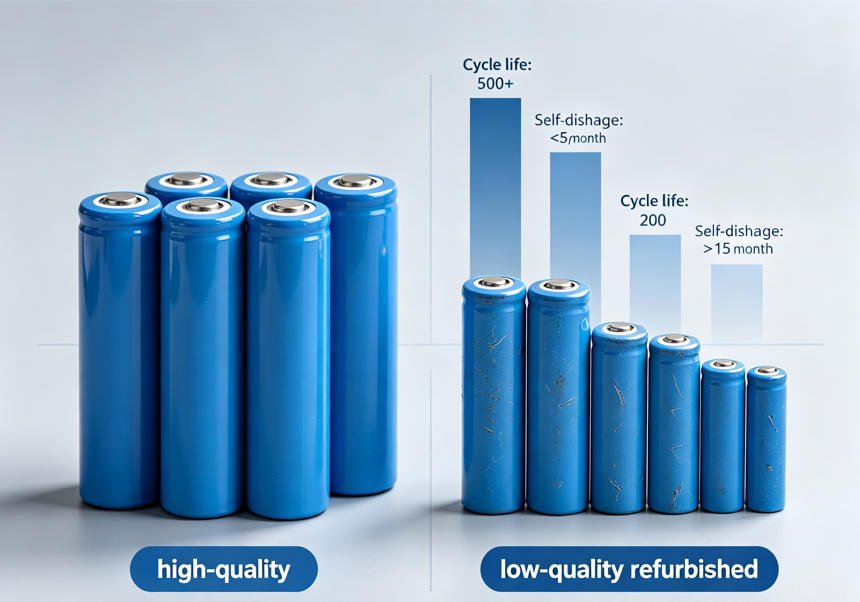
The 18650 battery selection guide helps buyers understand one important fact: not every 18650 lithium-ion cell delivers the same performance, safety, or lifetime. Although the 18650 format has a standardized size of 18mm × 65mm, internal materials, manufacturing quality, capacity consistency, and protection design can vary significantly between suppliers.
Today, 18650 cells are widely used in power tools, portable power stations, solar energy storage, medical devices, flashlights, and industrial equipment. However, the market also contains counterfeit, refurbished, and mislabeled cells that may cause reduced runtime, unstable performance, or potential safety risks.
For businesses purchasing lithium batteries in bulk, selecting reliable cells requires more than comparing price and capacity labels. The following five points explain how to evaluate battery quality and choose the right solution for different applications.
1. Verify the Real Capacity Instead of Trusting Labels
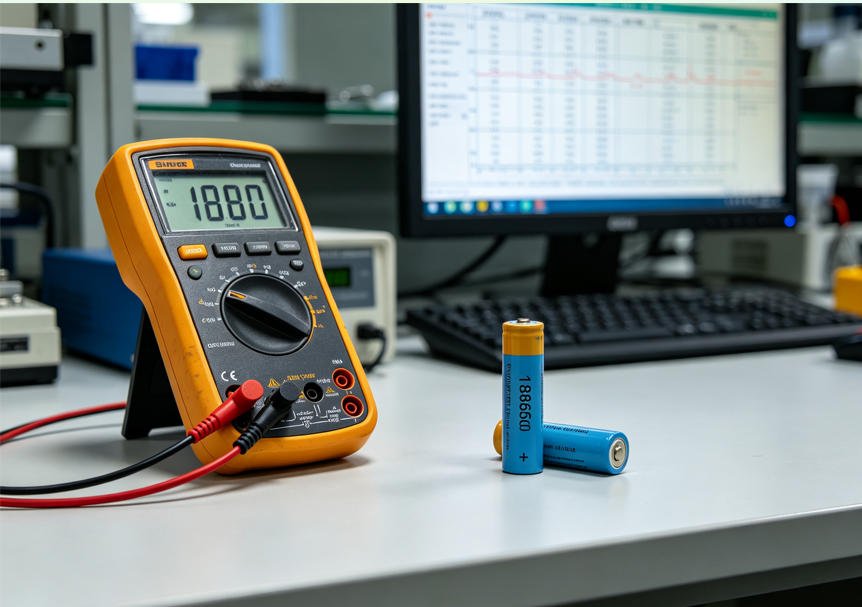
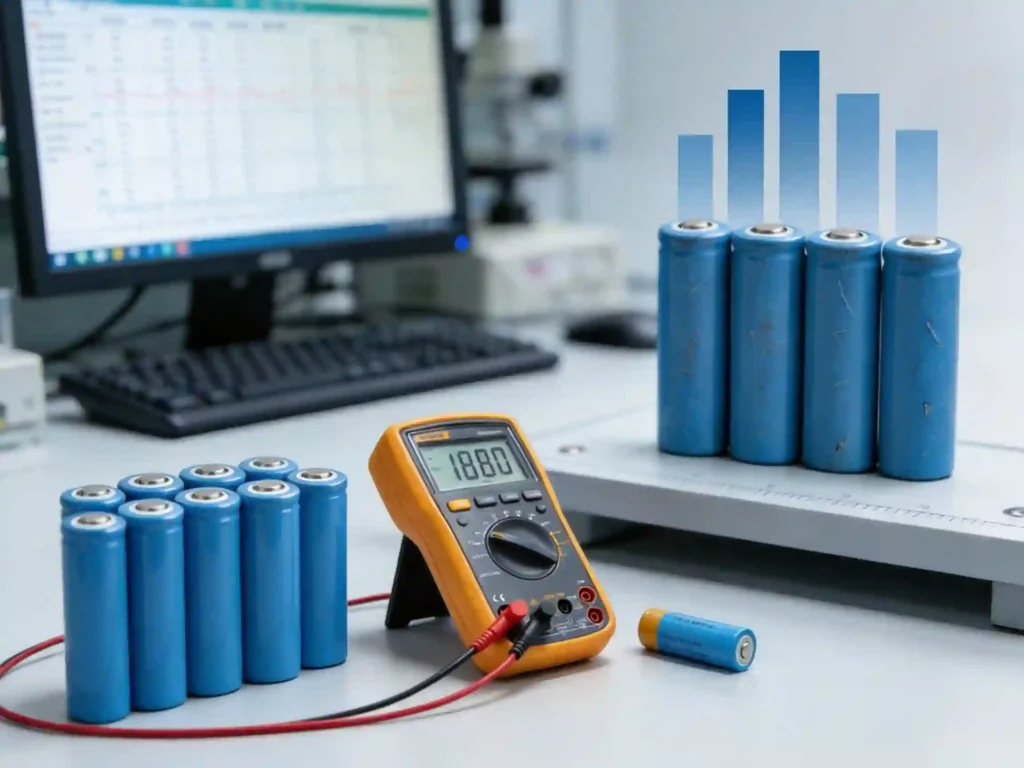
One of the most important steps in an 18650 battery selection guide is checking whether the advertised capacity matches actual performance.
Some low-quality sellers mark unrealistic capacities, such as 4000mAh or 5000mAh, on standard 18650 cells. In reality, most reliable 18650 lithium-ion batteries are typically within a practical capacity range of around 2000mAh to 3500mAh depending on chemistry and design.
Professional buyers should request:
- Capacity test reports
- Internal resistance data
- Discharge curve information
- Batch inspection records
A high quality 18650 battery should provide stable capacity, consistent voltage output, and reliable performance throughout its service life.
For industrial applications, actual discharge capability is often more important than the highest capacity number on the label.
2. Match Battery Chemistry and Discharge Performance With Applications
Different applications require different battery characteristics. Choosing the correct chemistry is a key part of successful 18650 battery sourcing.
Common 18650 lithium-ion chemistries include:
NMC 18650 Battery
NMC cells provide a good balance between energy density, power output, and cycle life. They are commonly used in:
- Power tools
- Portable equipment
- Electric mobility devices
LiFePO4 18650 Battery
LiFePO4 chemistry focuses on safety and long cycle life. It is suitable for:
- Solar storage systems
- Backup power
- Industrial applications
LCO 18650 Battery
LCO cells offer compact size and high energy density, making them suitable for low-power consumer electronics.
Besides chemistry, discharge rate is another critical factor. High-drain devices require cells capable of delivering higher current without excessive heat generation.
A correct balance between capacity and discharge rate ensures better reliability and longer operating life.
3. Check Safety Certifications and Protection Design
Safety should always be a priority when purchasing lithium-ion batteries.
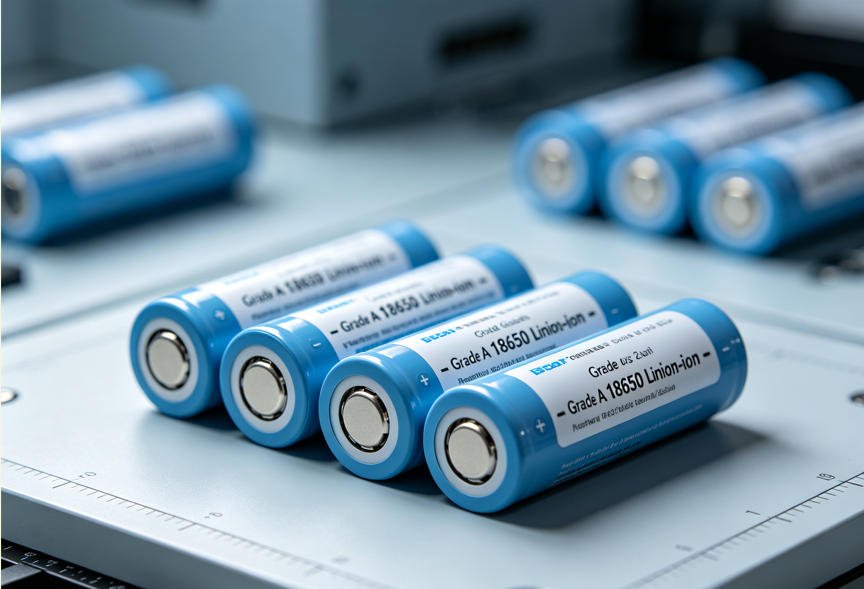
Reliable suppliers usually provide international compliance documents such as:
- UN38.3 transportation testing
- IEC 62133 battery safety standard
- CE compliance
- RoHS requirements
These certifications help confirm that the battery meets basic safety and transportation requirements.
Another important consideration is protection design.
For single-cell applications, protected 18650 batteries may include a PCM protection circuit that prevents:
- Overcharging
- Over-discharging
- Overcurrent
- Short circuits
For multi-cell battery packs, a professional Battery Management System (BMS) is required to monitor voltage balance, temperature, and overall battery condition.
A cheap battery without proper protection may create higher risks and increase long-term maintenance costs.
4. Evaluate Cycle Life and Storage Performance
Battery lifetime directly affects the total cost of ownership.
A reliable 18650 lithium-ion cell should maintain stable performance through hundreds or thousands of charge cycles depending on chemistry and operating conditions.
Important performance indicators include:
- Cycle life
- Self-discharge rate
- Capacity retention
- Temperature performance
For example, LiFePO4-based cells usually provide longer cycle life, while NMC cells often provide higher energy density.
Low self-discharge is also valuable for products stored for long periods, such as emergency equipment, industrial tools, and seasonal devices.
When evaluating suppliers, buyers should focus on long-term reliability rather than only initial purchase price.
5. Choose a Manufacturer With Stable Quality Control
The final factor in an effective 18650 battery selection guide is supplier evaluation.
Battery performance depends heavily on manufacturing consistency. Professional manufacturers usually have:
- Automated production lines
- Cell testing procedures
- Batch traceability
- Quality inspection systems
- Technical support capability
A reliable supplier should be able to provide detailed specifications, testing reports, and customized solutions based on application requirements.
For bulk purchasing, consistent quality between different production batches is more important than finding the lowest unit price.
A stable manufacturing partner helps reduce product failures, warranty issues, and unexpected replacement costs.
FAQ About 18650 Battery Selection
What is the best capacity for an 18650 battery?
The best capacity depends on the application. Higher capacity provides longer runtime, while lower capacity cells may offer better power output and charging performance. Buyers should select according to equipment requirements rather than choosing the largest number.
How can I identify a high-quality 18650 battery?
Reliable cells usually have consistent appearance, accurate specifications, stable voltage, low internal resistance, and complete testing documentation. Extremely high capacity labels at unusually low prices are often a warning sign.
Are LiFePO4 18650 batteries safer than NMC cells?
LiFePO4 cells generally offer better thermal stability and longer cycle life, while NMC batteries provide higher energy density. The best choice depends on the specific application.
Can 18650 batteries be customized?
Yes. Battery suppliers can customize capacity, protection circuits, battery packs, connectors, and BMS solutions according to equipment requirements.
What should I check before buying bulk 18650 batteries?
Before placing large orders, confirm battery specifications, certifications, testing reports, production capability, MOQ requirements, packaging methods, and transportation compliance.
Choose Reliable 18650 Battery Solutions for Your Project
Selecting the right lithium cells requires careful evaluation of capacity, chemistry, safety, and supplier capability.
Whether you need batteries for power tools, energy storage, industrial equipment, or customized battery packs, following this 18650 battery selection guide can help you avoid unreliable products and build safer, longer-lasting solutions.
Contact our team for professional battery matching, OEM customization, and reliable lithium battery supply support.
- Battery University – Lithium-ion battery fundamentals
https://batteryuniversity.com - IEC 62133 Battery Safety Standard
https://www.iec.ch - UN38.3 Lithium Battery Transport Testing
https://unece.org