
Introduction
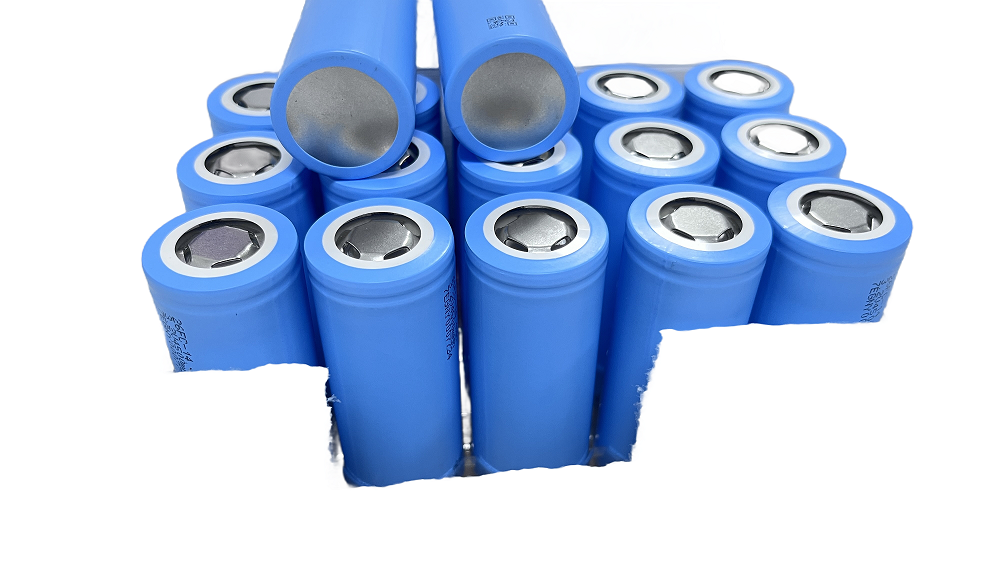
Choosing the right battery chemistry is a pivotal decision for procurement teams and OEM engineers. Safety, cycle life, and total cost of ownership all depend on that choice — and for a growing number of B2B buyers, the answer is a LiFePO4 battery.
Unlike lithium-ion chemistries that sacrifice safety for energy density, lithium iron phosphate (LFP) delivers an outstanding balance of longevity, thermal resilience, and sustainability. A quality LiFePO4 cell exceeds 3,000–6,000 cycles, resists thermal runaway, and requires zero cobalt — qualities that matter when your products operate in demanding conditions.
What Is a LiFePO4 Battery?
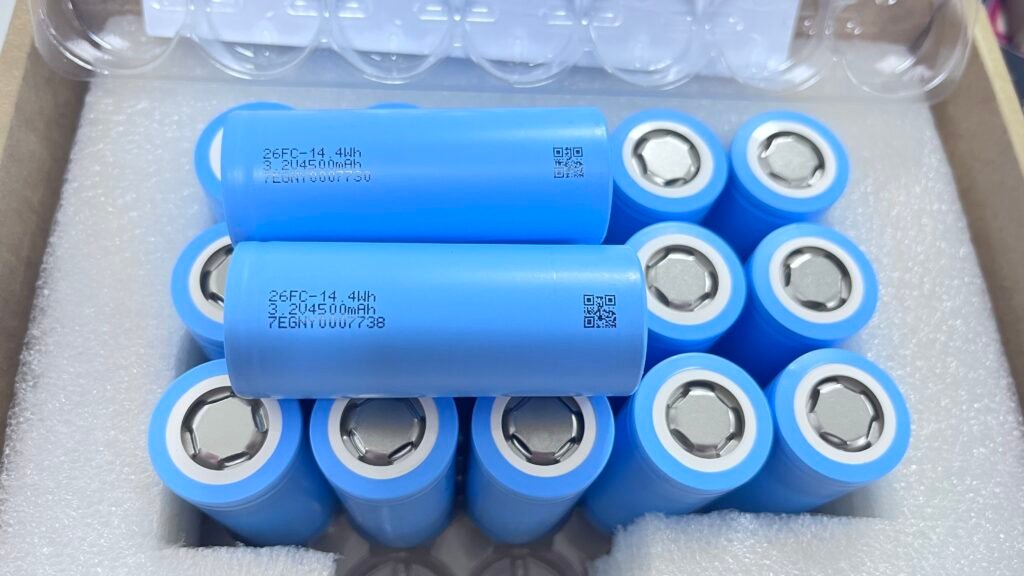
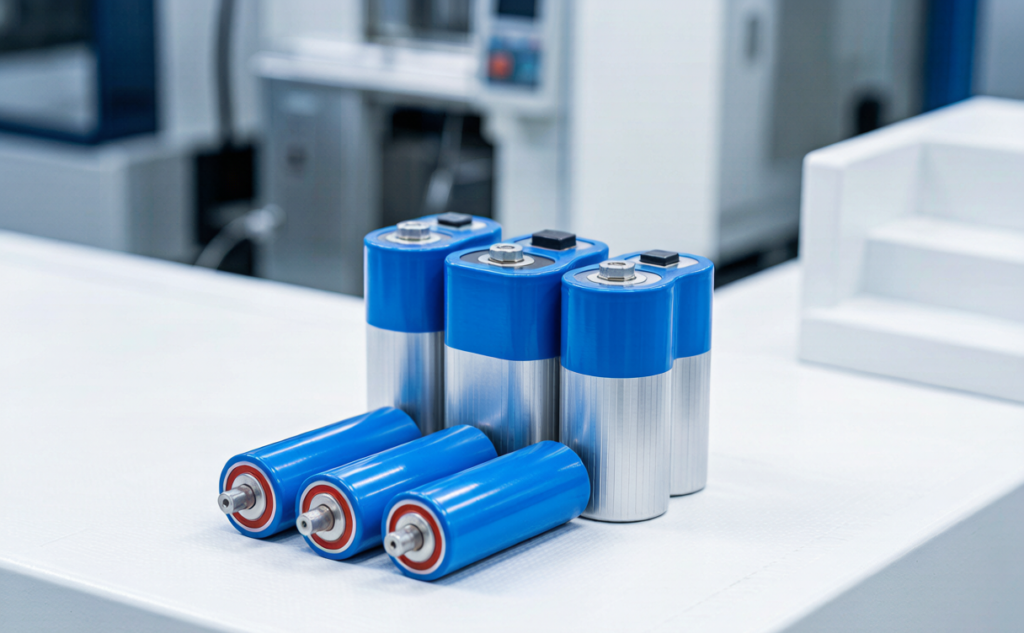
A LiFePO4 battery uses lithium iron phosphate as the cathode material. Its olivine crystal structure creates strong P–O covalent bonds that prevent oxygen release at high temperatures — the root cause of thermal runaway in NMC and LCO chemistries. Key specs:
| Parameter | Typical Value |
| Nominal Voltage | 3.2 V per cell |
| Cycle Life | 3,000–6,000+ (at 80% DOD) |
| Energy Density | 140–180 Wh/kg |
| Operating Temp | –20°C to 60°C |
| Round-trip Efficiency | 95–98% |
LiFePO4 cells come in prismatic, cylindrical, and pouch form factors. For deeper technical background, see Battery University and IEC 62660 standards.
Why Choose a LiFePO4 Battery
- Unmatched cycle life — 3,000–6,000+ cycles vs. 500–1,000 for NMC, lowering cost per cycle by 40–60%.
- Inherent safety — Cathode stability prevents thermal runaway; cells pass nail-penetration and crush tests without fire.
- Flat voltage curve — Stable 3.2 V output across 80–90% of discharge, simplifying power management.
- No cobalt or nickel — Abundant iron and phosphate reduce supply-chain risk and environmental impact.
- Fast charging — 0.5C–1C standard rates; 100Ah cell reaches 80% in ~1 hour.
Key Factors to Consider Before Buying
- Cell grade — Use only Grade A cells with documented ≤5mV/≤5mΩ matching tolerance.
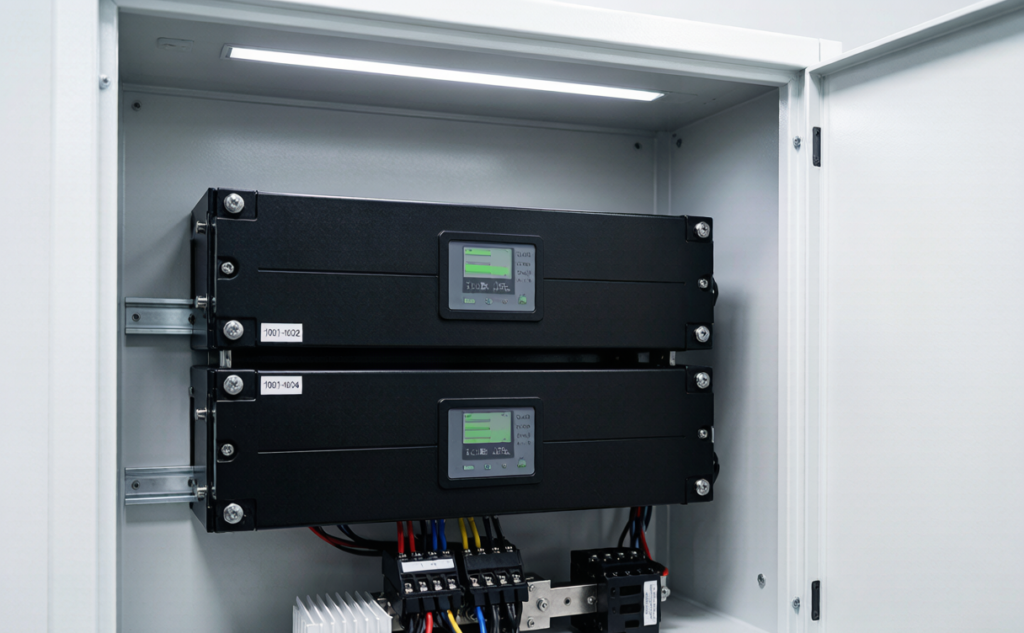
- BMS integration — The Battery Management System is as critical as the cells. Define protection thresholds, communication protocol (CAN/RS485), and firmware requirements upfront. [INTERNAL LINK: BMS Battery Management System Guide]
- Certifications — UN38.3 (transport), IEC 62619 (industrial safety), UL 1973/2580 (US market), CE (EU). Request full test reports before ordering.
- TCO — Despite 2–3× higher purchase price, LiFePO4 delivers 30–50% lower 10-year TCO over lead-acid due to longer life, higher efficiency, and zero maintenance.
Applications and Industries
LiFePO4 batteries power a wide range of industries:
- Energy Storage Systems — Solar and wind storage from 5 kWh residential to 100+ kWh commercial.
- Electric Vehicles — Urban EVs, buses, scooters, forklifts. Tesla and BYD have adopted LFP for standard-range models.
- Marine & RV — 60–70% lighter than lead-acid, zero maintenance, fast charging.
- UPS & Backup — 10+ years float service, no replacement every 3–5 years.
- Industrial Equipment — Forklifts, AGVs, mining tools with fast opportunity charging.
- Telecom & Off-Grid — Reliable performance in temperature extremes with no on-site maintenance.
Safety, Certifications & Procurement
LiFePO4 safety is a multi-layer system: inherent chemical stability, cell-level safety vents, BMS protection, IP-rated enclosures, and system interlocks. All shipments must comply with UN38.3. For procurement: demand cell grading data, specify BMS requirements, validate certifications, negotiate extended warranties for high-cycle use, and plan for 30–60 day lead times.
FAQ About LiFePO4 Battery
Q: What is the lifespan of a LiFePO4 battery?
3,000–6,000+ cycles at 80% DOD — roughly 8–15 years in daily cycling, 10–20 years in float service.
Q: Is LiFePO4 safer than other lithium-ion batteries?
Yes. The cathode resists oxygen release above 300°C, making thermal runaway virtually impossible.
Q: Can LiFePO4 be charged below 0°C?
Charge current must be limited below 0°C (0.1C max) to prevent lithium plating. A BMS with temperature-based charge limiting handles this automatically.
Q: LiFePO4 vs. lead-acid TCO?
30–50% lower over 10 years — longer life, 95–98% efficiency, zero maintenance, 60–70% lighter. Payback in 2–3 years.
Q: Do LiFePO4 packs need a BMS?
Yes. All lithium-ion packs require a BMS for voltage, temperature, and current protection.
Q: Are LiFePO4 batteries recyclable?
Yes. Recovered lithium, iron, phosphate, copper, and aluminum can be reprocessed — no cobalt simplifies recycling.
Conclusion
The LiFePO4 battery stands as the preferred chemistry where safety, longevity, and TCO outweigh energy-density premiums. Whether you need cells for EV integration, solar storage modules, or industrial equipment upgrades, the right manufacturing partner — with Grade A consistency, robust BMS engineering, and complete certifications — makes the difference.
Contact us to discuss your LiFePO4 battery requirements. We provide cell specs, BMS design consultation, certification documentation, and custom pack engineering. Our team responds within 24 hours.