
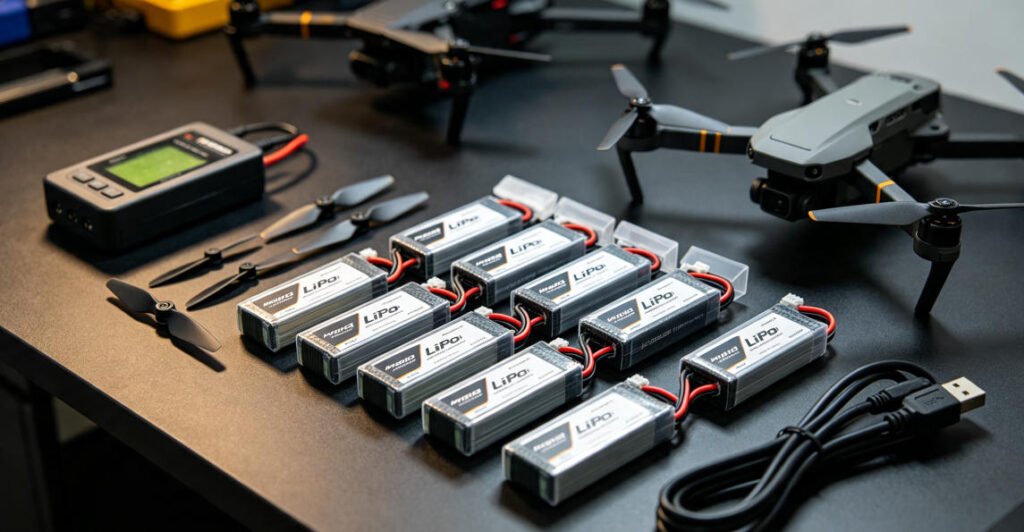
Choosing the best drone battery is the most critical factor that determines flight time, flight stability, safety, and long‑term operating costs for both consumer camera drones, FPV racing drones, and commercial industrial UAVs. Many drone operators and bulk buyers only compare battery capacity while ignoring discharge rate, cell consistency, cycle life, and safety certification, which leads to sudden power drops, short flight durations, swelling batteries, or even flight accidents. This professional guide explains core drone battery types, key technical parameters, selection rules, maintenance tips, and B2B sourcing standards to help you pick the most reliable drone battery for every application scenario.
As drone technology continues to upgrade, modern drone battery packs require balanced performance in energy density, high‑rate discharge capability, thermal stability, and cycle durability. Generic low‑quality batteries cannot support high‑speed flight, heavy payloads, or long‑hour commercial operations. Understanding professional drone battery specifications allows pilots, drone retailers, and fleet operators to reduce replacement frequency and improve overall flight safety and operational efficiency.
What Is a Professional Drone Battery and How Does It Work
A standard drone battery is a high‑rate lithium polymer (LiPo) lithium‑ion pack specially designed for high instantaneous current output, lightweight structure, and stable voltage discharge during dynamic flight. Unlike ordinary consumer lithium batteries, drone batteries must endure frequent high‑current bursts during takeoff, climbing, hovering, and rapid maneuvering. Ordinary low‑rate batteries will suffer severe voltage sag and power attenuation under high load conditions.
Most mainstream drone batteries adopt multi‑series LiPo cell configurations, including 3S, 4S, 6S, and higher industrial‑grade versions. Each series configuration directly affects the drone’s maximum speed, load capacity, and flight stability. Professional drone battery packs feature balanced charging systems, over‑discharge protection, and low internal resistance to ensure consistent power output throughout the entire flight process.
Common Types of Drone Batteries for Different UAV Applications
Different drone categories require completely matched battery types. Selecting the correct drone battery type guarantees flight performance and prolongs overall service life.
Consumer Camera Drone Batteries are compact smart lithium batteries with built‑in BMS protection and intelligent communication chips. These batteries prioritize stable voltage output, lightweight design, and safe charging cycles. They are widely used in mainstream aerial photography drones and support intelligent remaining power display and low‑voltage return functions. The core advantage is high safety and stable daily cycle performance.
FPV Racing Drone Batteries are high‑discharge rate LiPo batteries ranging from 50C to 120C. These drone batteries focus on instantaneous current release, supporting extreme acceleration, sharp turns, and high‑speed diving. High‑rate FPV drone batteries feature extremely low internal resistance but require strict daily maintenance and standard charging and storage rules to avoid swelling or performance degradation.
Industrial and Commercial Drone Batteries adopt high‑density long‑cycle lithium battery packs customized for heavy payloads, long endurance, and all‑weather operation. These professional drone batteries support ultra‑long flight time, low‑temperature discharge, and stable high‑load output, suitable for surveying, mapping, agricultural spraying, and public security patrol missions. Industrial drone batteries emphasize long cycle life, high consistency, and operational safety.
Key Technical Parameters to Evaluate the Best Drone Battery
To select the best drone battery, buyers must evaluate four core technical indicators instead of simply comparing mAh capacity. These parameters directly determine actual flight experience and long‑term reliability.
Battery Discharge Rate (C‑Rate) is the most critical specification for drone batteries. C‑rate represents the maximum instantaneous discharge capability. For FPV and high‑performance drones, a higher C‑rate ensures sufficient power reserve during violent flight movements and avoids voltage drop and power jitter. For consumer drones, a standard moderate C‑rate provides stable and safe daily flight performance.
Cell Internal Resistance determines battery efficiency and heat generation. Low internal resistance drone batteries produce less heat during high‑current discharge, deliver more stable voltage output, and have longer cycle life. High internal resistance cells easily heat up, lose capacity quickly, and risk swelling after repeated use.
Cycle Life and Capacity Consistency define long‑term cost performance. High‑quality drone batteries maintain stable capacity after hundreds of cycles, while low‑grade batteries experience rapid attenuation, resulting in shorter flight time after only dozens of uses. For commercial fleets, cycle stability greatly reduces overall replacement costs.
Voltage Platform Stability ensures flight safety. Qualified drone batteries maintain flat voltage output during hovering and continuous flight, preventing sudden power loss and unexpected landing risks caused by rapid voltage drop.
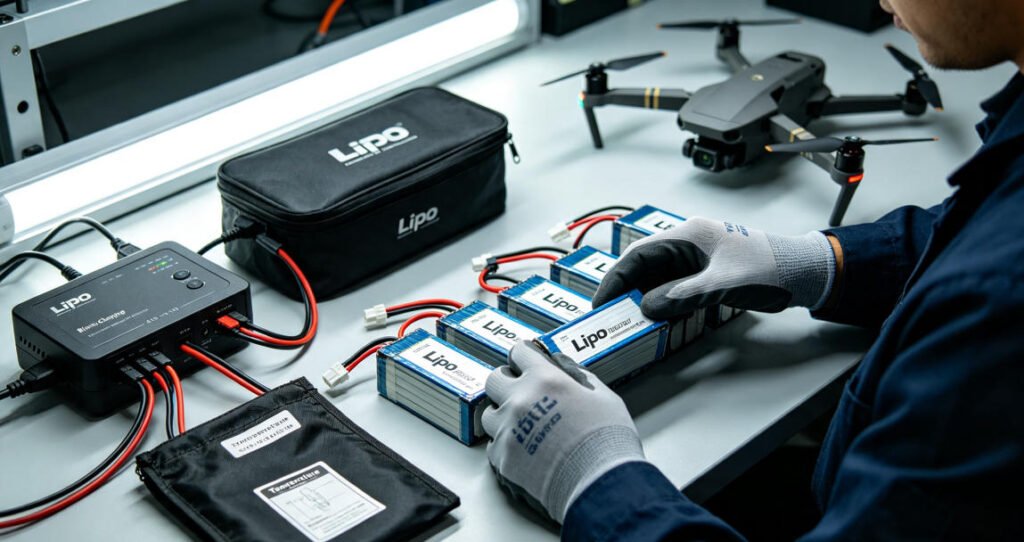
How to Choose the Right Drone Battery for Your Exact Drone Model
Matching the drone battery parameters strictly according to your drone model is the basic rule for safe and efficient flight. Wrong voltage, size, or discharge rate will cause performance failure or even hardware damage.
First, confirm the standard series voltage of your drone battery. Most consumer aerial drones use 4S configurations, while professional FPV drones commonly use 6S high‑voltage packs. Never use higher or lower series batteries to pursue longer flight time, as mismatched voltage will damage the drone power system and ESC module.
Second, select reasonable capacity based on flight demands. Larger capacity indeed extends flight time but increases overall takeoff weight. Excessively high capacity will reduce drone maneuverability and increase power consumption per flight. Professional buyers should balance endurance and flight flexibility according to actual usage scenarios.
Third, verify physical size, interface type, and lock structure. Different drone brands adopt exclusive battery sizes, connectors, and fixed structures. Unmatched physical dimensions will fail installation or cause poor contact during flight, bringing hidden safety hazards.
Professional Drone Battery Maintenance to Extend Service Life
Scientific maintenance can double the service life of drone batteries and maintain consistent flight performance for a long time. Most battery degradation problems are caused by irregular charging and storage habits.
Avoid Full Charge Long‑Term Storage. Fully charged LiPo drone batteries stored for a long time are prone to internal chemical aging and swelling. For daily standby storage, maintain battery power at 50% to 60% to keep cell activity stable.
Standard Charging Operation. Use a professional balance charger and avoid overcharging or fast over‑current charging. Balanced charging ensures consistent voltage of each single cell and prevents cell imbalance failure after long cycles.
Prohibit Over‑Discharge Flight. Do not force flight after low‑voltage alarm. Over‑discharge causes irreversible damage to lithium‑ion cells, resulting in permanent capacity reduction and increased internal resistance.
Low‑Temperature Protection. Drone batteries decay significantly in low‑temperature environments. Preheat the battery properly before winter flight and avoid long‑time hovering in ultra‑cold air to prevent sudden power drop.
Certification and Safety Standards for Qualified Drone Batteries
Qualified bulk‑order drone batteries must pass international safety and transportation certifications to ensure global compliance and flight safety. Professional suppliers provide complete test reports and compliance documents.
UN38.3 certification is mandatory for all drone battery air and sea transportation, ensuring battery safety during long‑distance logistics and avoiding dangerous goods risks. IEC 62619 industrial lithium battery safety standards guarantee stable performance under extreme working conditions such as high current, high temperature, and vibration. Reliable drone battery manufacturers strictly follow these international standards during production and testing. You can view authoritative industry specifications from IEC 62619 and professional battery technology knowledge from Battery University.
In addition, mainstream regional certifications including CE and UKCA are required for commercial sales in European and British markets, helping distributors and fleet operators complete compliant product deployment.
Common Drone Battery Problems and Troubleshooting
Many daily drone battery failures are avoidable with correct judgment and processing methods.
Battery Swelling is usually caused by overcharging, over‑discharging, or long‑term full storage. Swollen batteries cannot be used continuously and must be replaced immediately to avoid safety accidents.
Sudden Flight Power Drop generally results from decreased cell consistency or aging internal resistance. Replace aging batteries regularly to maintain flight stability.
Short Actual Flight Time often occurs in low‑quality refurbished batteries with inflated capacity labels. Bulk buyers should always verify third‑party test data instead of relying on nominal parameters only.
Frequently Asked Questions About Drone Batteries
Q1: Which battery type is best for daily drone aerial photography?
For daily aerial photography missions, standard smart LiPo drone batteries with moderate C‑rate, stable voltage output, and complete safety protection are the best choice. They balance flight time, safety, and service life perfectly.
Q2: Can I use higher capacity batteries to get longer flight time?
Higher capacity increases endurance but raises overall drone weight, which reduces flight agility and increases power consumption. Always select factory‑approved capacity specifications to ensure balanced performance.
Q3: How many cycles can a professional drone battery last?
High‑grade drone batteries support 300 to 600 stable cycles, while low‑quality refurbished batteries fail within 100 cycles. For commercial fleets, choosing high‑cycle batteries effectively reduces long‑term operating costs.
Q4: Why does drone battery performance drop in winter?
Lithium polymer cells naturally decay at low temperatures, causing reduced instantaneous discharge capability. Preheating and avoiding long‑time low‑altitude hovering can effectively improve winter flight stability.
Final Conclusion
The best drone battery is not simply the highest capacity or highest C‑rate product, but the most matched solution for your drone model, flight scenario, and operating environment. Consumer aerial drones prioritize stability and safety, FPV drones focus on high‑rate discharge performance, and industrial UAVs require long cycle life and all‑weather reliability.
For drone distributors, fleet operators, and professional pilots, mastering drone battery parameter selection, daily maintenance, and compliance standards helps maximize battery service life, reduce failure rates, and improve long‑term operational return on investment.