
Introduction
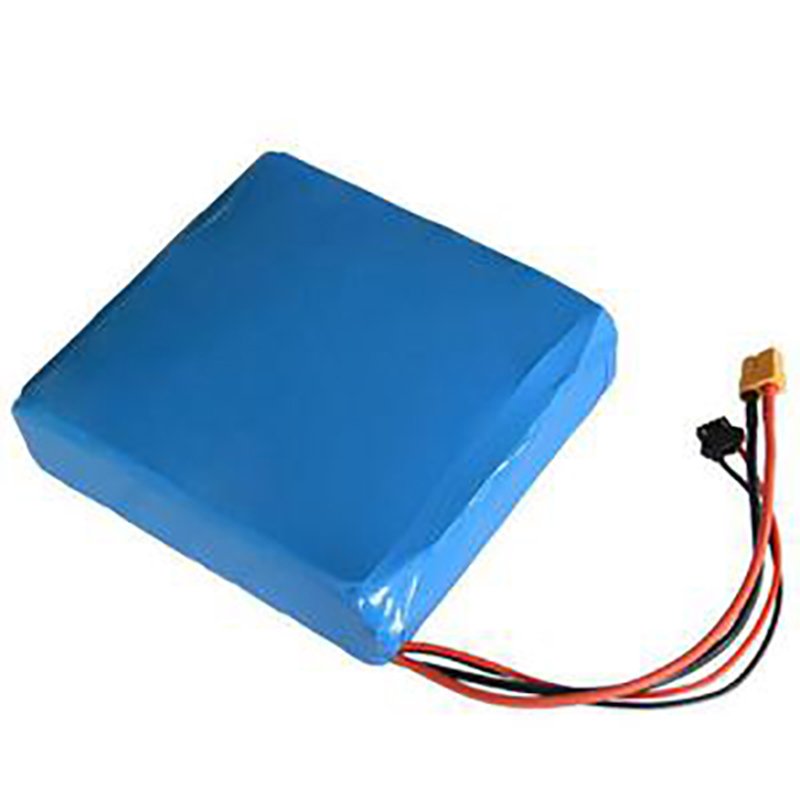
18650 battery pack is the workhorse of modern portable and industrial power systems. By assembling individual 18mm × 65mm lithium-ion cells into series and parallel configurations, manufacturers deliver packs from a compact 12V 2Ah unit to heavy-duty 72V 100Ah arrays — covering everything from e-bikes and power tools to solar energy storage and telecom UPS. This guide explains how an 18650 battery pack is designed, what to evaluate before sourcing, and how to choose an OEM partner for custom pack manufacturing.
What Is an 18650 Battery Pack?
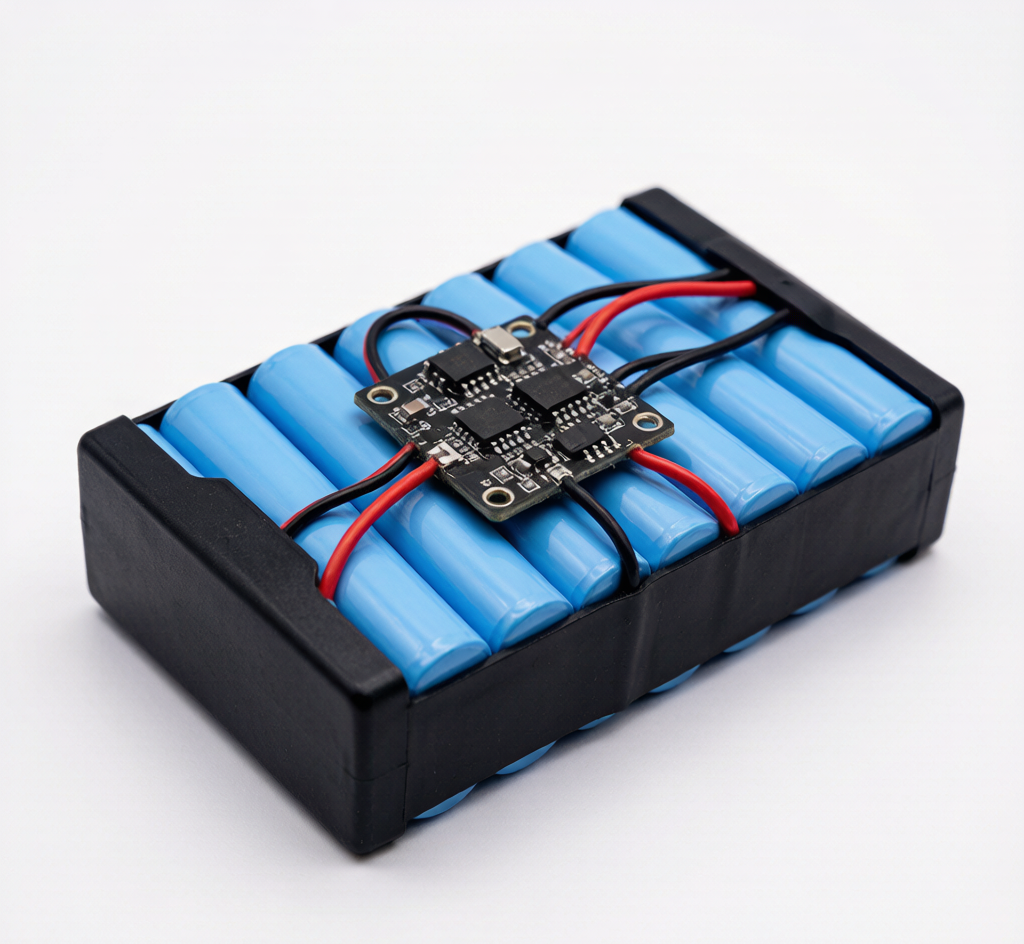
An 18650 battery pack groups multiple 18650 cylindrical lithium-ion cells (3.7V nominal, 2,000–3,500 mAh each) into series (S) and parallel (P) combinations to achieve the target voltage and capacity. The “4S2P” designation, for example, means 4 cells in series (14.8V) and 2 in parallel (double capacity). Each 18650 battery pack integrates a Battery Management System (BMS) that monitors cell voltage, temperature, and current to prevent overcharge, over-discharge, and short circuits.
| Common Config | Voltage | Capacity | Application |
| 4S2P | 14.8V | ~5,000 mAh | E-bikes, power tools |
| 7S2P | 25.9V | ~5,000 mAh | Scooters, robotics |
| 13S4P | 48.1V | ~14,000 mAh | E-motorcycles, forklifts |
| 20S6P | 74V | ~21,000 mAh | Industrial ESS, heavy EVs |
18650 Battery Cell Specifications & Selection Guide
Why Choose an 18650 Battery Pack
OEMs and distributors choose the 18650 battery pack format for five core advantages:
- Proven cell maturity — 18650 cells have over 20 years of mass-production history; failure rates below 0.01% for Grade A cells.
- Flexible scaling — Adjust S/P configurations to match any voltage (3.7V–74V) and capacity (2Ah–100Ah+) requirement without redesigning the cell itself.
- Cost efficiency — Mature supply chains and standardized cell dimensions keep per-cell costs 30–40% lower than custom prismatic or pouch cells.
- Easier replacement — Individual cells can be swapped during maintenance, reducing downtime and service costs.
- BMS integration — Standardized pack architectures allow plug-and-play BMS modules with CAN/RS485 communication for real-time monitoring.
Key Factors to Consider Before Buying an 18650 Battery Pack
- Cell grade — Specify Grade A cells (≤5mV voltage matching, ≤5mΩ internal resistance matching) to prevent capacity drift and premature failure.
- S/P configuration — Calculate your voltage and capacity needs: voltage = 3.7V × S count; capacity = single-cell mAh × P count.
- Discharge rate — Match the pack’s continuous and peak discharge current (5A–30A depending on cell INR/ICR chemistry) to your device load profile.
- BMS features — Confirm overcharge, over-discharge, short-circuit, temperature protection, and communication protocol (CAN bus, RS485, or SMBus).
- Certifications — UN38.3 (transport), IEC 62133 (safety), MSDS, and UL 2054 are required for international shipping and retail compliance.
- Thermal management — Packs above 5S should include thermal sensors and heat-dissipation design (aluminum casing or active cooling).
18650 Battery Pack Applications by Industry
| Industry | Typical Pack | Key Requirement |
| Electric Bicycles & Scooters | 7S2P–13S3P | Lightweight, 25–48V |
| Power Tools | 4S2P–5S2P | High discharge (15–30A) |
| Solar Energy Storage | 13S4P–20S10P | Long cycle life, 48–74V |
| Telecom & UPS | 13S4P | Float reliability, 48V |
| Medical Devices | 3S1P–4S2P | Safety-certified, compact |
| Robotics & AGVs | 7S3P–13S4P | CAN communication, stable output |
Safety, Certifications & Procurement
Every 18650 battery pack shipped internationally must comply with UN38.3 transport testing. For safety standards, IEC 62133-2 governs secondary lithium cell and pack requirements. Battery University offers independent reference data on 18650 cell behavior, cycle life, and charging best practices. When procuring, request cell grading reports, BMS protection test data, sample burn-in results, and packaging mockups before placing volume orders.
FAQ About 18650 Battery Pack
Q: How many cells are in a typical 18650 battery pack?
It depends on the S/P configuration. A 48V 14Ah pack (13S4P) contains 52 cells; a 14.8V 5Ah pack (4S2P) contains 8 cells.
Q: Can I mix different capacity cells in one pack?
No. All cells in a parallel group must match in capacity, voltage, and internal resistance to prevent imbalance and failure.
Q: What is the cycle life of an 18650 battery pack?
Grade A INR cells deliver 500–1,000 cycles at 80% DOD; pack-level cycle life depends on BMS quality and thermal management.
Q: Does every 18650 battery pack need a BMS?
Yes. Without a BMS, individual cells can overcharge or over-discharge, leading to thermal runaway or permanent capacity loss.
Q: What MOQ applies to OEM custom packs?
Typically 500–2,000 units, depending on cell matching, BMS firmware customization, and housing design complexity.
Q: How long does OEM production take? Standard packs: 15–25 business days. Fully custom design (new housing, firmware): 30–45 days.
Conclusion
A well-engineered 18650 battery pack offers the voltage flexibility, cost efficiency, and proven reliability that professional applications demand. For OEM buyers and distributors, focus on Grade A cell sourcing, robust BMS integration, full certification documentation, and a manufacturer who delivers consistent batch quality across every configuration.
Need a custom 18650 battery pack for your product line?
Contact us for cell specifications, BMS design consultation, OEM branding, and volume pricing. Our engineering team responds within 24 hours.