
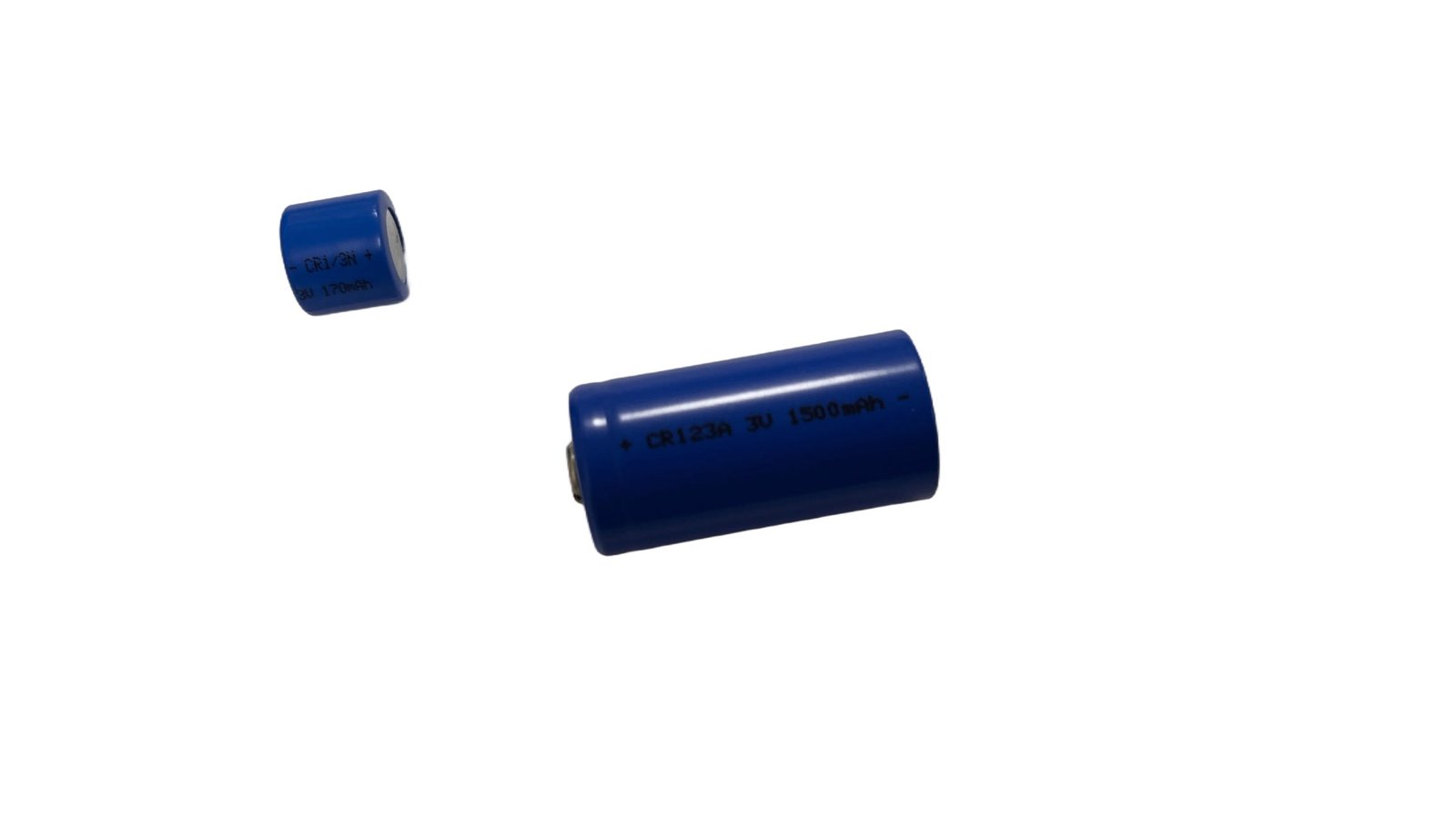
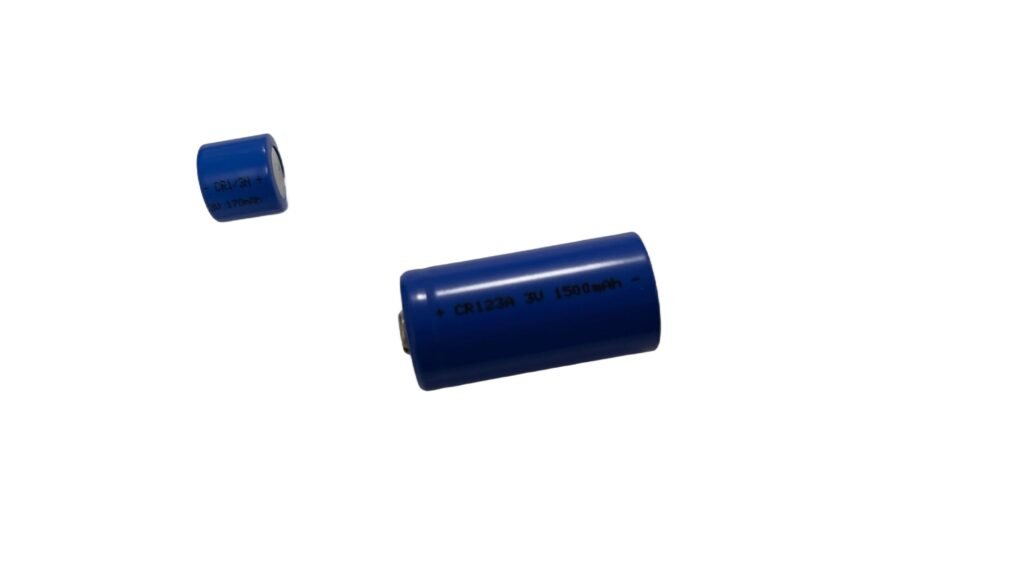
CR123A battery is the compact 3V lithium primary cell that powers security sensors, tactical flashlights, medical devices, and camera equipment worldwide. OEM buyers and distributors choose this cell for its 10-year shelf life, flat discharge curve, and reliable operation from –40°C to +60°C. This guide covers specifications, key advantages, buying criteria, and OEM sourcing tips.
What Is a CR123A Battery?
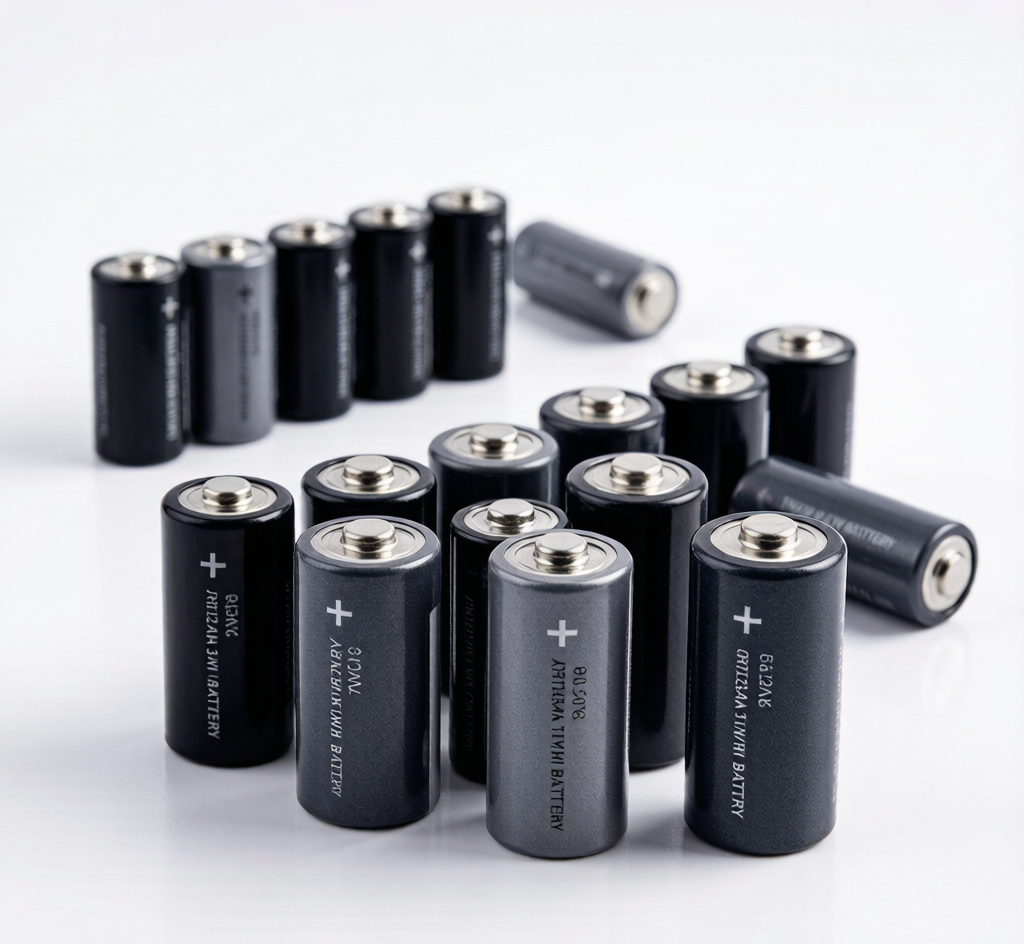
This cell is a non-rechargeable cylindrical primary lithium unit using lithium manganese dioxide (LiMnO₂) chemistry. It delivers 3.0V nominal voltage and 1,500–1,600 mAh capacity inside a compact 17.0 mm × 34.5 mm housing weighing ~17g. Common alternative labels include CR123, DL123A, CR17345, and 5018LC — they all refer to the same 3V primary cell. Do not confuse it with the rechargeable RCR123A (3.7V Li-ion), which can damage circuits designed for 3.0V.
| Parameter | Value |
| Nominal Voltage | 3.0V |
| Capacity | 1,500–1,600 mAh |
| Dimensions | 17.0 mm dia × 34.5 mm height |
| Weight | ~17 g |
| Chemistry | LiMnO₂ |
| Shelf Life | Up to 10 years |
Explore our CR123A Battery OEM Customization Solutions for branded packaging and volume ordering.
Why Choose a CR123A Battery for Your Products
OEMs and distributors choose this cell over alkaline alternatives for five key advantages:
- 10-year shelf life — Ideal for standby, emergency, and low-maintenance deployments.
- Consistent 3V output — Flat discharge curve keeps brightness and sensitivity stable until end-of-life.
- Wide temperature range — Reliable from –40°C to +60°C for outdoor and industrial use.
- High energy density — More power per gram than any alkaline cell of similar size.
- Low self-discharge — Under 1% annual loss, minimizing replacement costs in long-term installs.
Key Factors Before Buying a CR123A Battery
Before sourcing in bulk, evaluate these six criteria:
- Primary vs. rechargeable — Confirm your device requires 3.0V. A 3.7V RCR123A can damage circuits.
- Capacity rating — Select cells rated at ≥1,500 mAh with batch-level discharge test reports.
- Shelf life guarantee — Premium suppliers offer verified 10-year data; budget options may only guarantee 5 years.
- Operating temperature — Match the spec sheet range to your deployment environment.
- Certifications — UN38.3 (transport), IEC 60086-4 (primary lithium safety), and MSDS are non-negotiable for international shipping.
- OEM packaging — Blister packs, bulk trays, or custom-branded labeling depending on your channel.
Read our Primary Lithium Battery Safety & Certification Guide for compliance details.
CR123A Battery Applications by Industry
| Industry | Common Devices |
| Security & Safety | Motion sensors, smoke detectors, alarm panels, smart locks |
| Photography | Film cameras, flash units, light meters |
| Lighting | Tactical flashlights, weapon lights, headlamps |
| Medical | Glucose meters, portable diagnostic tools |
| Industrial | IoT sensors, GPS trackers, handheld testers |
| Military & Law Enforcement | Night-vision gear, laser sights, comm devices |
CR123A Battery Safety, Certifications & Procurement
Every lithium cell shipped internationally must meet UN38.3 transport requirements. For product safety, IEC 60086-4 governs primary lithium cell standards, and Battery University provides independent reference data on lithium primary cell performance.
When sourcing at scale, request sample discharge curves, shelf life verification reports, packaging mockups, and lead-time commitments for both stock and OEM-branded orders.
FAQ About CR123A Battery
Q: What voltage does this cell deliver?
3.0V nominal. The rechargeable RCR123A variant outputs 3.7V — check device compatibility before substituting.
Q: Can this primary cell be recharged?
No. This is a single-use cell. Attempting to recharge risks leakage, overheating, or rupture.
Q: How long does it last on the shelf?
Up to 10 years with less than 1% annual self-discharge for premium-grade cells.
Q: Is this cell allowed on airplanes?
Yes, when properly packaged and UN38.3 certified. Quantities above certain thresholds require Class 9 dangerous goods declaration.
Q: What MOQ applies to OEM orders?
Typically 1,000–5,000 units, depending on label customization and packaging format.
Conclusion
A quality primary lithium cell delivers the shelf life, voltage stability, and temperature resilience that professional devices demand. For OEM buyers and distributors, focus on verified capacity, full certification documentation, and a supplier who delivers consistent batch quality.
Need a dependable CR123A battery supplier? Contact us for samples, OEM branding, and volume pricing.