
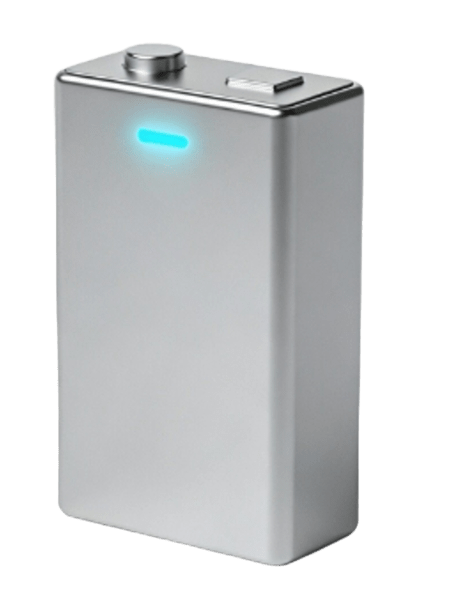
High Voltage Lithium-ion Battery: Cathode Materials and Process Development
The performance of a High Voltage Lithium-ion Battery is largely determined by the structure and stability of its active materials and electrolyte system. Among all components, the cathode material plays the most critical role, while electrolyte compatibility becomes increasingly important as operating voltage rises. This article focuses on recent progress in high-voltage cathode materials, with particular attention to lithium cobalt oxide (LiCoO₂).
High Voltage Lithium-ion Battery and LiCoO₂ Cathode Materials
Lithium cobalt oxide remains the most widely studied and commercially applied cathode material for High Voltage Lithium-ion Battery systems. It features a layered α-NaFeO₂ crystal structure, which allows lithium ions to intercalate and de-intercalate efficiently. With a theoretical specific capacity of approximately 274 mAh/g and mature manufacturing processes, LiCoO₂ continues to dominate the high-energy-density battery market.
In practical applications, only part of the lithium ions can participate reversibly. At a typical cutoff voltage of 4.35 V, the achievable capacity is around 167 mAh/g. However, increasing the operating voltage from 4.2 V to 4.35 V can raise energy density by roughly 16%, making high-voltage operation an effective way to improve High Voltage Lithium-ion Battery performance.
Structural Stability Challenges at High Voltage
Despite its advantages, LiCoO₂ faces structural instability under high-voltage cycling. Repeated lithium extraction can trigger a phase transition from a trigonal to a monoclinic structure. Once this occurs, lithium diffusion becomes severely restricted, particles may detach from the current collector, internal resistance increases, and overall electrochemical performance deteriorates.
To address these issues, current development strategies mainly focus on element doping and surface coating. These approaches aim to enhance both crystal structure stability and electrode–electrolyte interface durability under high-voltage conditions.
Commercial Applications and Limitations
High-voltage LiCoO₂ materials are already widely used in premium consumer electronics. For example, 4.35 V smartphone batteries typically require volumetric energy densities around 660 Wh/L, while 4.4 V designs can reach approximately 740 Wh/L. Such demands place strict requirements on cathode compaction density, lithium utilization, and structural robustness.
However, cobalt’s limited availability, high cost, and toxicity significantly restrict the large-scale use of LiCoO₂ in electric vehicles and power batteries. These challenges are driving ongoing research into alternative high-voltage cathode materials.