
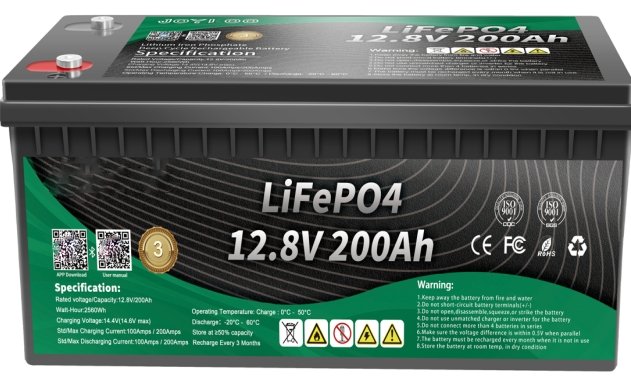
Introduction to Lithium Iron Phosphate Battery Technology
A Lithium Iron Phosphate Battery is a type of lithium-ion battery widely recognized for its excellent safety performance, long cycle life, and high-current discharge capability. Due to these advantages, the Lithium Iron Phosphate Battery has become a preferred energy solution for electric vehicles, energy storage systems, industrial equipment, and medical devices.
Compared with other lithium battery chemistries, a Lithium Iron Phosphate Battery offers better thermal stability, lower material cost, and superior environmental compatibility, making it ideal for both commercial and industrial applications.
What Is a Lithium Iron Phosphate Battery?
A Lithium Iron Phosphate Battery uses lithium iron phosphate (LiFePO₄) as the cathode material. In lithium-ion battery technology, common cathode materials include lithium cobalt oxide (LiCoO₂), lithium manganese oxide (LiMn₂O₄), lithium nickel oxide (LiNiO₂), and lithium iron phosphate (LiFePO₄).
Among these materials, cobalt is expensive and limited in supply, while iron is abundant, cost-effective, and environmentally friendly. As a result, the Lithium Iron Phosphate Battery is one of the most economical lithium battery solutions available today. More technical background on this chemistry can be found on
👉 Wikipedia – Lithium iron phosphate battery
Working Principle of Lithium Iron Phosphate Battery
The internal structure of a Lithium Iron Phosphate Battery consists of a LiFePO₄ cathode, a graphite anode, a polymer separator, and an electrolyte sealed within a metal casing.
During charging, lithium ions move from the cathode to the anode through the separator. During discharging, lithium ions migrate back to the cathode. This reversible movement of lithium ions allows the Lithium Iron Phosphate Battery to deliver stable voltage and reliable performance over thousands of cycles.
Main Performance Characteristics of Lithium Iron Phosphate Battery
A typical Lithium Iron Phosphate Battery has a nominal voltage of 3.2V, with a charging cut-off voltage of 3.6V and a discharge cut-off voltage of 2.0V. Performance may vary slightly depending on cell design and manufacturing processes.
High Discharge Capability and Stability
One of the key advantages of a Lithium Iron Phosphate Battery is its ability to handle high discharge rates:
- Continuous discharge: 2C–5C
- High-current discharge: up to 10C
- Short pulse discharge: up to 20C
This makes the Lithium Iron Phosphate Battery highly suitable for power tools, electric mobility, and industrial systems that require stable high-current output.
Safety Performance and Over-Discharge Resistance
Safety is a defining feature of the Lithium Iron Phosphate Battery. Even under extreme conditions such as overcharging, over-discharging, short circuits, or mechanical impact, the battery remains structurally stable and does not catch fire or explode.
In over-discharge tests, Lithium Iron Phosphate Battery cells discharged to 0V and stored for extended periods showed no leakage or permanent damage. After recharging, capacity recovery remained above 98%, a performance level unmatched by most other lithium-ion chemistries.
For international safety and battery standards, refer to guidance published by the International Electrotechnical Commission (IEC):
👉 IEC
Key Advantages of Lithium Iron Phosphate Battery
Based on extensive testing and real-world applications, a Lithium Iron Phosphate Battery offers the following benefits:
- Exceptional thermal and chemical stability
- Long cycle life (500–3000+ cycles depending on application)
- Stable discharge voltage
- Excellent high-temperature tolerance
- Fast charging capability
- Lower total cost of ownership
- Environmentally friendly and non-toxic
Applications of Lithium Iron Phosphate Battery
Thanks to these advantages, the Lithium Iron Phosphate Battery is widely used across multiple industries:
Electric Vehicles and Transportation
Electric buses, electric cars, sightseeing vehicles, and hybrid systems benefit from the safety and durability of Lithium Iron Phosphate Battery technology.
Energy Storage Systems
Lithium Iron Phosphate Battery solutions are commonly used in solar energy storage, wind power systems, and residential or commercial ESS installations.
Industrial and Medical Equipment
Power tools, UPS systems, emergency lighting, portable medical devices, and industrial machinery rely on the high reliability of Lithium Iron Phosphate Battery systems.
Lithium Iron Phosphate Battery vs Lead-Acid Battery
When replacing traditional lead-acid batteries, a Lithium Iron Phosphate Battery delivers significant advantages. For example, a 36V 10Ah lead-acid battery weighs approximately 12 kg and lasts about one year. In contrast, a Lithium Iron Phosphate Battery with the same energy capacity weighs around 4 kg, lasts 3–5 years, and supports over 1000 charge cycles.
Despite a higher initial investment, the Lithium Iron Phosphate Battery provides superior long-term economic value.
About Our Lithium Iron Phosphate Battery Solutions
With years of experience in lithium battery manufacturing, HRL Battery specializes in high-quality Lithium Iron Phosphate Battery solutions for global customers. To learn more about our company, production capabilities, and quality standards, please visit our About Us page:
👉 About Us page
Contact Us for Lithium Iron Phosphate Battery Projects
If you are looking for a reliable Lithium Iron Phosphate Battery supplier for OEM, ODM, or custom battery pack projects, our technical team is ready to assist you.
👉 Contact us here